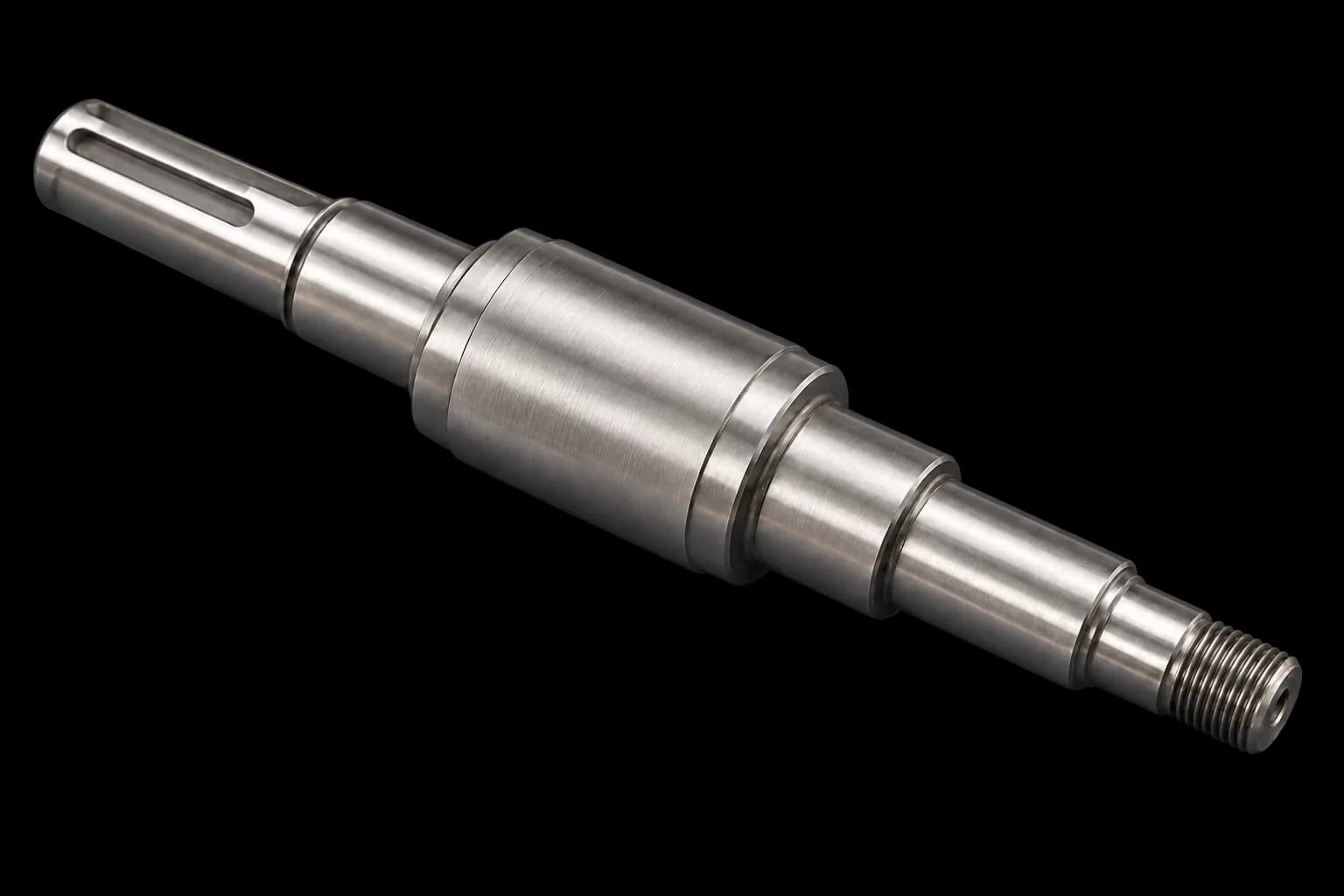
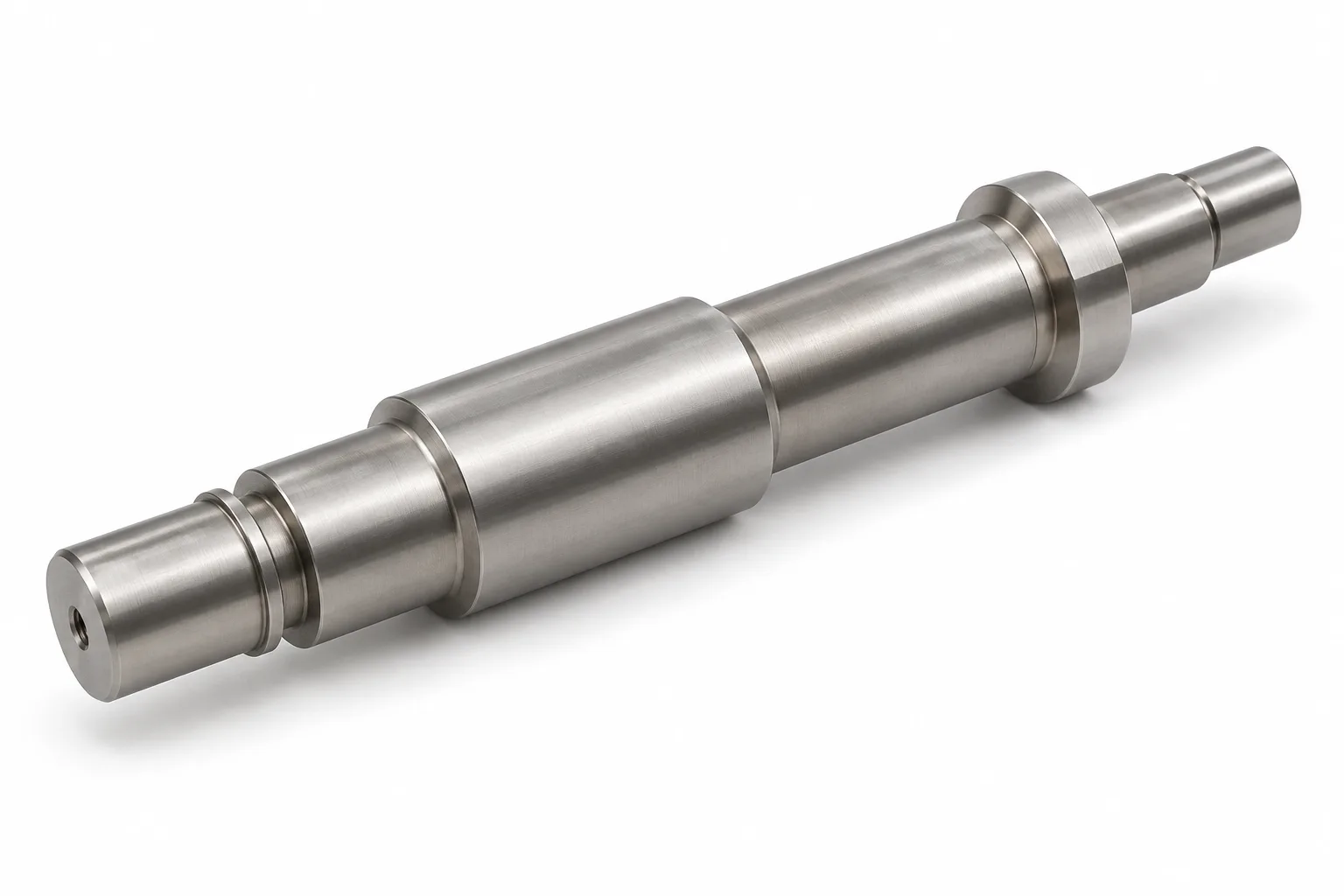
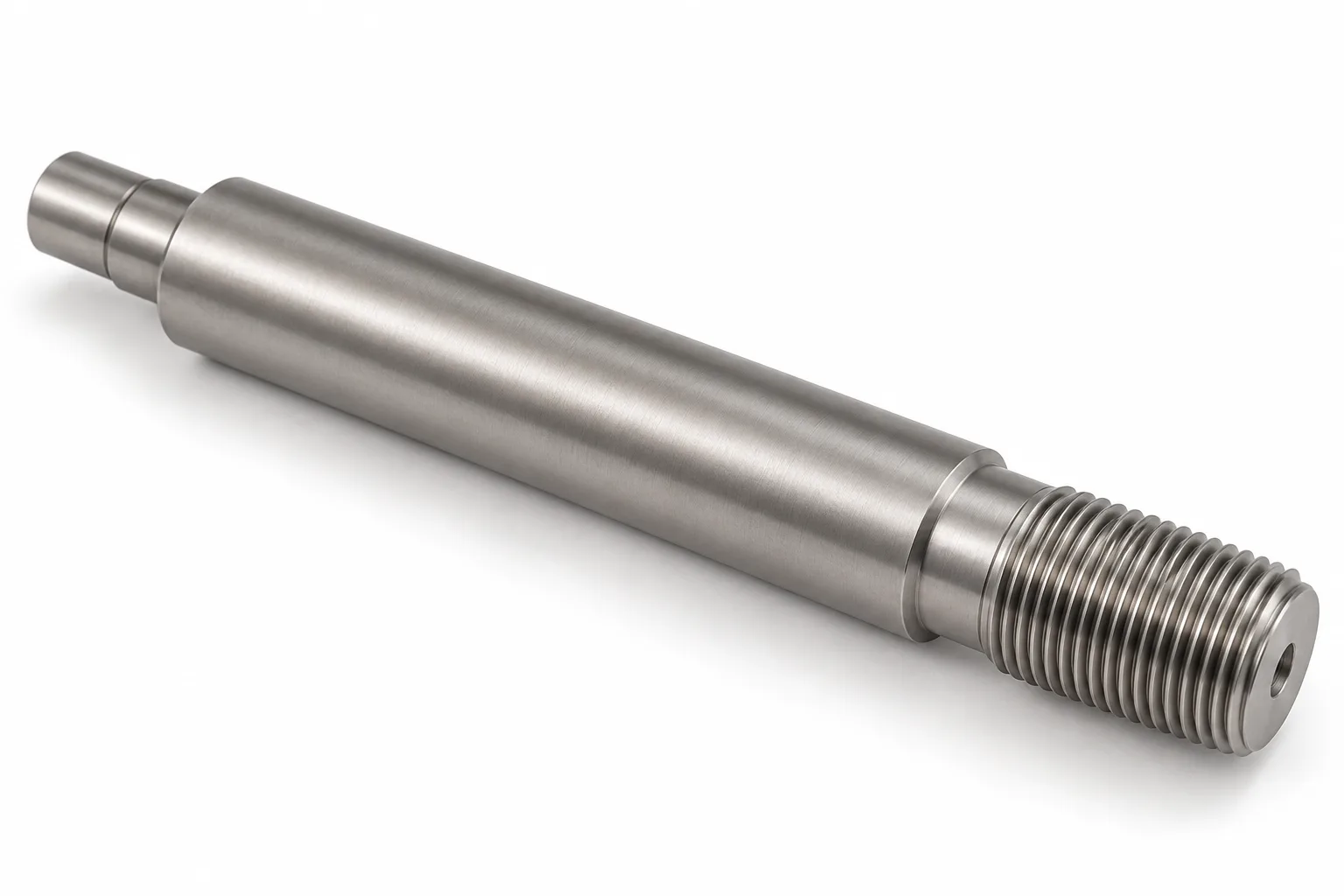
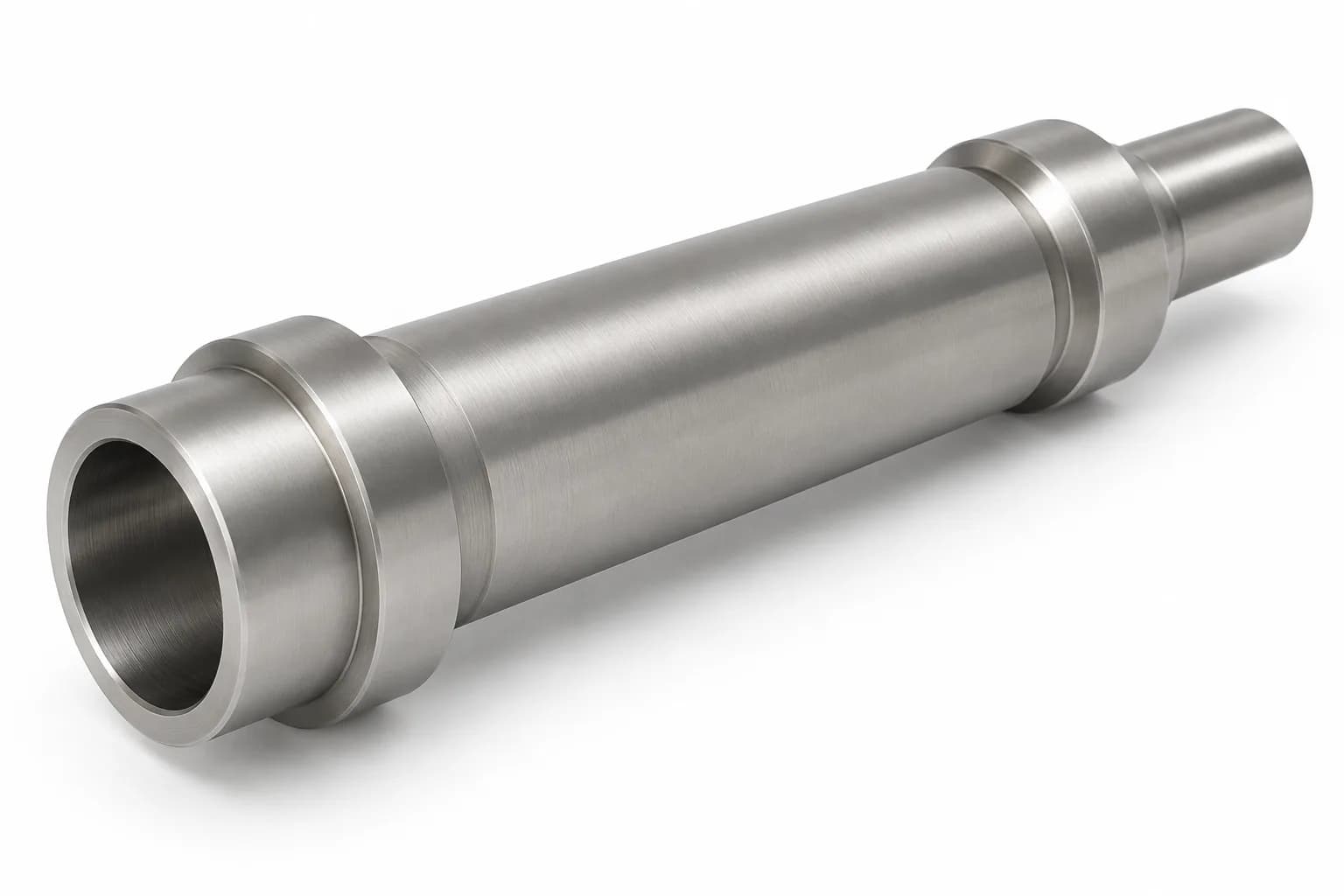
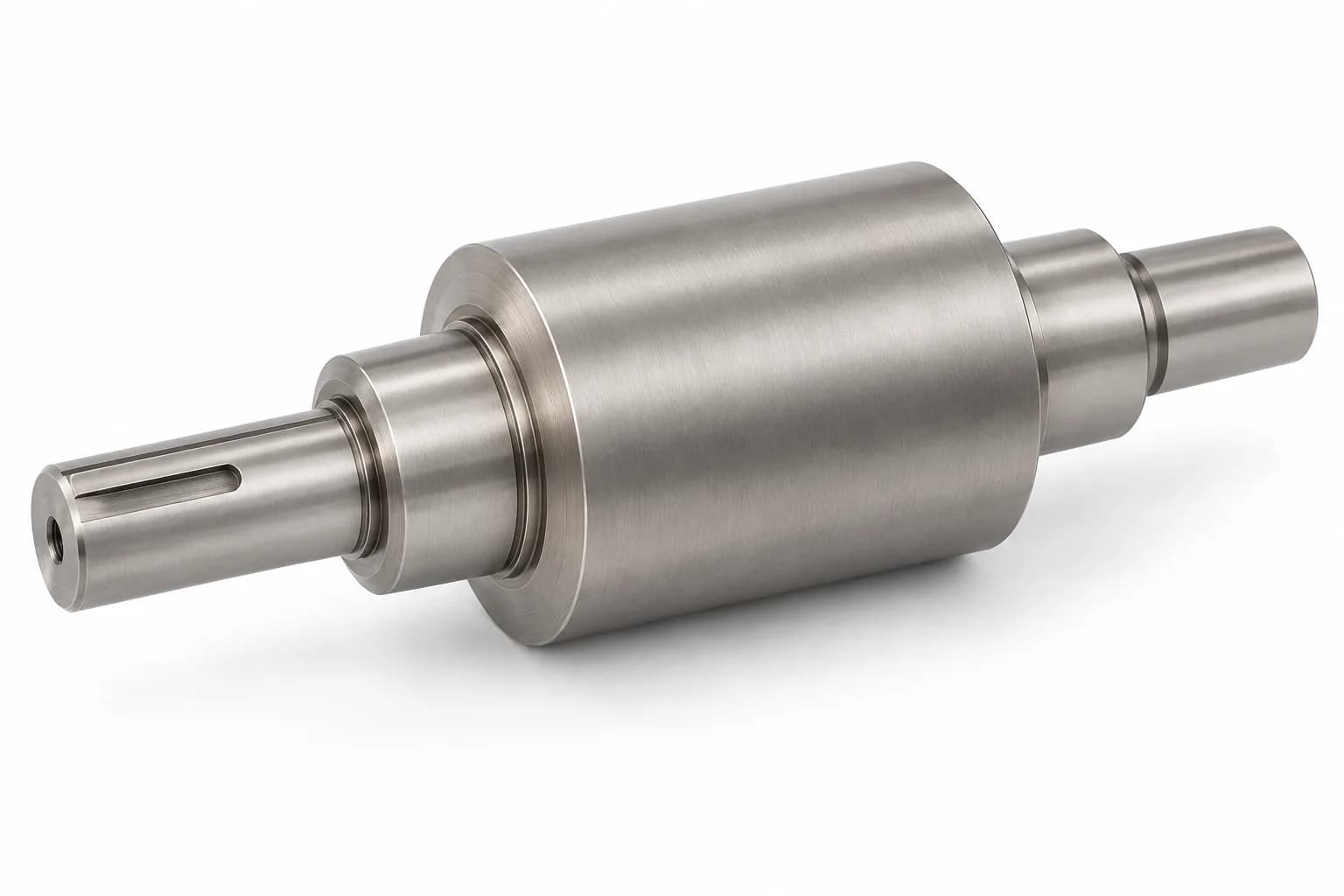
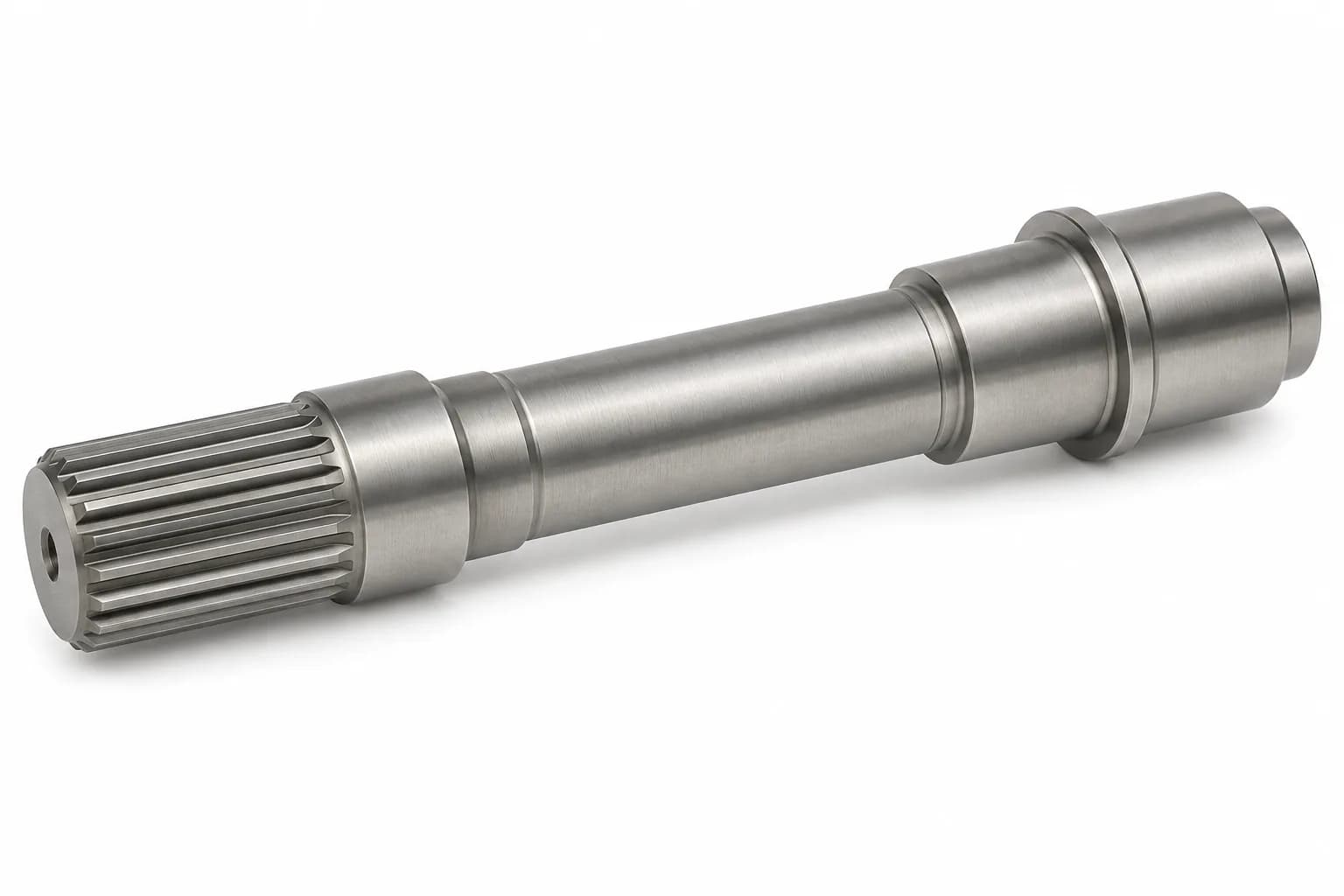
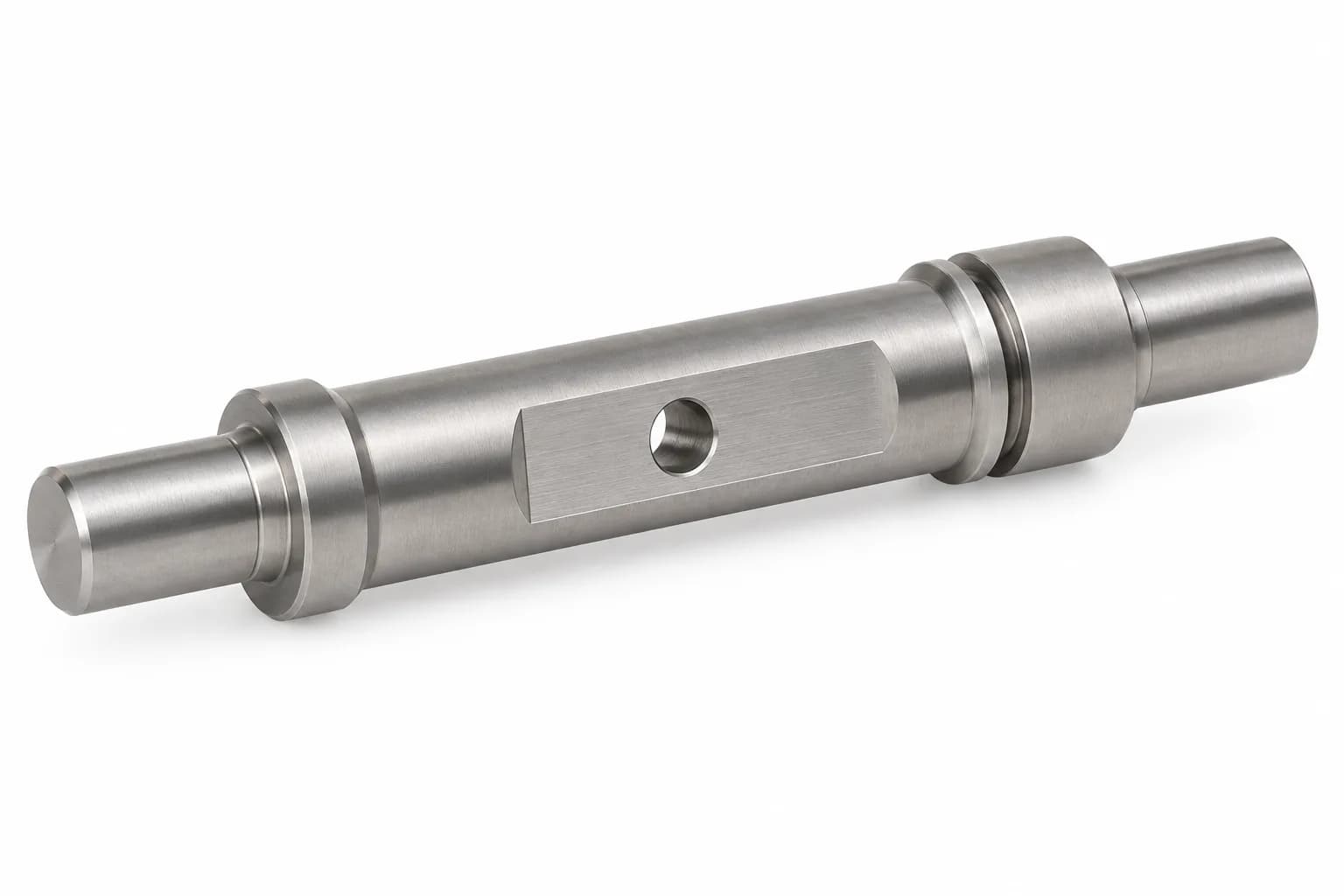
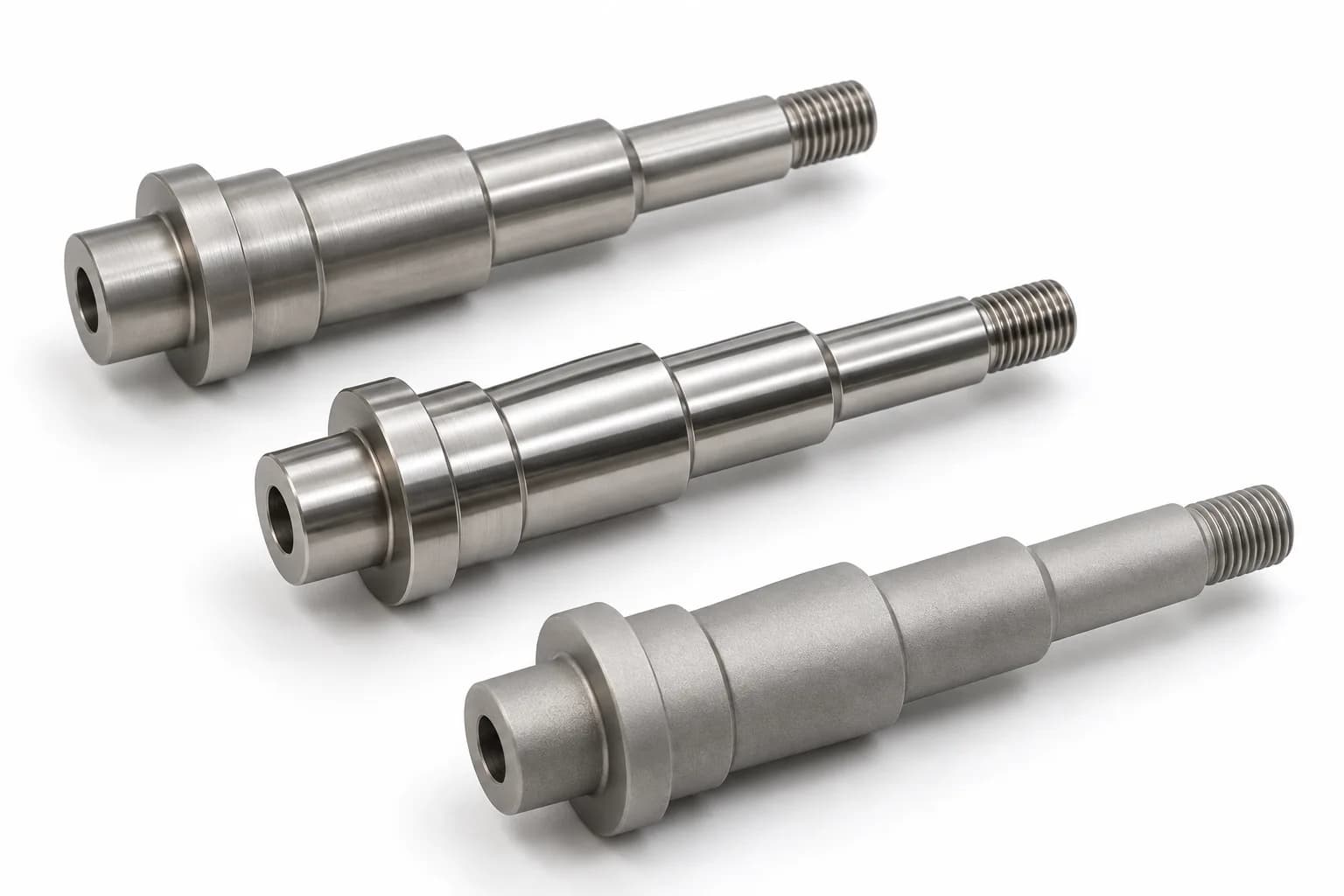
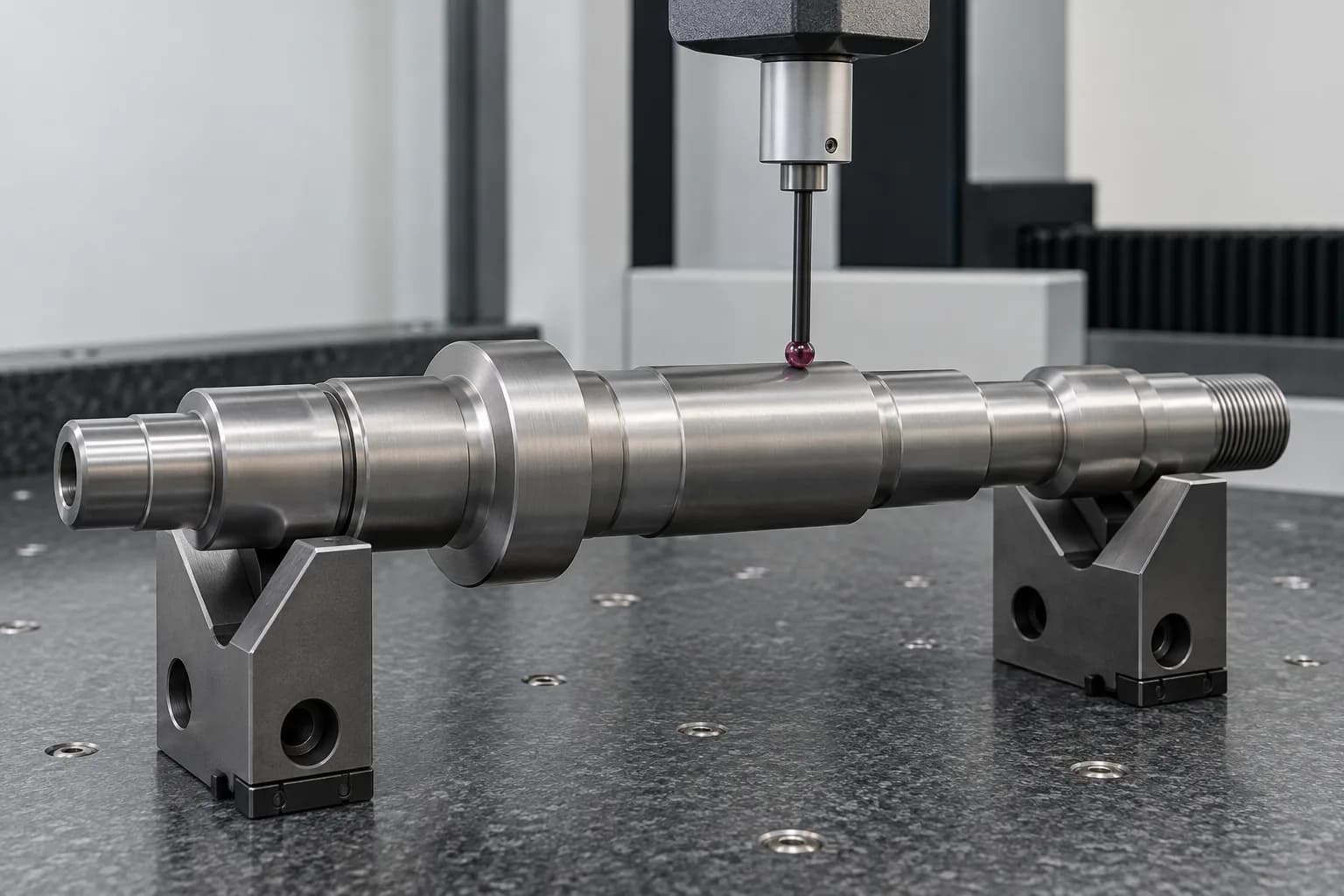
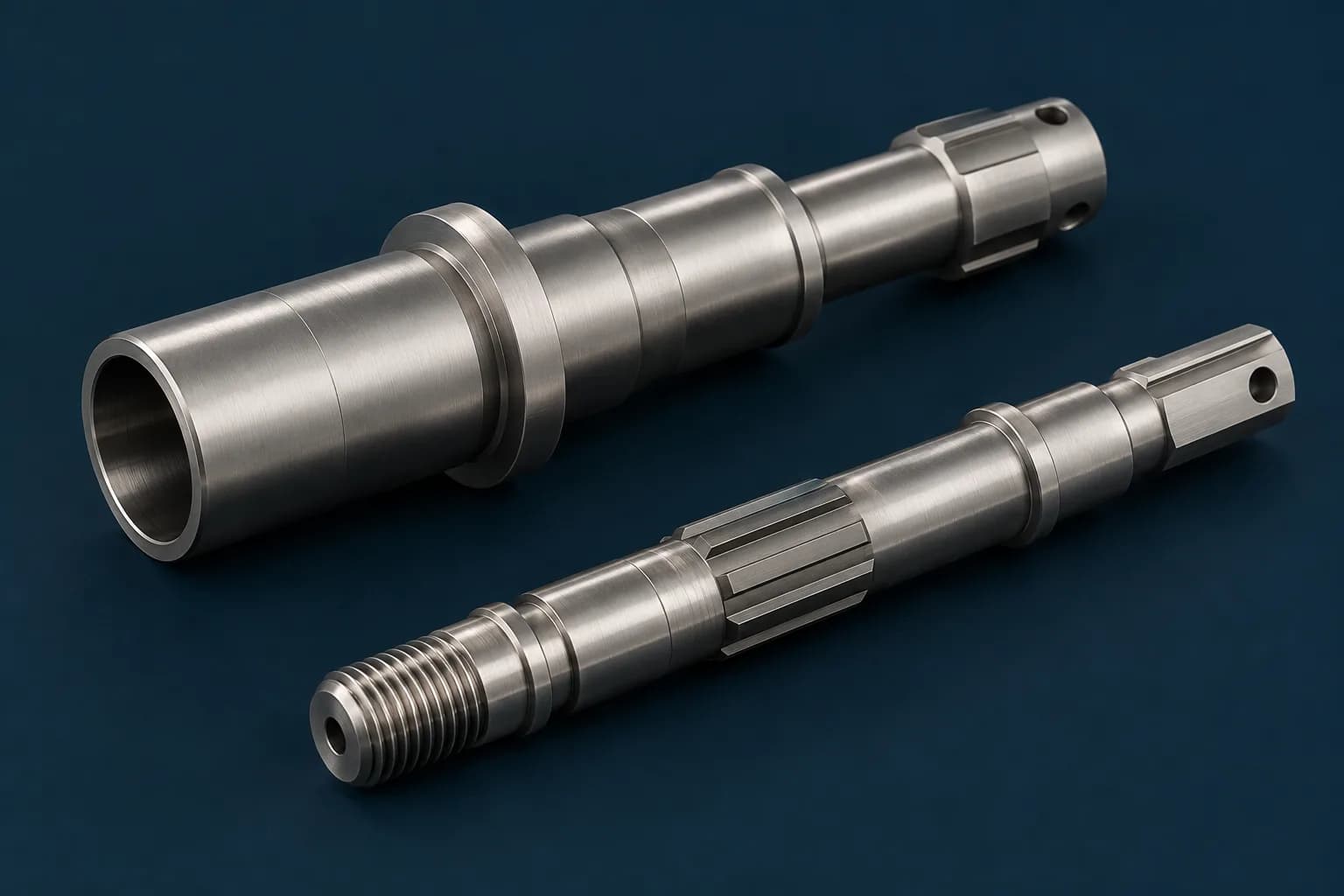
Topshaft provides custom CNC machining for precision titanium shafts manufactured to customer drawings. We support Grade 2 and Grade 5 titanium shaft projects, including stepped shafts, threaded shafts, hollow shafts and specialized OEM components.
Available grades and manufacturing feasibility are confirmed during quotation.
02
What Are Titanium Shafts?
Titanium shafts are precision mechanical components manufactured from titanium or titanium alloys. They are selected for applications requiring a combination of low weight, corrosion resistance, strength and specialized mechanical performance. The finished component is defined by its functional journals, shoulders, connections and acceptance criteria—not simply by a titanium bar designation.
Titanium has a density around 4.5 g/cm³, below steel's approximately 7.8 g/cm³. Selected alloys offer high strength relative to weight, but their elastic modulus is lower than steel's. A same-sized titanium shaft cannot therefore be assumed to have the same stiffness. Fatigue, contact wear and assembly behavior also need independent review.
Material and machining costs are generally above ordinary carbon steel. Titanium's value is strongest when its specific properties justify the complete manufacturing route. Corrosion performance depends on the medium, temperature and operating conditions; it is not universal immunity. Send the grade, condition and drawing so material sourcing, process feasibility and final inspection can be evaluated together.
03
Types of Custom Titanium Shafts We Manufacture
Stepped Titanium Shafts
Multiple diameters, shoulders and bearing seats locate components around a common axis. Define journal fits, transition radii and datum relationships so the machining route preserves alignment and assembly clearance, not just individual diameter limits.
External threads, connection ends and special interfaces are made to the specified form and fit. A titanium threaded shaft needs attention to thread runouts, mating materials and assembly lubrication because galling can matter as much as dimensional accuracy.
Hollow geometry can reduce mass and provide an internal passage where wall stiffness and tool access permit. Review bore-to-journal relationships, wall thickness, support and internal surface requirements before selecting the blank and machining sequence.
Specialized lightweight motor and actuator designs may consider titanium after checking torque, fatigue, stiffness and bearing contact. A titanium motor shaft is not a universal replacement for steel; rotor attachment, speed and actual assembly requirements govern suitability.
Splined connections and custom drive features require the tooth standard, fit, engagement and inspection criteria. Review root geometry, angular relationships and contact wear with the mating part rather than selecting material solely for its strength-to-weight ratio.
Keyways, ring grooves, flats, cross holes and special features add attachment or positioning functions. Identify stress-sensitive transitions and burr-sensitive edges. Coordinate rotational and milled features around the functional datums before approving the finished-part route.
Which Titanium Grade Is Best for Shaft Manufacturing?
Grade 2
Commercially pure titanium for corrosion-priority duties with moderate strength requirements. Confirm the specific environment and required condition.
Grade 5 / Ti-6Al-4V
A principal higher-strength direction for weight-sensitive components. A Grade 5 titanium shaft still needs stiffness, fatigue and interface review.
Swipe horizontally to read all columns.
Titanium shaft grade selection and application considerations
Material grade
Main characteristics
Application direction
Grade 1
Commercially pure titanium; good formability and corrosion resistance with relatively low strength.
Special corrosion-sensitive, low-load shaft components.
Grade 2
Commercially pure titanium combining useful corrosion resistance with moderate strength.
Chemical equipment, pump-related and specialized industrial components.
Grade 5 / Ti-6Al-4V
Widely used alpha-beta alloy with high specific strength; condition and product form matter.
Higher-strength precision shafts where weight reduction is valuable.
Grade 7
Palladium-bearing commercially pure titanium for selected corrosion environments.
Specialized chemical equipment after medium and temperature review.
Grade 9 / Ti-3Al-2.5V
An intermediate-strength alloy offering useful formability between some CP grades and Grade 5.
Lightweight components with specified geometry and material condition.
Grade 23 / Ti-6Al-4V ELI
Extra-low-interstitial variant with particular toughness-related requirements.
Specified medical-equipment or high-reliability projects; material identity is not device certification.
Grade 2 vs Grade 5 Titanium Shafts: Which Should You Choose?
Grade 2 often suits corrosion-first requirements at moderate strength; Grade 5 favors greater strength and weight optimization. Neither is automatically best for every shaft. Review loads, environment, condition and processing requirements, and approve any substitution against the complete drawing.
Grade 23 material compliance is not certification of a medical device or finished shaft. All grade listings are review directions, not claims of permanent stock or application qualification.
Material references and scope
TIMET's Ti-6Al-4V / ELI data and Ti-3Al-2.5V data provide material background. Acceptance follows the specified current product standard and agreed supplied condition, not a generic property table.
05
CNC Titanium Shaft Machining Capabilities
01
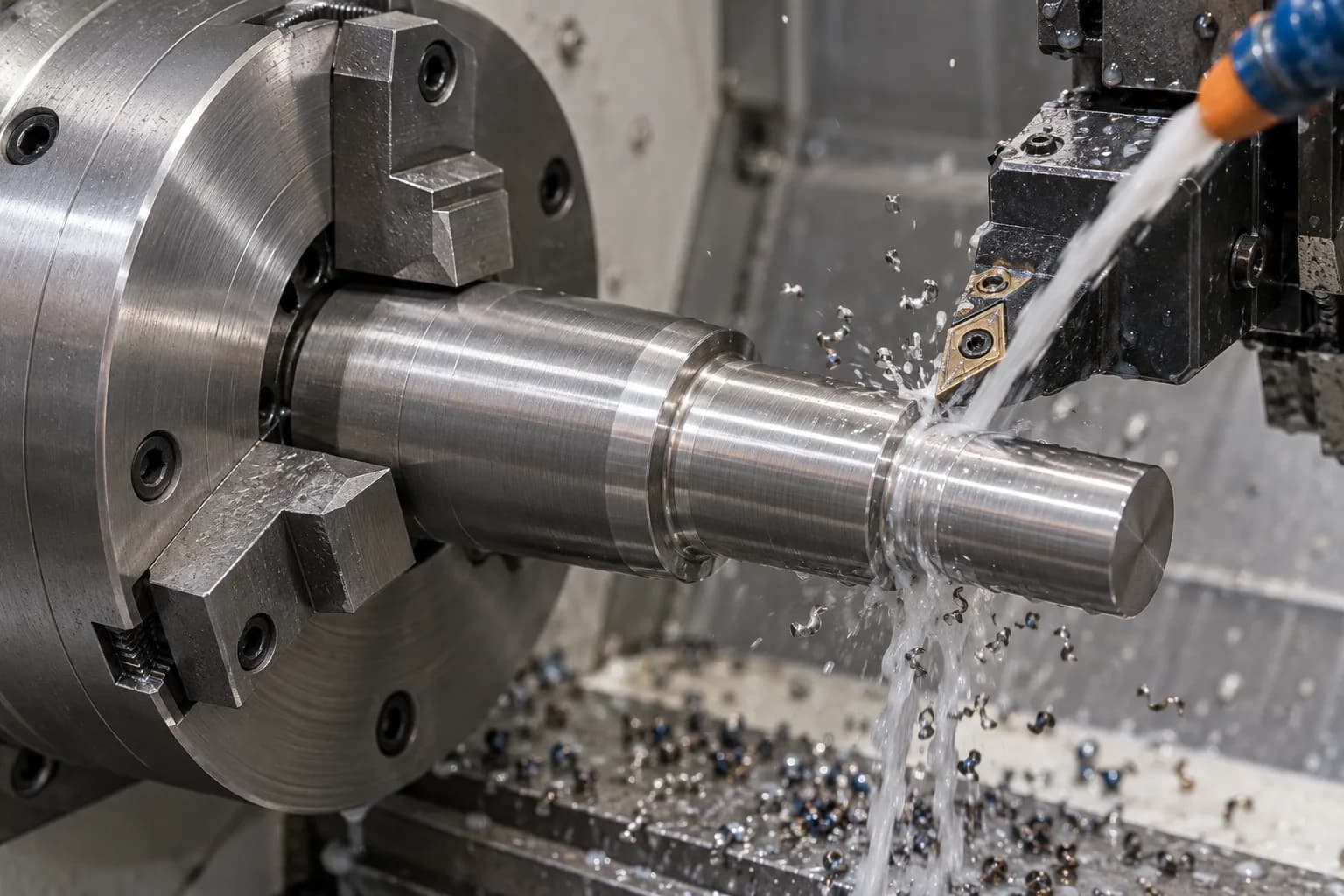
CNC Titanium Turning
Turning establishes diameters, shoulders, ring grooves, threads and bearing seats. Titanium shaft machining concentrates heat near the cutting edge, so tooling, cutting parameters and coolant strategy are selected together. Stable workholding and controlled tool engagement help protect the surface and maintain geometry.
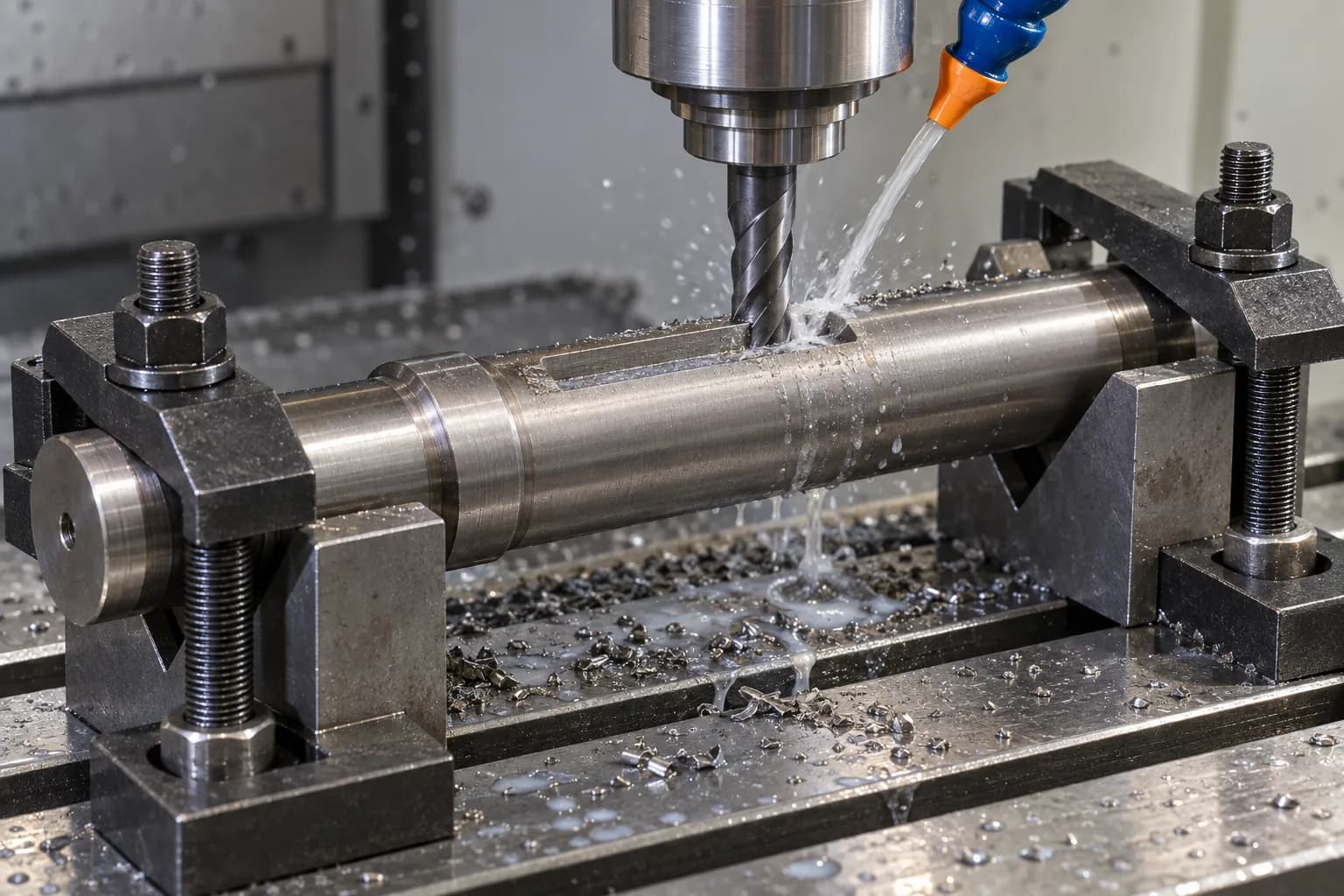
Milling adds keyways, flats, holes, connection features and special profiles. Relate them to functional journals and support the workpiece against cutting forces. Tool access, chip removal and deburring are planned so secondary machining does not impair the shaft's fit or fatigue-sensitive transitions.
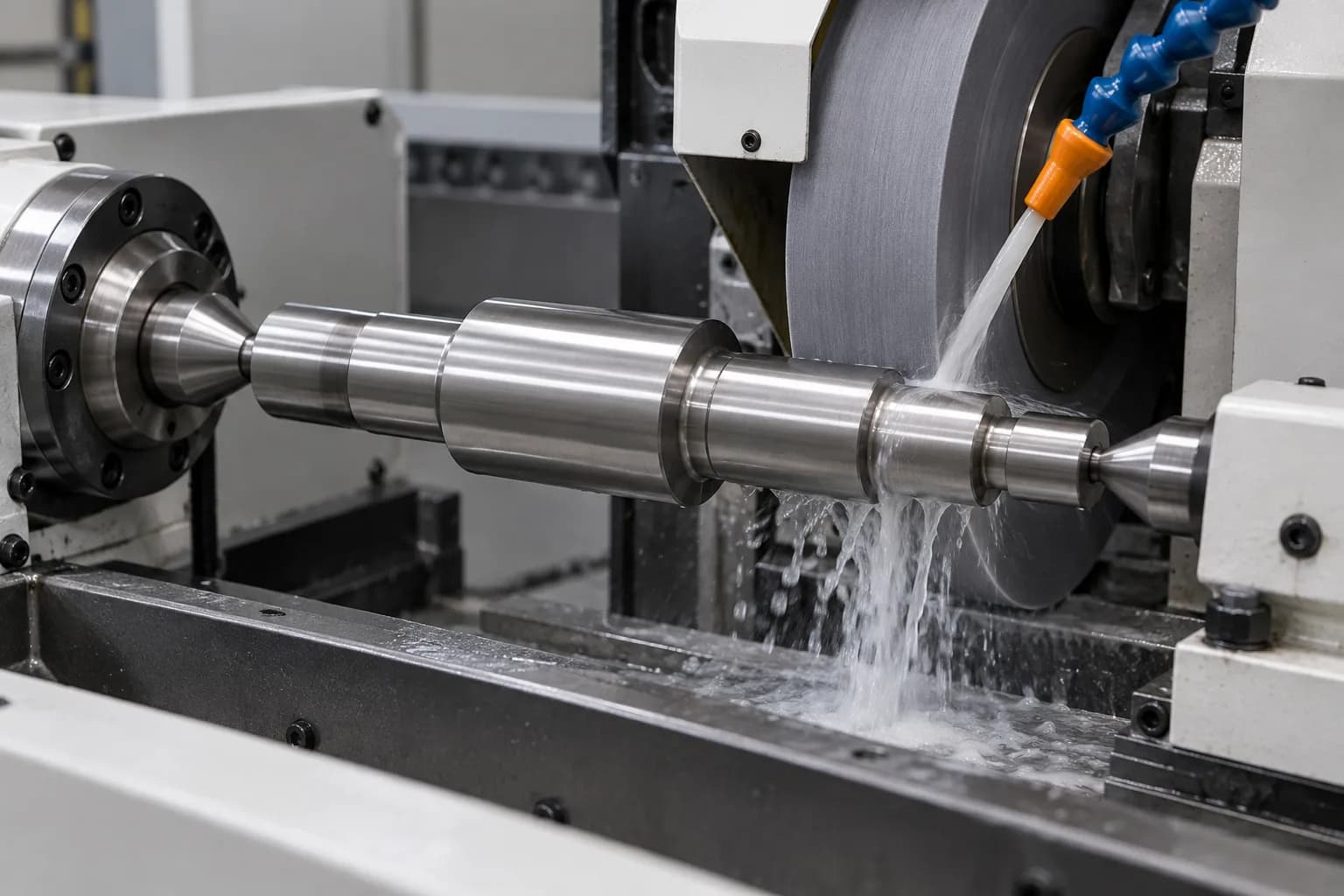
Cylindrical grinding is evaluated for specific fit surfaces, roughness and geometric requirements, not offered as one automatic route for every titanium part. Abrasive selection, coolant, allowance and heat control must suit the material condition and required surface integrity of the finished journal.
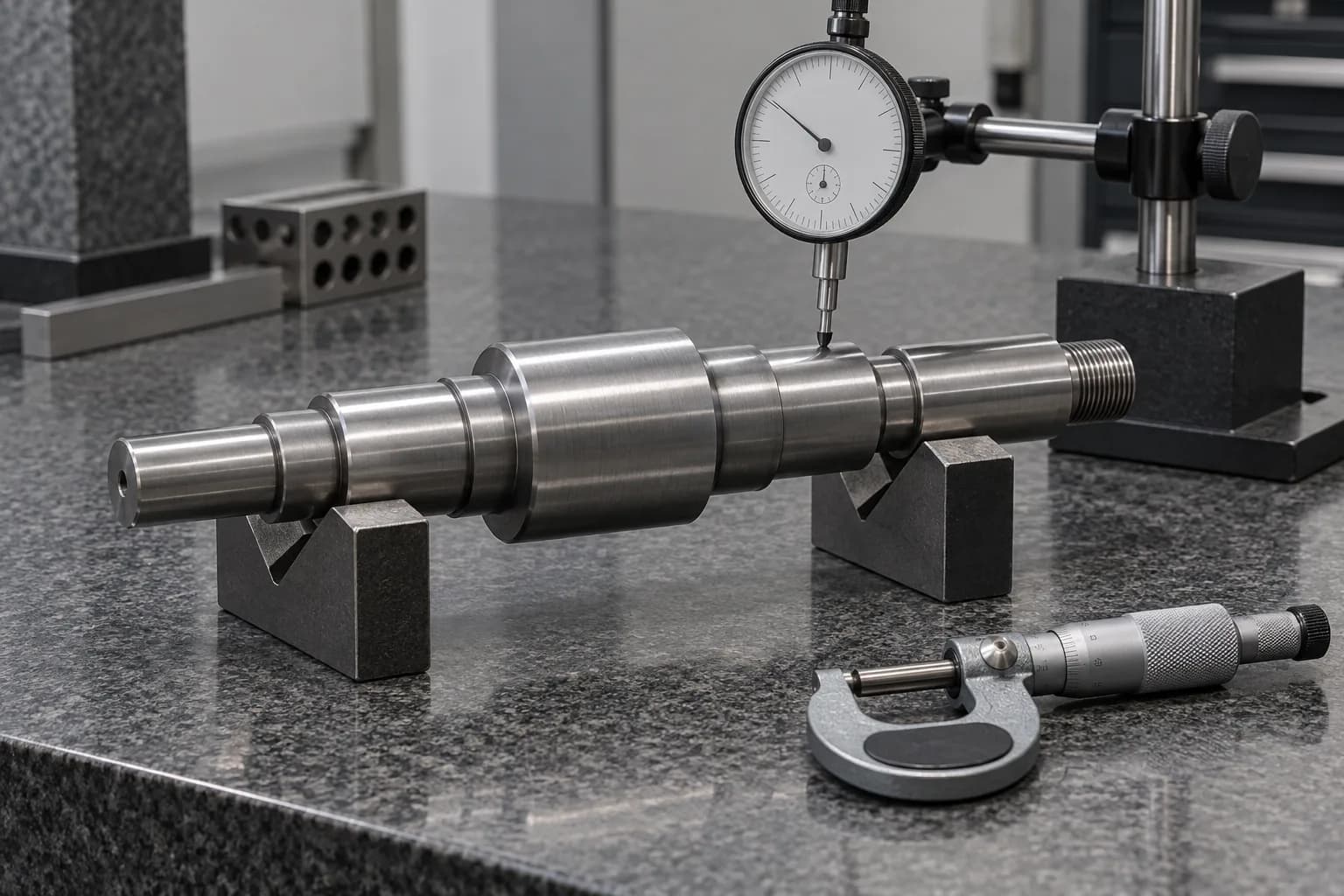
Check diameters, roundness, runout, coaxial relationships and other drawing-defined features using suitable methods. Define the datums and measurement condition early. A CNC machined titanium shaft must satisfy the agreed final geometry and surface requirements, not merely appear smooth or visually straight.
Titanium shaft manufacturing specifications and tolerances
Specification
Drawing-based requirement
Material
Grade 2, Grade 5 and customer-specified titanium alloys; availability and condition confirmed.
Diameter
According to the drawing and machining feasibility.
Length
Subject to machine capacity, support requirements and shaft geometry.
Dimensional tolerance
Confirmed after engineering review of the actual features.
Runout
According to functional datums and drawing requirements.
Surface roughness
Application-specific, with suitable measurement criteria.
Threading
Metric, imperial or customer-specified forms and fits.
Heat treatment
According to grade, supplied condition and applicable standards; route confirmed.
Production quantity
Prototype, low-volume and repeat production, agreed for the project.
Inspection
Dimensional, geometric and agreed documentation requirements.
A generic ±0.005 mm metal-machining tolerance is not a promise for all titanium shafts. Long, slender, thin-wall or complex components require feature-specific feasibility and inspection review.
07
What Makes Titanium Shaft Machining Challenging?
The route must manage heat, cutting forces and surface integrity together.
Low Thermal Conductivity
Heat tends to concentrate around the cutting zone. Review cutting parameters, tooling and coolant delivery together rather than transferring an aluminum cutting strategy unchanged.
Tool Wear
Use suitable tool materials and coatings where appropriate, with tool-life management. Worn edges can raise forces, alter dimensions and damage the surface before failure is obvious.
Workpiece Deflection
Optimize clamping, auxiliary support and machining sequence for the length-to-diameter ratio. Check released geometry; a dimension measured only under clamping load may be misleading.
Surface Integrity
Avoid overheating, rubbing, scoring and an unacceptable altered surface layer. Define edge condition, cleaning and finishing requirements for the actual service rather than judging only appearance.
Dimensional Stability
Plan roughing, finishing and intermediate checks around residual stress and the specified material condition. Reconfirm critical dimensions after required thermal or surface processing.
Material Cost
Review blank size, machining allowance and the complete process route to limit unnecessary removal. Material savings must not compromise traceability, support or final acceptance.
Illustrative Manufacturing Workflow
Example: machining a custom Grade 5 titanium stepped shaft. This is a process-planning illustration, not an actual customer case or inspection report.
01
Drawing Requirements
A conceptual Grade 5 stepped shaft calls for bearing journals, shoulders and a keyed end. Define alloy condition, functional datums, quantity and final acceptance.
02
Process Review
Evaluate blank size, support, tool access, heat management and whether critical journals need a separate finishing operation. Resolve unclear requirements before manufacture.
03
Machining
Plan turning and secondary features as one sequence, managing tool wear and surface integrity. Exact setups and parameters depend on the actual geometry.
04
Inspection
Check the specified dimensions, geometry and surface condition, with agreed documentation. This example contains no customer identity, measured results or claimed production record.
08
Surface Finishing Options for Titanium Shafts
Titanium's corrosion resistance does not guarantee good sliding wear. Review galling, contact load, lubrication and the mating material before relying on a surface treatment.
As-Machined Finish
Retain the controlled machining surface where it meets function. Specify roughness and edge condition separately from cosmetic appearance; protect contact surfaces during handling and shipment.
Precision Polishing
Review polishing for particular functional or appearance requirements. Control material removal so journals, shoulders and threads remain within limits; gloss alone is not a dimensional or wear-performance criterion.
Bead Blasting
A uniform matte appearance may be specified for suitable surfaces. Agree media, cleanliness, masking and final roughness; blasting must not impair fit surfaces or introduce unacceptable contamination.
Titanium Anodizing
A specified oxide process can produce appearance and surface effects. Define the intended function and acceptance criteria. Do not transfer aluminum Type II / Type III anodizing parameters to titanium.
Application-Specific Coatings
Special wear-resistant or lower-friction treatments require substrate, process and environment compatibility review. Confirm thickness, masking, adhesion-related requirements and post-treatment dimensions before approving a coating route.
09
What Should Engineers Consider When Designing Titanium Shafts?
01
Strength-to-Weight Ratio
Titanium's lower density than steel can support lighter designs at an appropriate strength level. Compare the selected grade, condition and geometry; high specific strength does not mean every titanium alloy exceeds every steel in absolute strength.
02
Shaft Stiffness and Deflection
Grade 5 is often represented by an elastic modulus around 110–115 GPa, compared with approximately 200–210 GPa for steel. At equal geometry and load, more elastic deformation is possible. Review diameter, support span, critical speed and actual loads.
03
Fatigue and Stress Concentration
Consider the load spectrum, reversals, shoulder radii, keyways and grooves. Surface damage and local stress concentration can dominate service life. Material tensile properties alone do not qualify a finished shaft for the required fatigue duty.
04
Bearing and Sliding Contact
Titanium does not automatically provide good sliding-wear behavior. Assess contact pressure, galling, lubrication and mating materials. A bearing interface or repeated threaded assembly may need a compatible sleeve, coating or different material rather than a bare titanium surface.
05
Surface Finish and Corrosion Environment
Specify the medium, temperature and operating conditions as well as finish. Titanium resists many environments but is not immune to all chemicals. Consider crevices, contact conditions and whether a treatment changes corrosion or wear behavior.
06
Material Certification and Traceability
Specify grade, product standard, supplied condition and required records. Agree lot identification and inspection scope before quotation. A Grade 23 material certificate does not establish certification or regulatory approval of the final medical device or shaft.
10
Industrial Applications of Custom Titanium Shafts
Potential applications and procurement considerations—not claims of completed projects or approvals.
Swipe horizontally to read all columns.
Potential titanium shaft industrial applications
Industry
Potential shaft application
Key procurement requirements
Aerospace
Actuator shafts and lightweight mechanical components.
Material standard, strength, traceability and project-specific approvals.
Medical Equipment
Specialized mechanical shafts and instrument components.
Material identity, surface quality and applicable project compliance.
Robotics
Lightweight joint and actuator shafts.
Stiffness, moving mass, fatigue and attachment requirements.
Marine Equipment
Corrosion-resistant mechanical shaft components.
Actual seawater duty, temperature, mating materials and wear.
Chemical Processing
Pump and specialized equipment shafts.
Medium compatibility, sealing fits, temperature and documentation.
Industrial Machinery
Specialized high-performance shafts.
Dimensions, loads, repeatability and agreed inspection scope.
Aerospace and medical projects may require additional supplier qualification, documentation and regulatory controls. Requirements must be assessed explicitly; no certification or application approval is implied here.
11
Titanium vs Steel vs Aluminum Shafts: Which Material Is Better?
Swipe horizontally to read all columns.
Representative titanium, steel and aluminum shaft material comparison
Property
Titanium Grade 5
Steel
Aluminum 6061-T6
Density
Approximately 4.43 g/cm³
Approximately 7.85 g/cm³
Approximately 2.70 g/cm³
Elastic modulus
Approximately 114 GPa
Approximately 200–210 GPa
Approximately 69 GPa
Specific strength
High in suitable conditions
Depends on grade and condition
Moderate for this alloy and temper
Corrosion resistance
Excellent in many environments; not universal
Depends on steel grade and protection
Good in many environments; exposure-dependent
Machining difficulty
Generally higher
Grade- and condition-dependent
Generally lower with suitable tooling
Material cost
Usually higher
Often lower for ordinary carbon steel
Usually below titanium
Typical selection reason
Specific strength and specialized environments
Strength, stiffness and cost
Low weight and machinability
Typical reference values near room temperature, not guaranteed acceptance limits. Exact properties depend on grade, product standard, heat-treatment condition, texture and service conditions. Approximately 114 GPa is a representative Grade 5 modulus, not a fixed value for every product.
Confirm the specified grade, condition and agreed material documents. Define whether additional verification is needed; a gray product image cannot verify titanium identity.
Critical Diameter Inspection
Check bearing journals, overall length and shoulder locations against the drawing. Measurement methods and acceptance limits follow the actual feature sizes and tolerances.
Runout and Coaxiality
Use the functional datum scheme and defined supports to evaluate the required geometric relationships, including released straightness and roundness where specified.
Surface Roughness Inspection
Evaluate designated working surfaces with the agreed method. Identify roughness, edge condition and surface-integrity requirements separately from general cosmetic expectations.
Thread and Feature Inspection
Verify specified threads, keyways, splines, holes and grooves for fit, location and edge quality. Agree any required gauges or feature-specific acceptance criteria.
Specified Records
Material certificates and inspection reports are provided when specified, available and agreed. Define traceability and report scope before ordering, not after manufacture.
13
Why Choose Topshaft for Custom Titanium Shafts?
01
Drawing-Based Engineering Review
Review the drawing, material condition, machining route and functional requirements before confirming feasibility. Resolve critical fits, surface treatments and documentation expectations early.
02
Precision CNC Manufacturing
Coordinate turning, milling and related secondary operations around the shaft design. The selected route accounts for support, tool wear and the required final surfaces.
03
Critical Feature Inspection
Focus inspection on critical dimensions, geometric tolerances and agreed records. Acceptance is tied to the controlled drawing rather than a universal accuracy or zero-defect claim.
04
Prototype to Repeat Production
Support sample evaluation and continuing OEM procurement with a controlled revision and agreed process scope. Sourcing, quantity, timing and any special requirements are confirmed individually.
TOPSHAFT is the precision shaft manufacturing division of Dongguan Tops Precision Manufacture Co., Ltd., operating alongside Topsbest Precision for shaft-focused OEM projects. Review company information and request the process evidence relevant to your supplier evaluation.
Technical background
TIMET's titanium design and fabrication handbook discusses machining and surface-treatment considerations. It is general material guidance, not evidence of Topshaft equipment ownership, qualified processes or project results.
14
Technical FAQs About Titanium Shafts
What is a titanium shaft used for?
Titanium shafts are considered for lightweight mechanisms, corrosion-sensitive equipment and specialized high-performance assemblies. Potential uses include actuators, robotic joints, pump-related components and selected medical-equipment mechanisms. Suitability depends on the grade, loads, stiffness, bearing interfaces and environment. These application directions do not imply that every titanium shaft is aerospace-qualified, implantable or approved for a particular regulated use.
What is the difference between Grade 2 and Grade 5 titanium shafts?
Grade 2 is commercially pure titanium, often considered when corrosion resistance is prioritized and strength requirements are moderate. Grade 5 is Ti-6Al-4V, an alpha-beta alloy offering higher strength and useful weight optimization. Compare the specified condition, actual medium, temperature, fatigue, stiffness and machining requirements. Neither grade is an automatic substitute for the other without technical approval.
Can titanium shafts be CNC machined?
Yes. Titanium shafts can be CNC turned, milled and finished using a process suited to their grade and geometry. Low thermal conductivity and tool interaction make heat management, tool wear, stable support and surface integrity important. The cutting strategy should be reviewed for the actual component rather than copied from aluminum or ordinary steel settings.
Are titanium shafts stronger than steel shafts?
Not universally. A Grade 5 titanium shaft can offer high strength relative to its mass, but steel spans a wide range of grades and conditions. Compare the relevant strength, fatigue and contact requirements rather than material names alone. Titanium also has a lower elastic modulus than steel, so equal-sized shafts do not have equal stiffness even when their strengths are comparable.
Can titanium shafts be anodized?
Yes, a suitable titanium anodizing process can be reviewed for specified surface or appearance requirements. Define its purpose, compatible alloy, masking and final acceptance. Titanium anodizing is not simply aluminum Type II or Type III processing applied to another metal. An oxide color does not verify the alloy, and an anodized surface does not automatically solve sliding wear or galling.
What tolerances can be achieved on titanium shafts?
Tolerance feasibility depends on geometry, size, slenderness, wall thickness, material condition, process and inspection method. Identify critical dimensions, datum relationships, runout and roughness separately. Long shafts, thin-wall hollow parts and complex features can need different setups and finishing sequences. A generic metal-machining tolerance should not be treated as a guarantee for every precision titanium shaft.
Can Topshaft manufacture custom titanium shafts from drawings?
Topshaft reviews customer drawings for titanium shaft projects, including rotational geometry and secondary features. Send the required grade, condition, quantity and acceptance criteria so sourcing and manufacturing feasibility can be confirmed during quotation. Special treatments, documentation or regulated-application requirements need explicit agreement; a product category listing is not a claim that every grade or process is stocked or qualified.
What information is needed for a titanium shaft quotation?
A titanium shaft supplier needs the drawing revision or CAD model, material grade and condition, quantity, critical tolerances, surface treatment and application requirements. Include load and environmental information when selection is unresolved. Specify material certificates, traceability, inspection records and delivery expectations, so the quotation covers the finished component and required evidence rather than only a machined blank.
15
Request a Quote for Custom Titanium Shafts
Send your drawing, titanium grade, condition, quantity, critical tolerances, surface treatment and application requirements. Include documentation and delivery expectations for a finished-part quotation.