Precision Carbon Steel Shaft Manufacturing

Custom Carbon Steel Shafts Manufacturer

Topshaft manufactures custom carbon steel shafts for motors, gearboxes, conveyors and industrial machinery. We provide drawing-based CNC turning, milling, heat-treatment coordination, precision grinding and dimensional inspection for prototype and repeat OEM production.

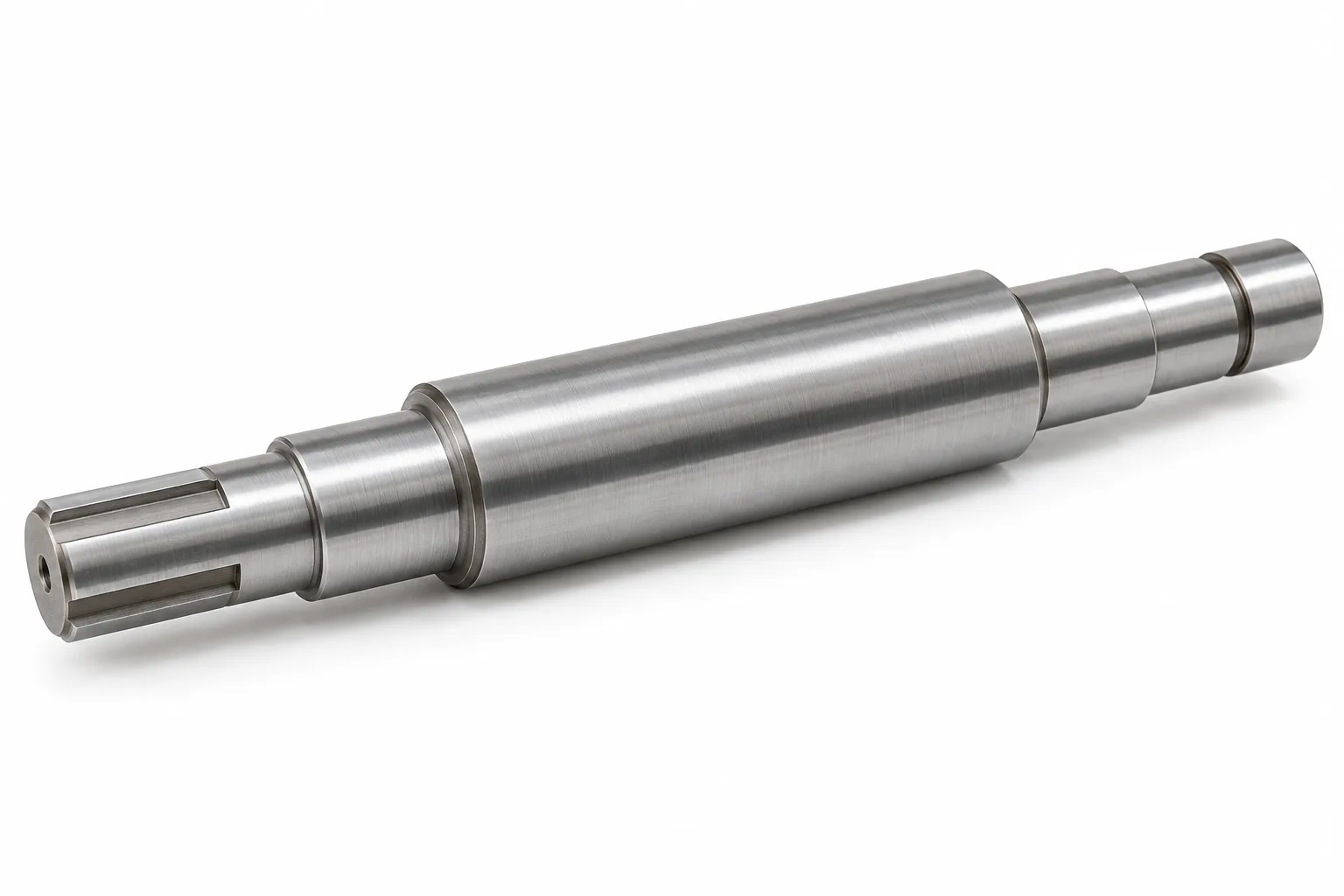
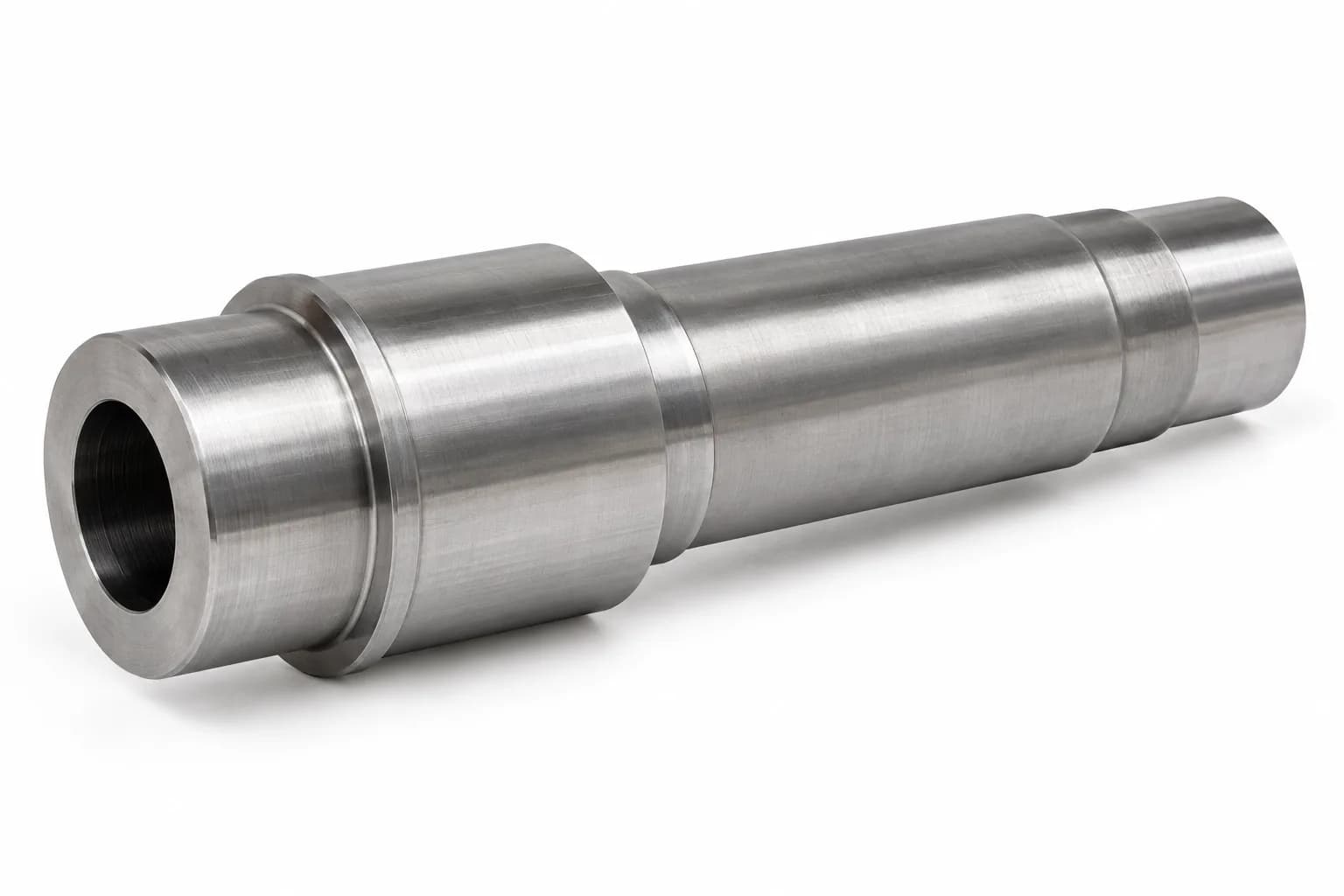
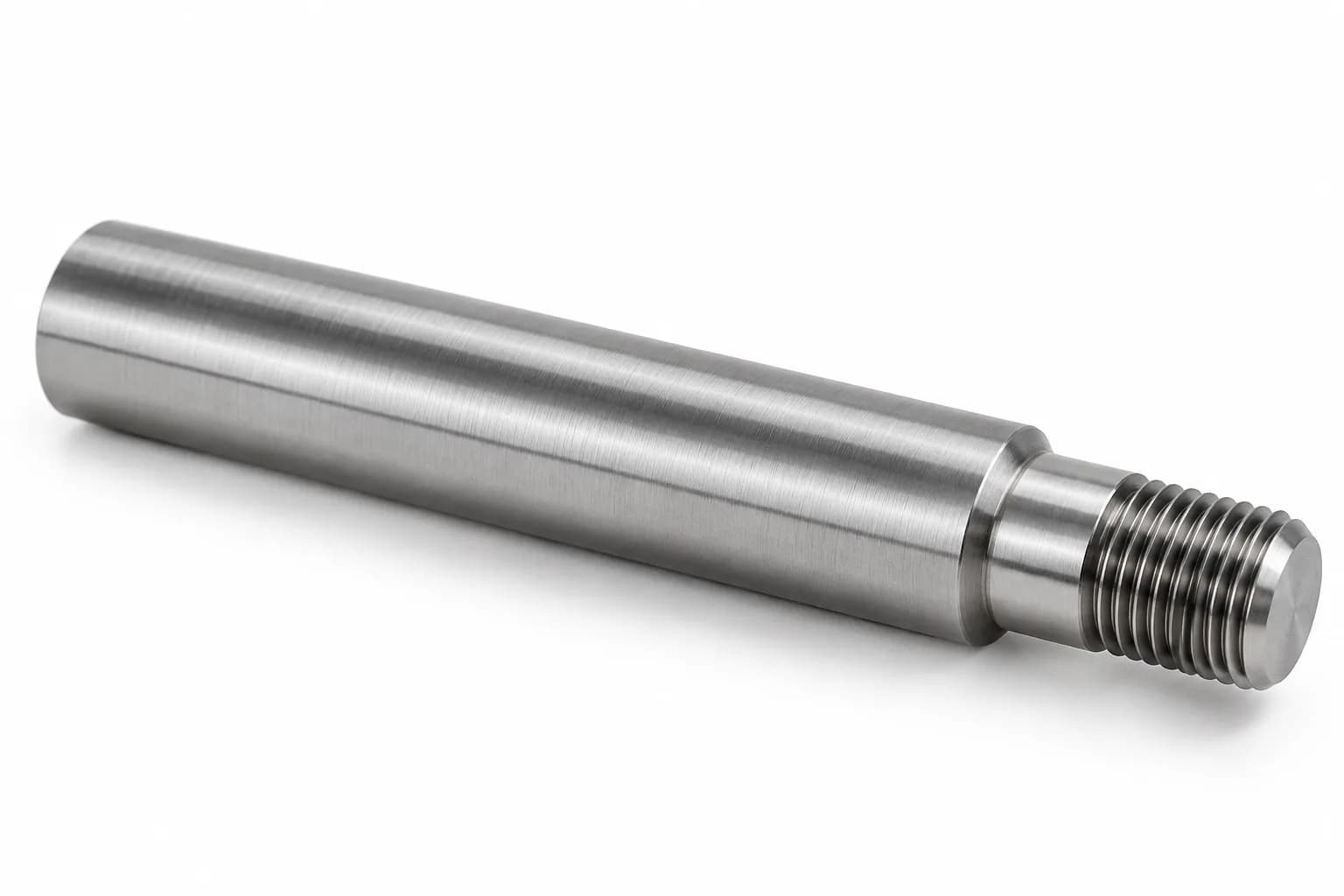
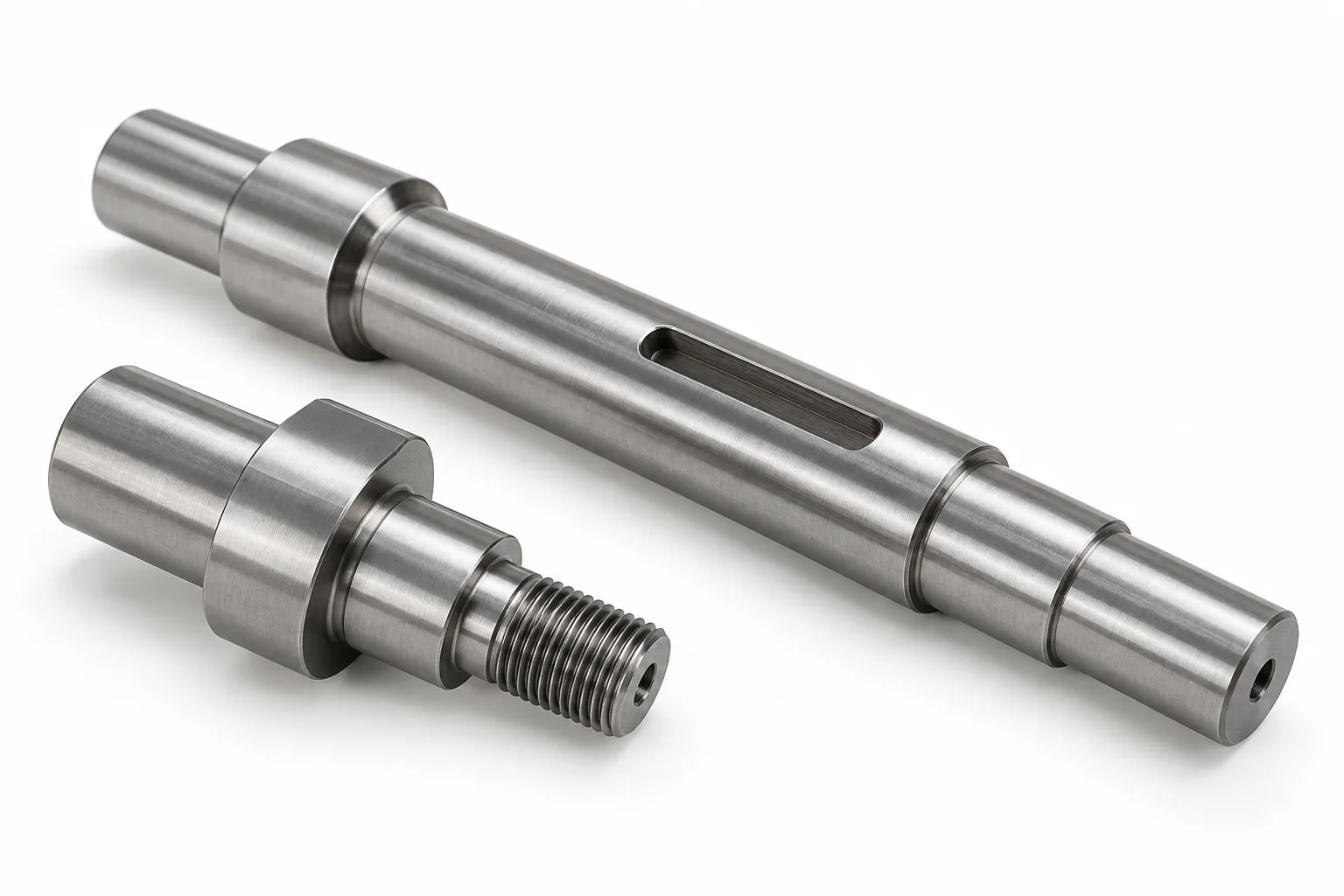
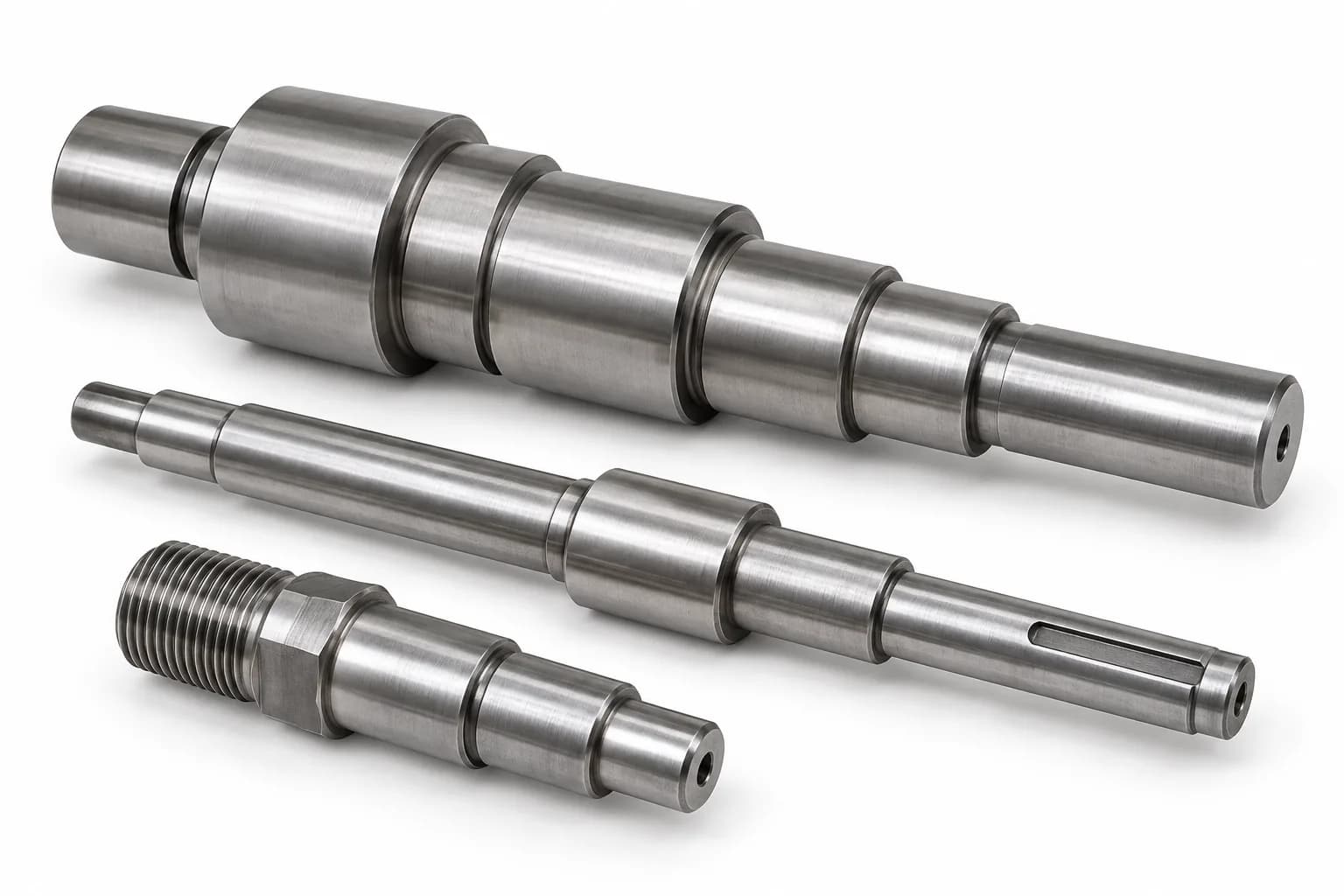
Finished steel shaft geometries with bearing journals, shoulders, a keyway and threaded end on white
  • 1045 / C45 Steel
  • CNC Turning & Grinding
  • Custom OEM Manufacturing

What Are Carbon Steel Shafts?

A carbon steel shaft is a mechanical component manufactured from steel based primarily on iron and carbon, without the deliberate alloy additions that define many alloy-steel grades. It supports rotating components, transmits torque or provides mechanical positioning. The finished part is defined by its journals, shoulders, interfaces and operating duty—not simply the diameter of a purchased bar.

Carbon steel is common in shaft manufacturing because it combines cost efficiency, broad material availability, useful strength, machinability and grade-dependent heat-treatment options. A low-carbon 1018 or 1020 steel shaft may suit a light-duty mechanism or a route involving case hardening. Medium-carbon 1045 / C45 is especially relevant where greater strength or hardening response is required than typical low-carbon grades provide.

Select the supplied condition as carefully as the grade. Cold-drawn, normalized or treated stock can behave differently during machining and service. Topshaft's carbon steel shaft manufacturer review connects that starting material with the drawing, treatment sequence and final acceptance requirements. Availability and feasibility are confirmed during quotation.

Types of Custom Carbon Steel Shafts

Finished, drawing-based OEM components—not a listing of standard steel bars.

Carbon Steel Motor Shafts with drawing-specific machined geometry on white

Carbon Steel Motor Shafts

Bearing journals, rotor seats and coupling interfaces are machined to the assembly drawing. A carbon steel motor shaft needs control of functional diameters, shoulder positions and the relationship between the rotor seat and bearing axis.

Explore this shaft type →
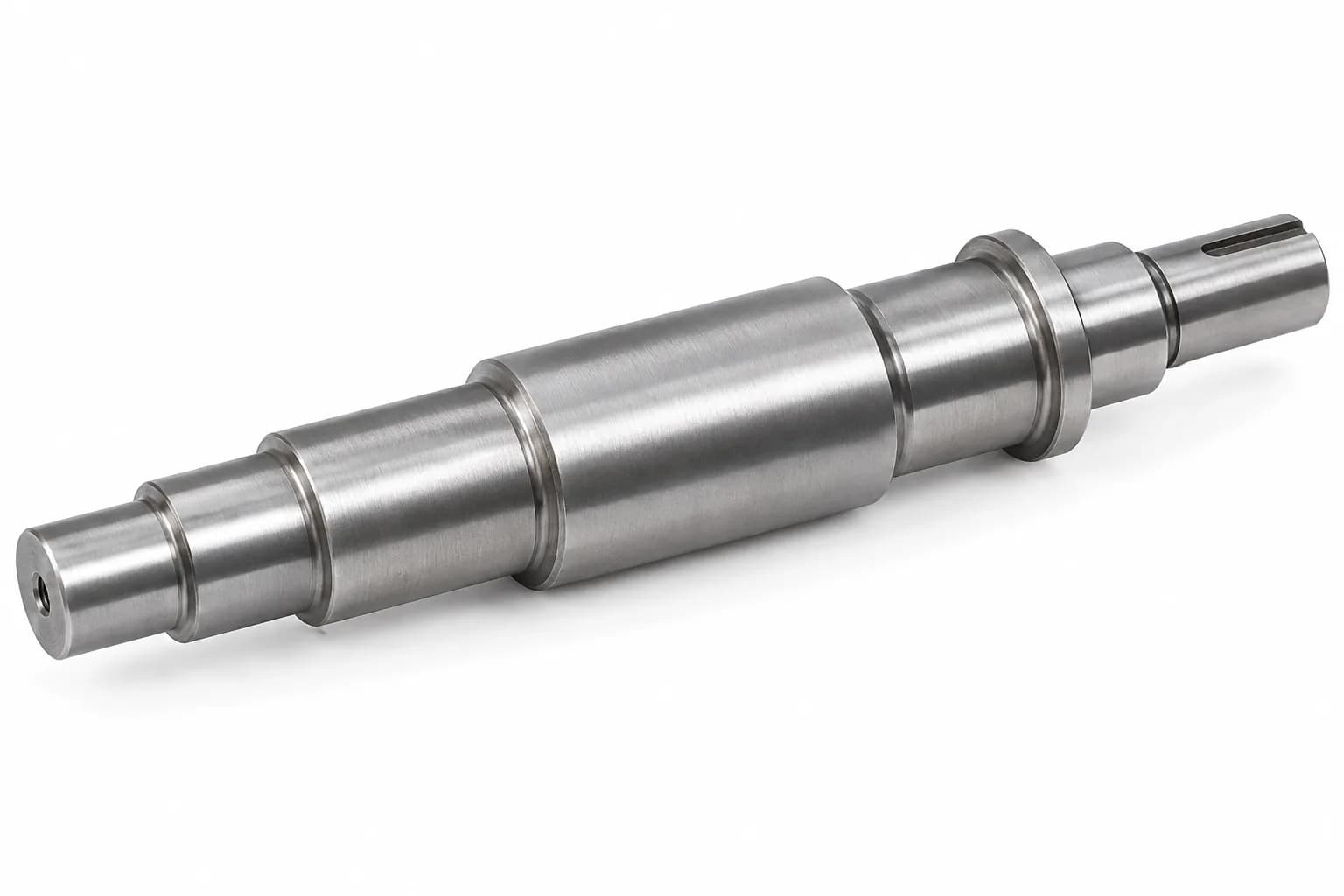
Stepped Carbon Steel Shafts with drawing-specific machined geometry on white

Stepped Carbon Steel Shafts

Multiple diameters, shoulders and locating features position components along a common shaft. Define transition radii, datum journals and shoulder faces so the manufacturing route preserves the relationships that determine installed alignment.

Explore this shaft type →
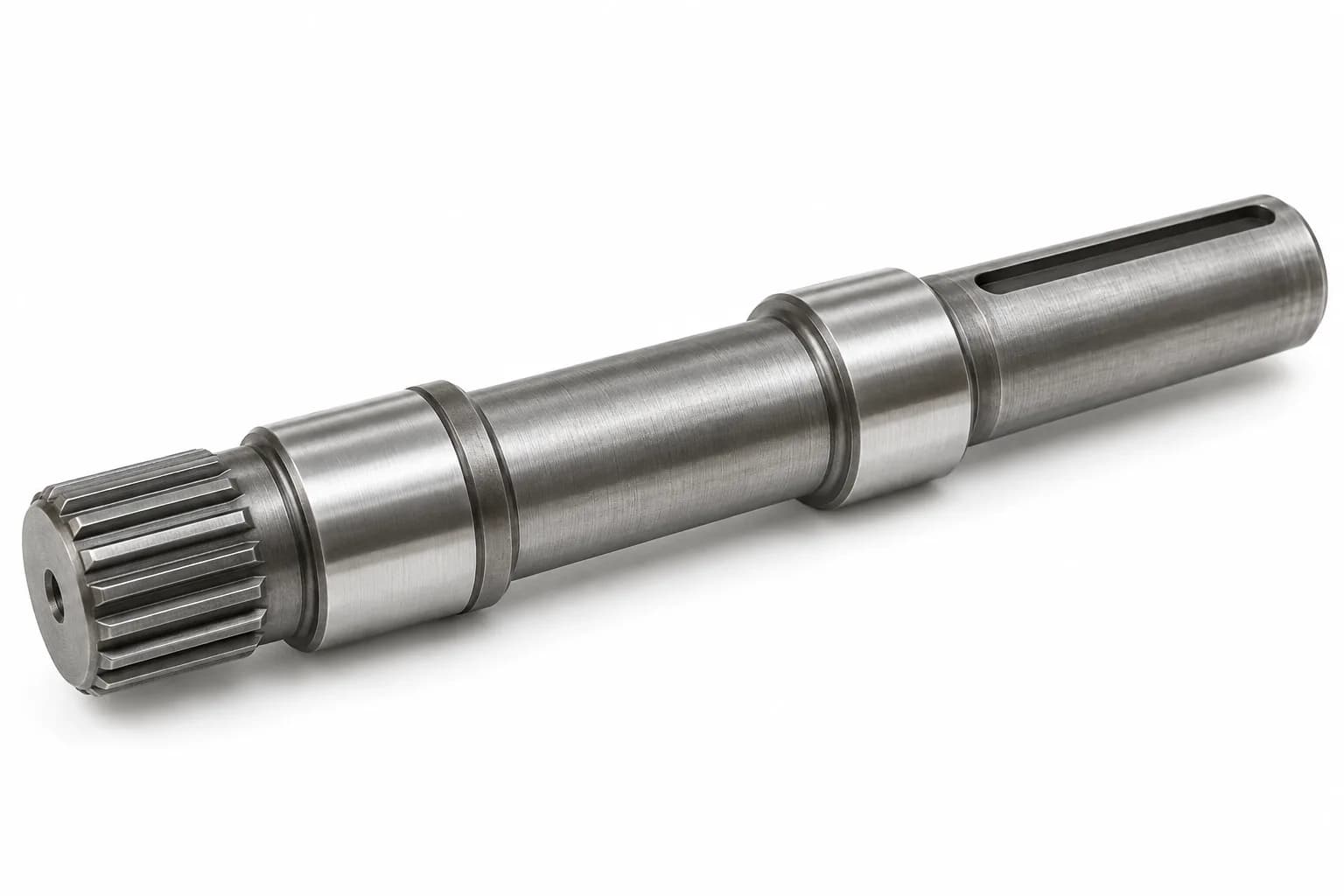
Carbon Steel Transmission Shafts with drawing-specific machined geometry on white

Carbon Steel Transmission Shafts

Keyways, splines and connection features transfer torque between components. Review tooth or key standards, angular orientation, section strength and fatigue at feature roots rather than considering the outside diameter alone.

Explore this shaft type →
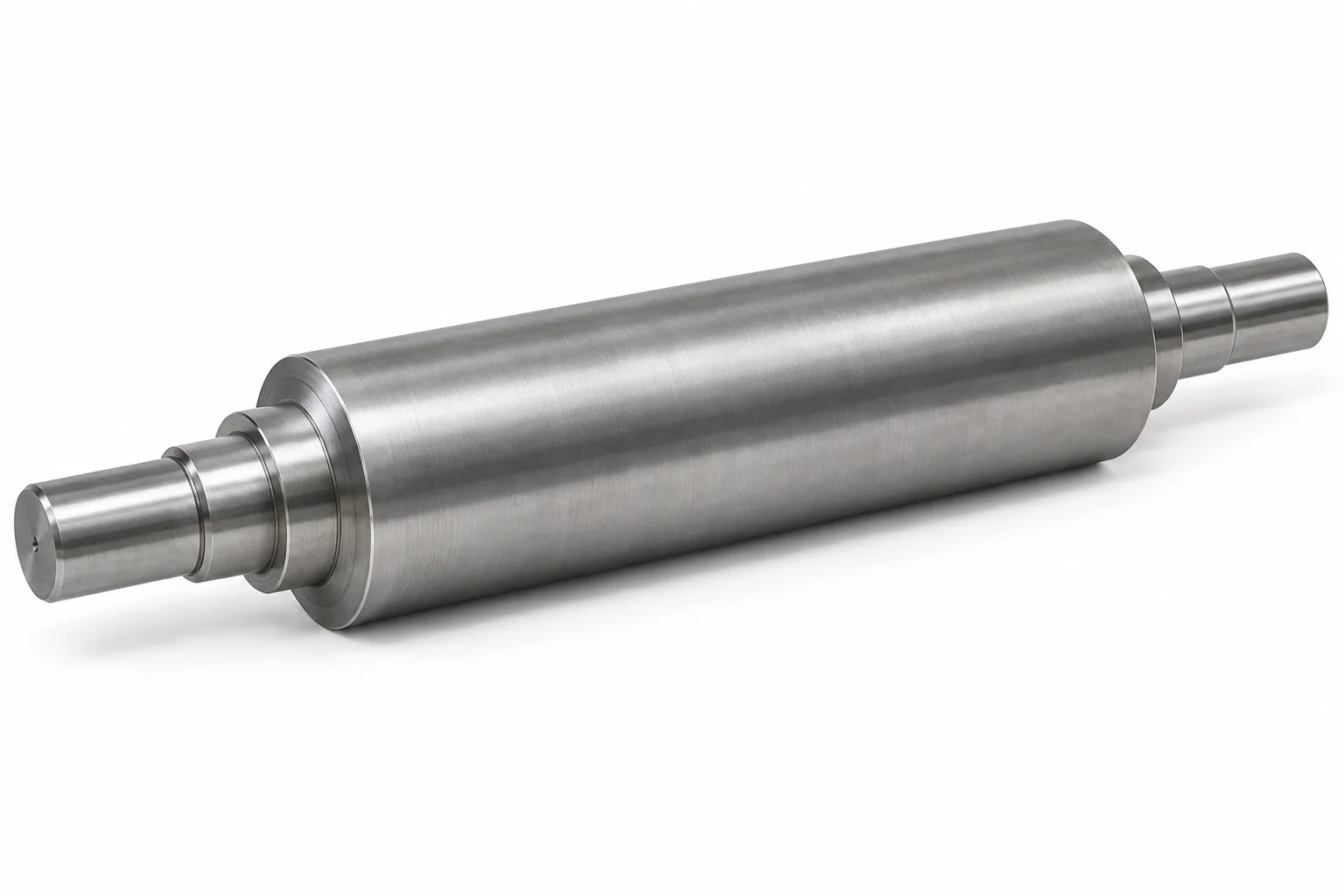
Carbon Steel Roller Shafts with drawing-specific machined geometry on white

Carbon Steel Roller Shafts

Conveyor, material-handling and machine rollers may need long bodies with reduced end journals. Support spacing, straightness and bearing fits should reflect the loaded installation, including stationary loads and the actual duty cycle.

Explore this shaft type →
Hollow Carbon Steel Shafts with drawing-specific machined geometry on white

Hollow Carbon Steel Shafts

Internal bores can provide a passage or reduce mass where the design allows. Review minimum wall thickness, bore access, bore-to-journal relationships and stock choice before committing to a hollow geometry.

Explore this shaft type →
Threaded Carbon Steel Shafts with drawing-specific machined geometry on white

Threaded Carbon Steel Shafts

Threaded ends and assembly connections require specified thread form, fit and relief. Identify burr-sensitive edges and whether coating or heat treatment affects final thread dimensions, engagement or adjacent bearing surfaces.

Explore this shaft type →

Which Carbon Steel Grade Is Best for Shaft Manufacturing?

Swipe horizontally to read all columns.

Carbon steel shaft grade selection: 1018, 1020, 1045, C45, 1050 and 1060
GradeCharacteristicsTypical shaft applications
AISI 1018Low-carbon steel with useful machining and forming characteristics.Light-duty shafts, pins and general mechanical components; review surface-hardening needs separately.
AISI 1020Low-carbon grade with useful machinability and weldability in appropriate conditions.General-purpose shafts and low-to-moderate loads; confirm welding and treatment requirements.
AISI 1045Medium-carbon steel with greater strength and hardening response than typical low-carbon grades, depending on condition.Motor shafts, rollers and transmission components; a common starting point for industrial shaft review.
C45 / EN 1.0503European medium-carbon steel broadly comparable to 1045, but governed by the specified standard and condition.Industrial shafts and mechanical drive components; substitutions require technical approval.
AISI 1050Medium-carbon grade with greater carbon content than 1045.Selected shafts needing grade-specific hardness and strength, with toughness and section size considered.
AISI 1060Higher-carbon grade with increased hardening potential under a suitable process.Wear-sensitive components where toughness, cracking risk and the required treatment are evaluated carefully.

AISI 1045 and C45 are broadly comparable, not automatically interchangeable under every standard, composition limit or certification requirement. Specify the required standard and condition, and approve substitutions explicitly.

Material references and scope

Ovako's C45 material data provides manufacturer background and similar designations. Bodycote's carburising explanation describes a case-hardening route for suitable low-carbon steels. Use the selected material specification and agreed process for acceptance; these references do not establish Topshaft inventory, qualified treatments or guaranteed properties.

How Does Topshaft Manufacture Carbon Steel Shafts?

Turning, secondary features, treatment and final inspection are planned as one route for the selected carbon steel grade.

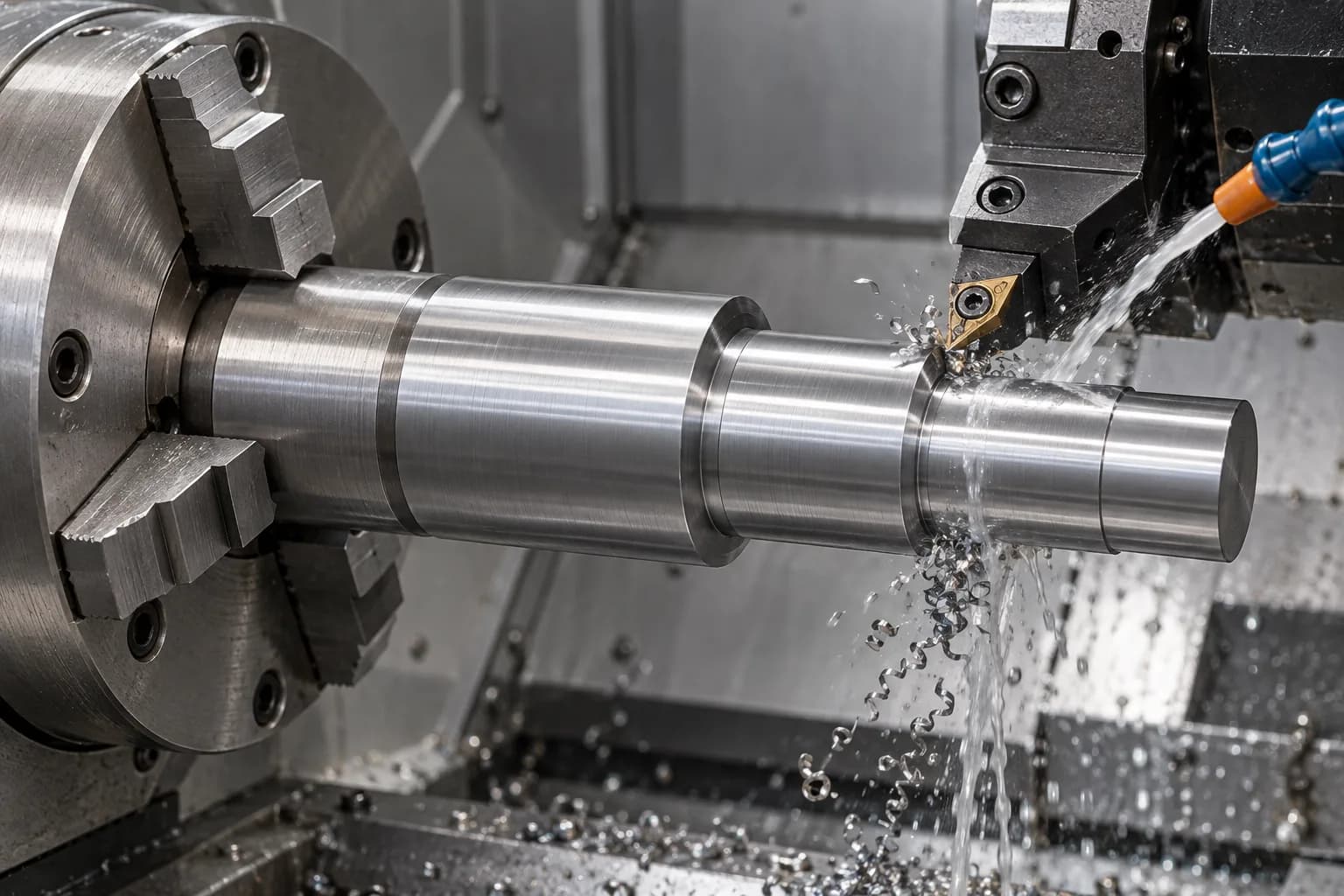
CNC Turning setup for a finished steel shaft

CNC Turning

Turning establishes external diameters, shoulders, grooves, threads and bearing seats. Stock condition, machining allowance and support influence the sequence. A CNC machined steel shaft may need separate roughing and finishing stages, especially when subsequent heat treatment can change its geometry.

Related manufacturing information →
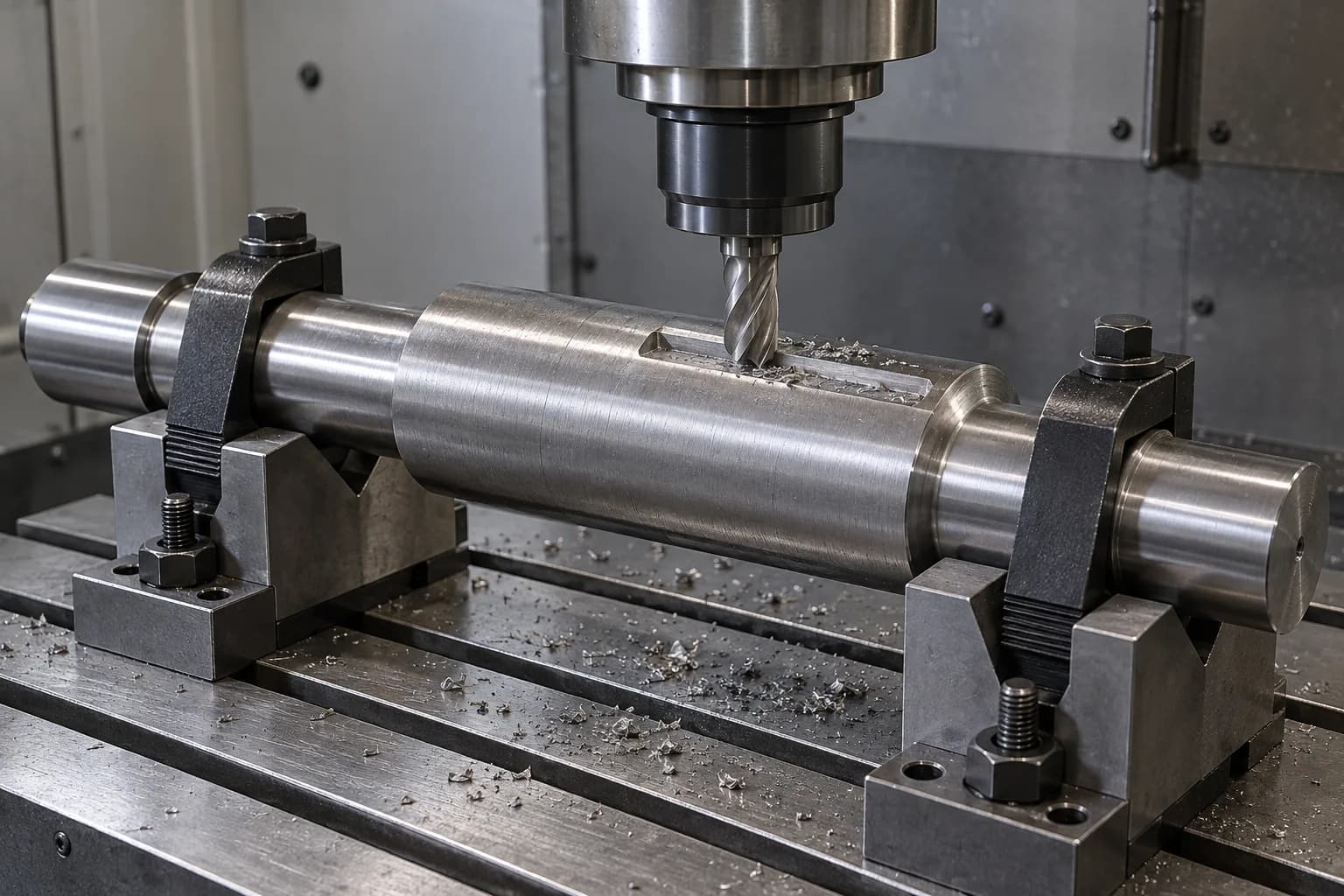
CNC Milling setup for a finished steel shaft

CNC Milling

Secondary machining adds keyways, flats, slots, cross holes and special profiles. Locate these features from the functional journals or other agreed datums. Tool access, edge breaks and burr removal are planned so that the finished connection can be assembled and checked.

Related manufacturing information →
Precision Grinding setup for a finished steel shaft

Precision Grinding

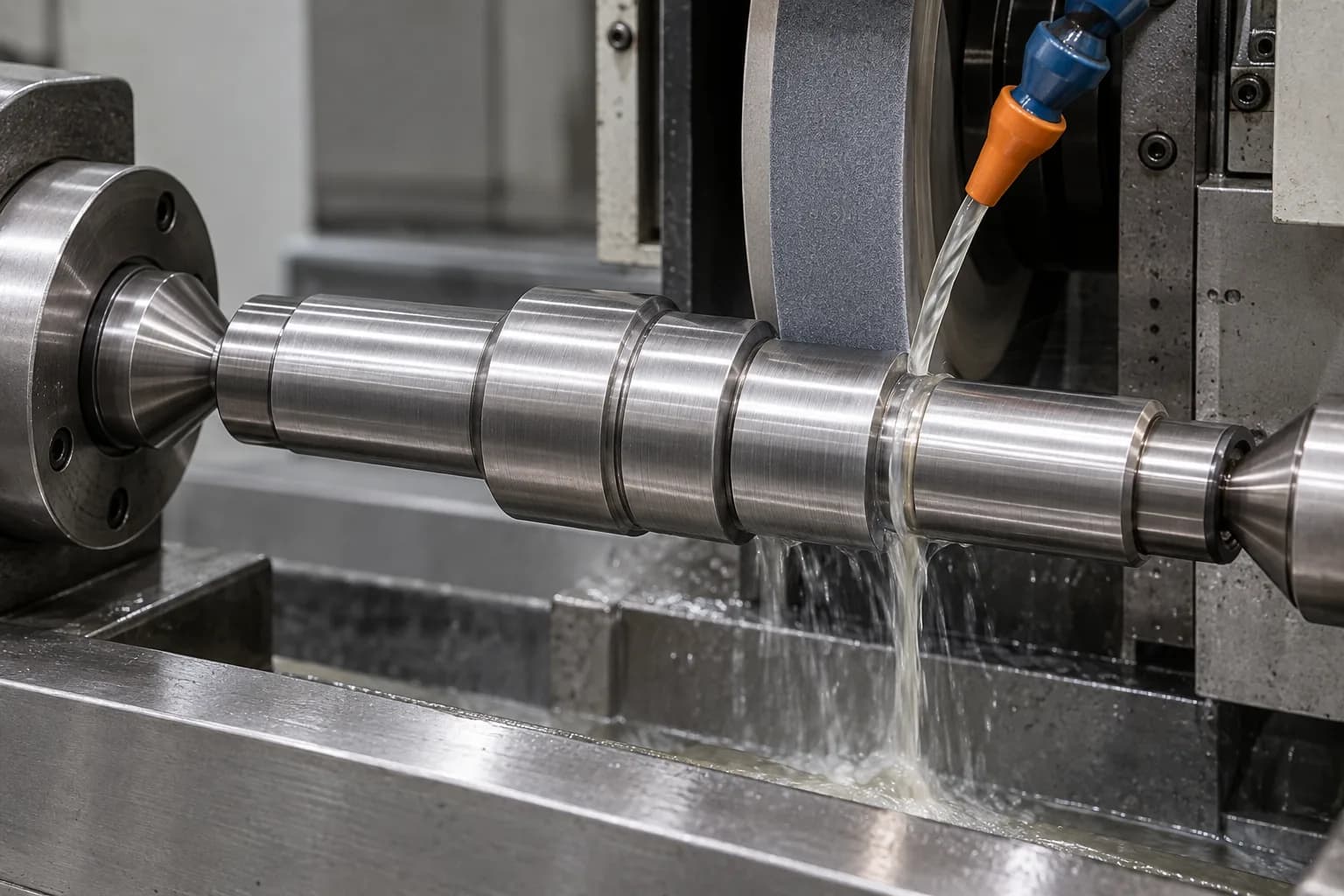
Grinding is evaluated for bearing journals and functional diameters needing tighter dimensional or surface control. Confirm the material condition, grinding allowance and datum relationship. A ground steel shaft must satisfy the specified geometry and roughness, not merely have a polished appearance.

Related manufacturing information →
Steel shaft on V-blocks with a journal indicator and inspection tool

Quality Inspection

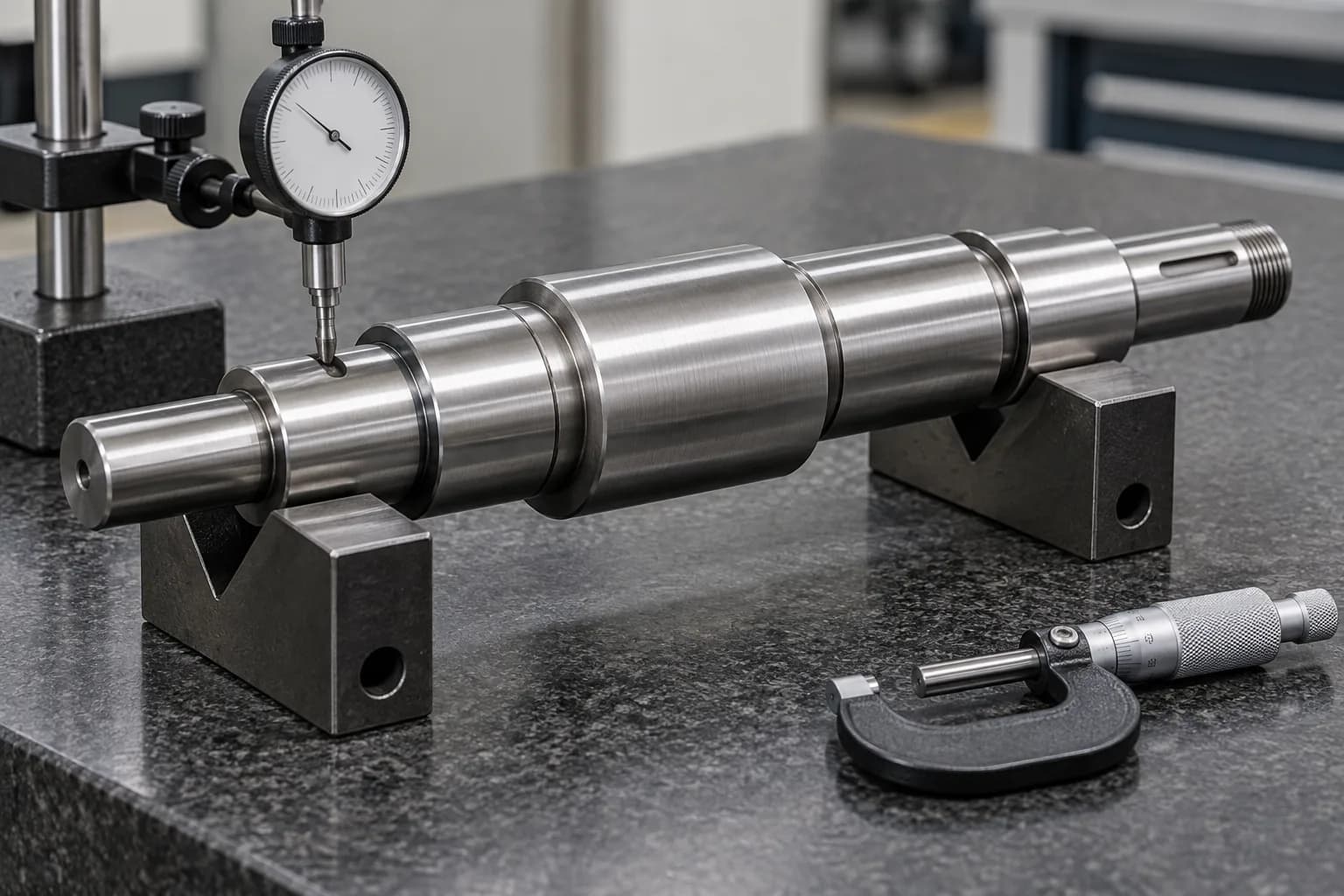
Inspect critical dimensions, runout, straightness and surface finish using suitable methods. Treatment and finishing can alter results, so the release condition follows the agreed complete route. Hardness or case requirements need their own checking criteria rather than being inferred from dimensional results.

Related manufacturing information →

Heat Treatment Options for Carbon Steel Shafts

Treatment affects performance, cost and dimensional accuracy. These processes are not equally appropriate for every grade.

Swipe horizontally to read all columns.

Carbon steel shaft heat treatment and hardening options
ProcessPurposeEngineering considerations
NormalizingRefine microstructure and obtain a more uniform condition.Consider grade, stock and subsequent operations; thermal processing can change final dimensions.
Quenching and temperingAdjust strength, hardness and toughness.Response depends on chemistry, section size and process; do not assume uniform through-hardness.
Induction hardeningIncrease surface hardness in selected regions.Relevant to suitable medium-carbon steels such as 1045; define treated zones, case criteria and transitions.
Stress relievingReduce residual stresses where the route requires it.May be considered before precision finishing; confirm compatibility with the required material condition.
CarburizingProduce a hardened case on suitable low-carbon steels through a specified treatment route.Evaluate grade, case depth, subsequent hardening and distortion; it is not interchangeable with induction hardening.
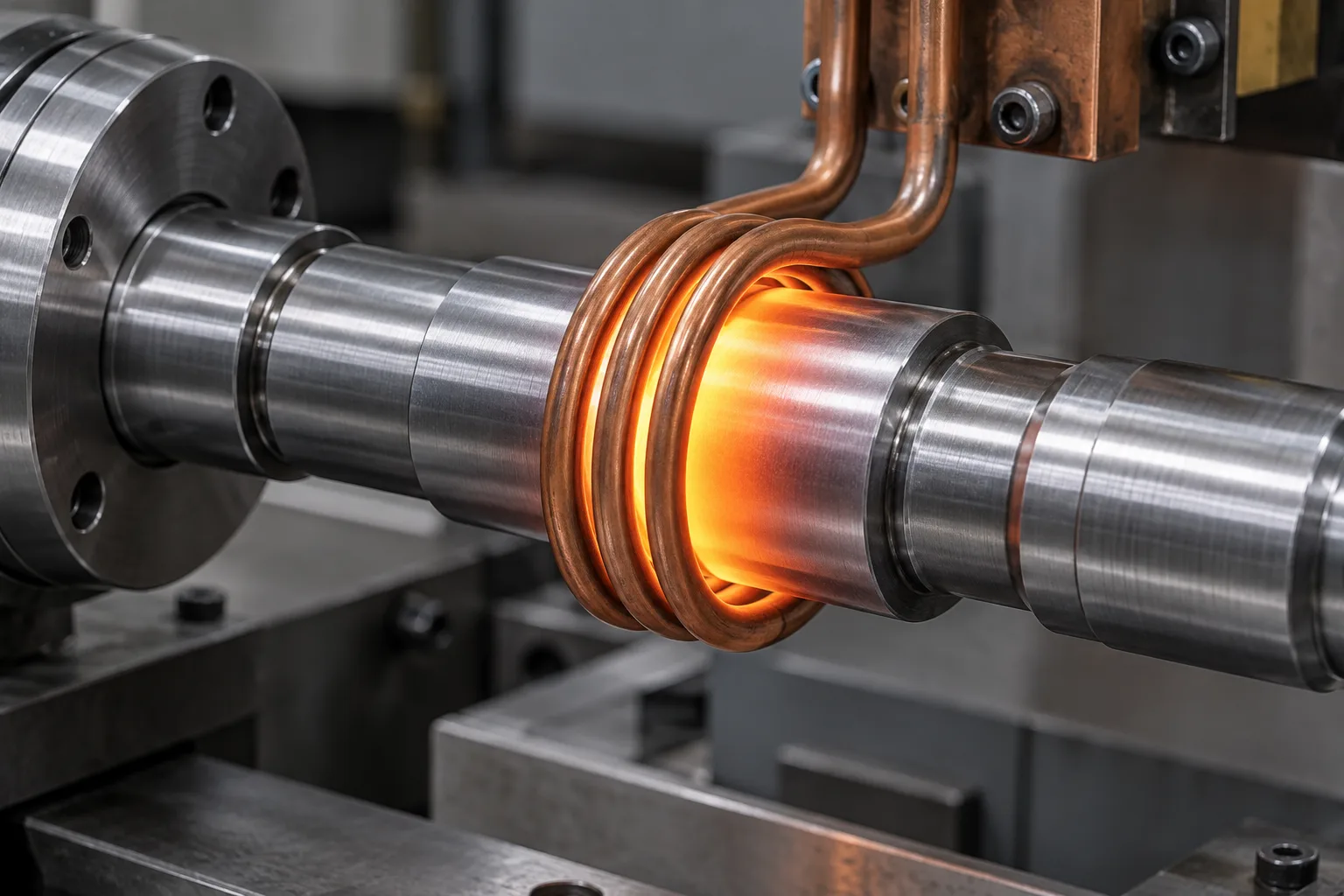
Localized journal heating within a copper induction coil on a steel shaft

Match the Hardened Region to Its Function

A hardened carbon steel shaft should specify more than a surface-hardness number. Identify the required region, hardness criterion, case-depth definition where relevant and the relationship to the core. Review distortion, transitions and finishing allowance with the treatment route.

1045 is a common candidate for induction hardening; suitable low-carbon steels are more commonly associated with carburizing when a hardened case is needed. Neither statement authorizes a treatment substitution without checking the complete drawing.

Precision Grinding and Surface Finishing for Carbon Steel Shafts

Cylindrical grinding & polishing

Functional journals may require grinding and appropriate polishing after treatment. Define diameter limits, roundness, roughness and the relevant datums. Excessive material removal or uncontrolled heat must not compromise the specified hardened layer or surface integrity.

Deburring & protective finishes

Deburring protects assembly interfaces and removes loose edges. Black oxide, zinc plating or another specified protective finish can be reviewed for the actual environment. Carbon steel generally needs suitable corrosion protection when exposed to moisture or corrosive conditions.

Fit after coating

Coating thickness can change bearing fits, threads, grooves and other interfaces. State whether drawing dimensions apply before or after finishing, identify masking areas and agree any required verification. Review treatment compatibility and additional process controls for hardened or high-strength parts.

Carbon Steel Shaft Manufacturing Specifications

Swipe horizontally to read all columns.

Carbon steel shaft manufacturing specifications and tolerances
SpecificationDrawing-based requirement
Material grades1018, 1020, 1045 / C45 and other drawing-specified grades; sourcing confirmed.
Shaft diameterConfirmed according to drawing, stock and machine capacity.
Shaft lengthConfirmed after geometry, support and slenderness review.
TolerancesDrawing-specific and subject to manufacturing feasibility.
Surface roughnessDefined for functional surfaces with a suitable checking method.
HardnessSpecified according to grade, heat-treatment condition and measurement location.
Geometric tolerancesRunout, straightness, roundness and coaxiality according to the drawing.
Surface protectionBlack oxide, plating or another specified treatment, subject to review.
Production quantitiesPrototype, low-volume and repeat production; quantity and timing confirmed individually.

Do not interpret one tolerance figure as a guarantee for every shaft size and treatment. Confirm the drawing, material condition, finishing sequence and inspection method before accepting critical limits.

What Should Engineers Consider When Designing Carbon Steel Shafts?

Torque, bending and fatigue

Consider the combined load history, not only a maximum static torque. Starts, stops, reversals and rotating bending can govern fatigue performance. The appropriate material condition, section and safety factors depend on the actual application.

Shoulders, keyways and grooves

Local stress concentrations can govern failure even when nominal stress appears acceptable. Define fillets, reliefs and keyway geometry with mating-part clearance in mind. Avoid treating a sharp transition as equivalent to a smooth circular test section.

Bearing fits and surface hardness

Specify journal fits, axial locating faces and datum relationships. A hard surface may improve resistance to a particular wear mechanism, but it does not replace adequate core support, lubrication or contact design. Agree hardness location and case acceptance criteria.

Corrosion and thermal distortion

Allow for protective finishing, masking and the environment over the intended life. Heat treatment can change straightness and size; the route may need allowance, intermediate checks and final grinding rather than attempting every final dimension before hardening.

How Does Shaft Diameter Affect Torque Capacity?

For a solid circular shaft under pure torsion, the maximum nominal shear stress at the outer surface is:

τmax = 16T / (πd3)

Here, T is torque and d is shaft diameter. Use consistent units: torque in N·mm and diameter in mm give stress in N/mm² (MPa). At constant torque, reducing diameter increases nominal stress in inverse proportion to diameter cubed.

This relationship applies to an ideal solid circular section, not automatically to hollow shafts, keyways or shoulders. Actual design also needs bending, fatigue, stress concentrations, material condition and applicable safety factors; the formula alone is not an allowable-torque rating.

Industrial Applications of Carbon Steel Shafts

Typical application directions, subject to project review; not a claim of specific delivered projects or approvals.

A carbon steel transmission shaft or motor shaft should be specified for its operating environment as well as its torque path. Common material use does not remove the need for application-specific acceptance and documentation.

Carbon Steel vs Alloy Steel vs Stainless Steel Shafts

Swipe horizontally to read all columns.

Carbon, alloy and stainless steel shaft material comparison
ComparisonCarbon steelAlloy steelStainless steel
Typical costGenerally lower.Grade- and condition-dependent.Often higher, depending on grade.
StrengthModerate to high depending on grade and condition.Wide range, including high-strength grades.Grade- and condition-dependent.
Corrosion resistanceGenerally limited without appropriate protection.Generally limited without appropriate protection.Often better; environment and grade still matter.
Heat-treatment optionsGrade- and section-dependent.Broad for suitable grades and conditions.Strongly grade-dependent; not one common route.
Common applicationsGeneral industrial machinery and power transmission.Higher-load or more demanding duty when justified by design.Corrosion-sensitive equipment and specified environments.

This page focuses on 1018, 1020, 1045 / C45 and related carbon grades. For 4140, 4340, 42CrMo and other alloy-steel directions, compare the separate material guide rather than treating all steels as one category.

How Does Topshaft Ensure Carbon Steel Shaft Quality?

Dimensions and functional geometry

Check bearing journal diameters, overall length, shoulder locations and keyway dimensions. Evaluate runout and straightness against defined datums and supports; inspect roundness and roughness where the drawing requires them.

Hardness and final condition

Specify hardness scale, locations and acceptance limits, together with case-depth or treated-zone requirements when applicable. Final dimensional acceptance should reflect all specified thermal and finishing processes, including coating effects on fits.

Material and inspection records

Material certificates, first-article inspection records and other reports are supplied where available and agreed before quotation. Define heat / lot identification and document scope. A general grade name or image cannot establish compliance for a particular delivered shaft.

Why Choose Topshaft for Custom Carbon Steel Shafts?

Drawing-based technical review

Link the functional geometry to grade, treatment and inspection requirements before confirming the route. Resolve critical fits and ambiguous acceptance criteria early.

Turning and secondary machining

Coordinate rotational surfaces, keyways, threads and other features around the shaft's functional datums rather than treating every operation as a disconnected component.

Grade-specific treatment planning

Review heat-treatment coordination, allowance and finishing sequence for the actual material. Do not promise the same hardening response or distortion control for every steel.

Prototype to repeat production

Use the agreed drawing revision, sample feedback and inspection scope to establish repeat requirements. Availability, quantities, documentation and delivery are confirmed for the individual order.

TOPSHAFT is the precision shaft manufacturing division of Dongguan Tops Precision Manufacture Co., Ltd., operating alongside Topsbest Precision for shaft-focused OEM projects. Review our company information and request the process or inspection evidence needed for supplier evaluation.

Custom shaft manufacturing →

Technical FAQs About Carbon Steel Shafts

01

What carbon steel grade is commonly used for shafts?

1045 and broadly comparable C45 are common starting points for industrial shaft selection because their medium-carbon composition supports useful strength and hardening response. Low-carbon 1018 and 1020 can suit other duties. Choose the specific standard, supplied condition and treatment against load, wear and manufacturing needs. AISI 1045 and C45 should not be substituted automatically without approval.

02

Is 1045 steel suitable for motor shafts?

1045 steel can be suitable for motor shafts when the design, condition and processing meet the application. Review rotor attachment, bearing fits, coupling features, fatigue, surface hardness and corrosion protection. A 1045 steel shaft is not inherently qualified for every motor speed or load; the final geometry and treatment must support the actual assembly and operating requirements.

03

What is the difference between 1045 and 4140 shafts?

1045 is a medium-carbon steel, while 4140 is a chromium-molybdenum alloy steel with a different hardenability and property profile. In suitable conditions, 4140 can be considered for more demanding sections or duty, but it is not automatically necessary or superior for every shaft. Compare grade, section size, heat treatment, toughness, fatigue, cost and the complete specification.

04

Can carbon steel shafts be induction hardened?

Suitable carbon steel grades can be induction hardened in selected areas; medium-carbon 1045 is a common candidate. The result depends on chemistry, section, prior condition and the qualified process. Specify treated regions, hardness and case criteria, transitions and the final inspection state. Low-carbon grades may instead need a suitable carburizing route when a hardened case is required.

05

What tolerances can be achieved on CNC-machined carbon steel shafts?

Achievable tolerances are confirmed for the actual drawing, material, size, treatment and inspection method. Critical bearing fits may need controlled finishing or grinding after hardening. Separate dimensional limits from geometric requirements and roughness, and identify which features share a datum axis. A universal tolerance figure cannot reliably describe every precision carbon steel shaft.

06

Do carbon steel shafts require surface protection?

Carbon steel generally needs suitable protection when moisture or corrosive exposure can cause rust or impair function. The appropriate solution may involve a specified protective finish, lubrication, packaging or another material. Review the environment and functional interfaces. Black oxide or zinc plating should not be assumed equivalent, and coating thickness must be included when defining final fits and threads.

07

Can Topshaft manufacture custom carbon steel shafts from drawings?

Topshaft reviews drawings for custom carbon steel shaft manufacture using turning, secondary machining, heat-treatment coordination and appropriate finishing. Send the material specification, quantity and critical requirements so feasibility and sourcing can be confirmed. Prototype and repeat-production support follow the agreed project scope; a drawing-based review is more useful than selecting solely from a product photograph.

08

What information is required for a carbon steel shaft quotation?

A carbon steel shaft supplier needs your drawing revision, material grade, quantity, heat treatment, hardness, critical tolerances, surface finish, inspection requirements and delivery expectations. Include operating loads and environment if material or process selection is unresolved. Identify final dimensions after coating or treatment and required records, so the quotation addresses the finished shaft rather than only the machining blank.

Finished Shafts Made to Your Drawing

Get a Quote for Custom Carbon Steel Shafts

Send the drawing, grade, quantity, heat treatment, hardness, critical tolerances, surface finish, inspection requirements and delivery expectations. We review the complete finished-part requirement before confirming feasibility and quotation.

Finished steel journal shafts with a keyed end and external thread on white
Contact our team →

Carbon Steel Shaft Drawing Review

Fields marked * are required.

Your inquiry and drawing are sent through our existing FormSubmit email service to info@tops-precision.com. For larger files, email us directly.