
How to Choose a Shaft Material: Corrosion, Wear, Heat Treatment and Cost
Choosing a shaft material is not simply a line-item purchasing decision. The material affects how a part is turned, milled, heat treated, ground, coated, inspected and assembled. It also affects whether critical dimensions remain stable after processing and whether the finished shaft performs reliably in its real operating environment.
For an OEM buyer or engineer, the useful question is not only, “Which material grade should we use?” It is, “What must each functional area of this shaft do, under what conditions, and how will we verify the result?” A correct answer links material selection to torque, bending load, rotational speed, wear, corrosion, mating interfaces, dimensional tolerance and required records.
This guide provides a practical way to select or review a material requirement before releasing a drawing or sending an RFQ for a custom precision shaft.
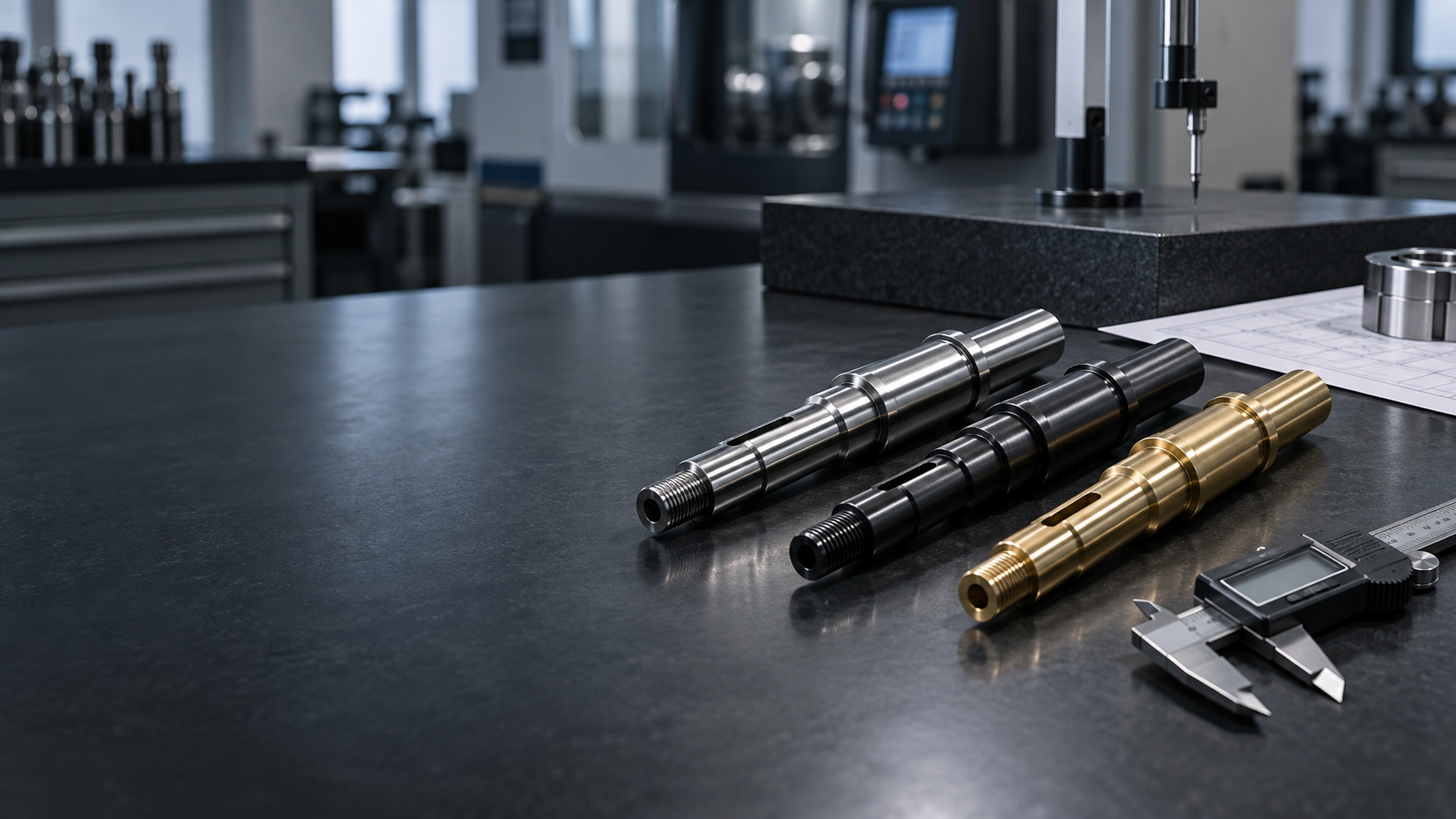
Start With Shaft Function, Not a Familiar Grade
Many shaft drawings begin with a material that has been used successfully on an earlier part. That can be a reasonable starting point, but it is not proof that the same grade is right for a new geometry, environment or production route. A long slender shaft, an integral gear shaft, a hollow shaft and a high-speed motor shaft can have very different priorities even when they look similar in a CAD model.
Break the component into its functional zones. A shaft may include bearing journals, press-fit diameters, seal lands, splines, threads, keyways, flange faces, gear teeth and non-functional body areas. Each zone can experience a different combination of contact stress, wear, corrosion exposure and geometric control.
For example, a bearing journal may need a controlled fit, low runout and a suitable final finish. A spline may need adequate tooth strength and wear resistance. A threaded end may need toughness, corrosion protection or a plating-compatible condition. A non-contact body diameter might only need normal machining and safe edge break. Applying one broad material or finish requirement to every feature can increase cost while still leaving critical interfaces unclear.
Begin with the assembly role. Ask where torque enters and exits, what surfaces locate mating components, which zones rotate against seals or bearings, and where a change in hardness or coating thickness could influence fit. The more clearly those questions are answered on the drawing, the easier it is to choose a practical manufacturing route.
Define the Real Operating Environment
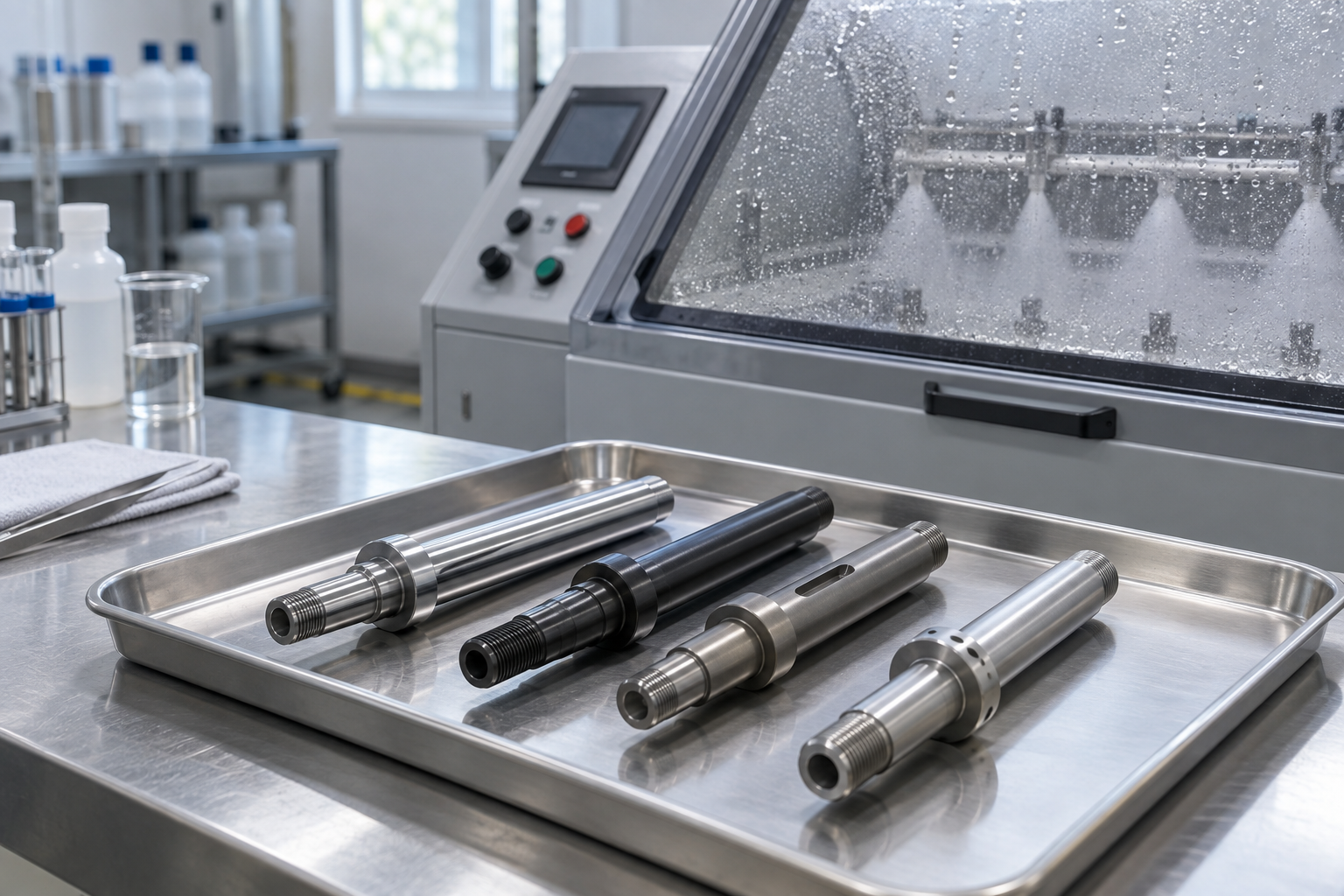
The environment often determines whether corrosion resistance is a primary requirement or only a secondary consideration. “Indoor use” is not always enough information. A shaft inside a clean, enclosed motor has different exposure from one used in food handling, outdoor machinery, washdown equipment, coastal service, pumps or chemical-processing equipment.
Before selecting a grade or coating, define the actual conditions:
- Moisture and washdown. Will the part see condensation, frequent cleaning or standing water?
- Chemical contact. What fluids, cleaning agents, lubricants, fuels or process chemicals may reach it?
- Temperature. Does operating temperature change material strength, lubricant behaviour, treatment selection or dimensional stability?
- Contamination. Could abrasive dust, slurry, fibres or metal particles accelerate wear?
- Storage and transport. Is temporary corrosion protection needed before assembly or export?
- Maintenance access. Can the shaft be replaced easily, or does downtime make corrosion prevention more valuable?
Stainless steels can be suitable for many moisture-related applications, but “stainless” is not a complete requirement. Grade selection, heat treatment, machining response, strength and mating-part compatibility still need review. In less aggressive environments, an alloy steel combined with a suitable coating or treatment may be a more practical solution. The correct choice depends on the exposure, expected life and the surfaces that need to remain functional.
If coating, plating or black oxide is being considered, identify which surfaces may be treated, masked, protected or finished afterward. A general corrosion-resistance note does not explain whether a bearing seat, a seal land or a press fit must meet a final dimensional condition after the treatment.
Evaluate Strength, Stiffness and Fatigue Together
Material strength matters, but it is only one part of shaft behaviour. A shaft transfers torque, resists bending, supports rotating components and may experience repeated load cycles. Diameter, unsupported length, shoulder geometry, keyways, splines, threads and transitions can all influence stress concentration and fatigue performance.
A high-strength material may be useful where torque, bending or compact geometry creates higher stress. However, strength alone does not guarantee a robust design. A sharp transition, poorly specified relief, insufficient fillet radius or unsuitable surface condition can create a local fatigue risk even when the material grade has high nominal properties.
For higher-speed or longer rotating shafts, stiffness, straightness, runout and mass distribution may deserve as much attention as tensile strength. If the shaft is part of a motor or drive system, include operating RPM, balance requirements and bearing arrangement in the review. Material selection should support the complete mechanical system rather than be chosen in isolation.
When an application has severe cyclic loading, document the operating duty, peak load and load direction wherever possible. A manufacturer can then review whether material condition, heat treatment and critical feature geometry are aligned with the design intent. This is particularly useful for shafts with splines, gear teeth, cross holes, threads or reduced-diameter sections.
Specify Wear Resistance at the Functional Surface
Wear rarely affects an entire shaft equally. It tends to occur at contact zones such as bearing journals, seal-running surfaces, splines, gear teeth, sliding diameters and locating fits that are repeatedly assembled or disassembled.
The material decision should therefore be linked to the surface that performs the work. For a bearing journal, the required hardness, diameter tolerance, roundness, runout and surface condition should be reviewed together. For a gear or spline interface, contact loading, mating material, lubrication and possible surface treatment may matter. For a seal land, the final finish, hardness, coating condition and machining lay can be more important than a bright visual appearance.
Our guide to bearing journal specifications explains why diameter and surface condition cannot be considered separately. Likewise, shaft surface-finish specification should be tied to the actual functional interface rather than copied as a general note across the entire part.
Avoid calling for a treatment simply because it is familiar. State the result that matters: required hardness range, treated depth where relevant, final roughness, dimensional condition after treatment, and inspection evidence. This gives the manufacturer a clearer basis for selecting a feasible route.
Heat Treatment Can Change Dimensions and Process Order
Heat treatment can improve hardness, strength, toughness or wear resistance. It can also introduce distortion, change machining response and affect the stock allowance needed for final finishing. That is why heat-treatment requirements should be reviewed at the same time as tolerance, runout and surface-finish requirements.
For a critical shaft, clarify whether the drawing dimensions apply before treatment, after treatment or at both stages. If a journal must meet a final fit after hardening, determine whether it needs grinding or another finishing process. If a coating is applied after machining, identify whether the final diameter includes the coating and whether selected areas must be masked or post-finished.
The drawing should ideally state:
- Material grade or permitted material alternatives
- Required heat-treatment type and final hardness range
- Case depth, treated zone or localised treatment area when applicable
- Critical dimensions after treatment or coating
- Grinding, polishing or machining required after treatment
- Surface finish for functional zones
- Required material certificates, hardness records or inspection reports
Heat treatment should not be treated as an isolated supplier instruction. It is part of the complete manufacturing sequence. Discuss it early through a materials and requirements review, especially when tight geometry must be held after treatment.
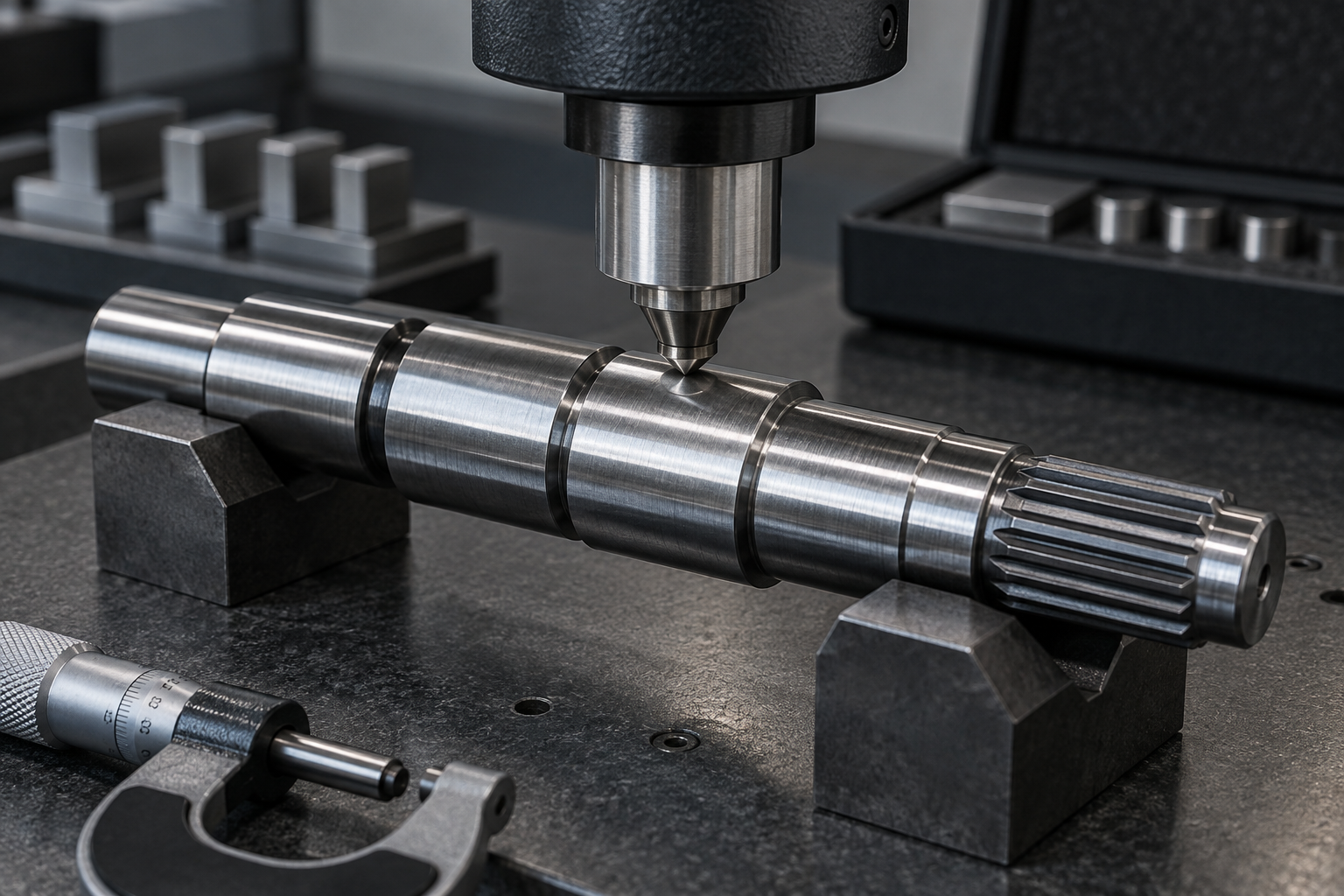
Compare Total Manufacturing Cost, Not Raw-Material Price Only
The lowest raw-material price does not always produce the lowest total component cost. A less suitable material can increase cycle time, tool wear, grinding requirements, distortion risk, inspection complexity and scrap exposure. It can also lead to a coating or treatment route that complicates critical fits.
When comparing alternatives, consider the complete route:
- Availability and batch consistency of the chosen material
- Machinability for turning, milling, drilling, broaching or grinding
- Need for heat treatment, coating or post-process finishing
- Dimensional movement and allowance after treatment
- Inspection method for hardness, runout, dimensions and finish
- Quantity, repeatability and expected production stage
- Required documentation, traceability and packaging protection
For prototype work, a route that gives fast technical feedback may be more useful than one optimised only for high-volume cost. For repeat production, stability and inspection planning may become more important. Include forecast quantity and programme stage in your RFQ so material and process choices can be reviewed on the right basis.
Build the Material Requirement Into the RFQ
The best time to resolve material uncertainty is before quotation or production. A complete precision shaft RFQ checklist reduces the risk that suppliers quote different assumptions for the same part.
Send the following information where available:
- A current 2D drawing, plus 3D model if available
- Application, operating environment and mating-component details
- Torque, load, RPM, duty cycle and any important operating temperature
- Material grade, permitted alternatives and required condition
- Heat-treatment, coating, hardness and corrosion-protection needs
- Critical dimensions, GD&T, runout, straightness and surface-finish callouts
- Features needing final grinding, masking, protection or special inspection
- Quantity, prototype or repeat-production stage, and delivery expectation
- Required material certificates, hardness records or final inspection reports
Do not assume every requirement needs to be tightened. The goal is to state the characteristics that affect the assembly and leave non-functional surfaces practical. Clear requirements help a manufacturer quote a route that is both technically appropriate and commercially realistic.
A Practical Decision Path
Use this sequence when reviewing a new shaft design:
- Identify the functional interfaces and operating environment.
- Determine the loading, speed and wear risks for each critical zone.
- Select a material family that supports those conditions.
- Decide whether treatment, coating or final grinding is required.
- Define final dimensions, finish and inspection after the full route.
- Include documentation and quantity requirements before quotation.
This process does not replace application-specific engineering or material standards. It gives the sourcing and manufacturing conversation a clearer starting point. Where a specific grade, treatment or corrosion requirement is critical, it should be confirmed against the assembly design and relevant engineering guidance.
FAQ
Is stainless steel always the best material for corrosion resistance?
No. Stainless grades behave differently, and corrosion resistance is only one requirement. Strength, wear, machinability, cost, treatment options and the operating environment all need review. In some applications, an alloy steel with a suitable protective system may be appropriate.
Can heat treatment affect shaft runout or bearing fits?
Yes. Heat treatment can influence dimensional stability. Critical journals, bores and locating diameters may need allowance and final finishing after treatment. State the final dimensional requirement and agree the inspection approach before production.
Should every shaft use the same material certificate requirement?
No. Certification and traceability should match the project requirement. If a material certificate, heat-lot information, hardness report or customer-specific record is required, specify it clearly in the RFQ.
Can a supplier recommend a material alternative?
Yes, but the alternative should be reviewed against function, environment, processing route and customer requirements. A material substitution should not be assumed without agreement.
Ready To Review Your Shaft Material Requirement?
Send your drawing and requirements with the application, operating environment, material preference, treatment condition, critical interfaces and quantity. TOPSHAFT can review the information needed for a practical drawing-based manufacturing discussion.