
Drawing Revision Control for Custom Shafts: An OEM Engineering Change Checklist
A custom shaft can match its drawing and still be wrong for your assembly. This happens when the supplier manufactures the correct geometry from an outdated revision.
The difference may be difficult to notice. A bearing shoulder moves slightly. A thread requirement changes. A relief groove gains a new restriction. The part number stays the same, but the requirements no longer do.
For OEM purchasing and engineering teams, drawing revision control connects the approved design with the quotation, purchase order, manufacturing instructions and inspection evidence. It also determines what happens to material and parts already in production when you issue a change.
You do not need an unnecessarily complicated system. You need an identifiable requirement baseline, clear approval authority and a documented transition between revisions.
This guide explains how to manage that transition for custom shaft orders.
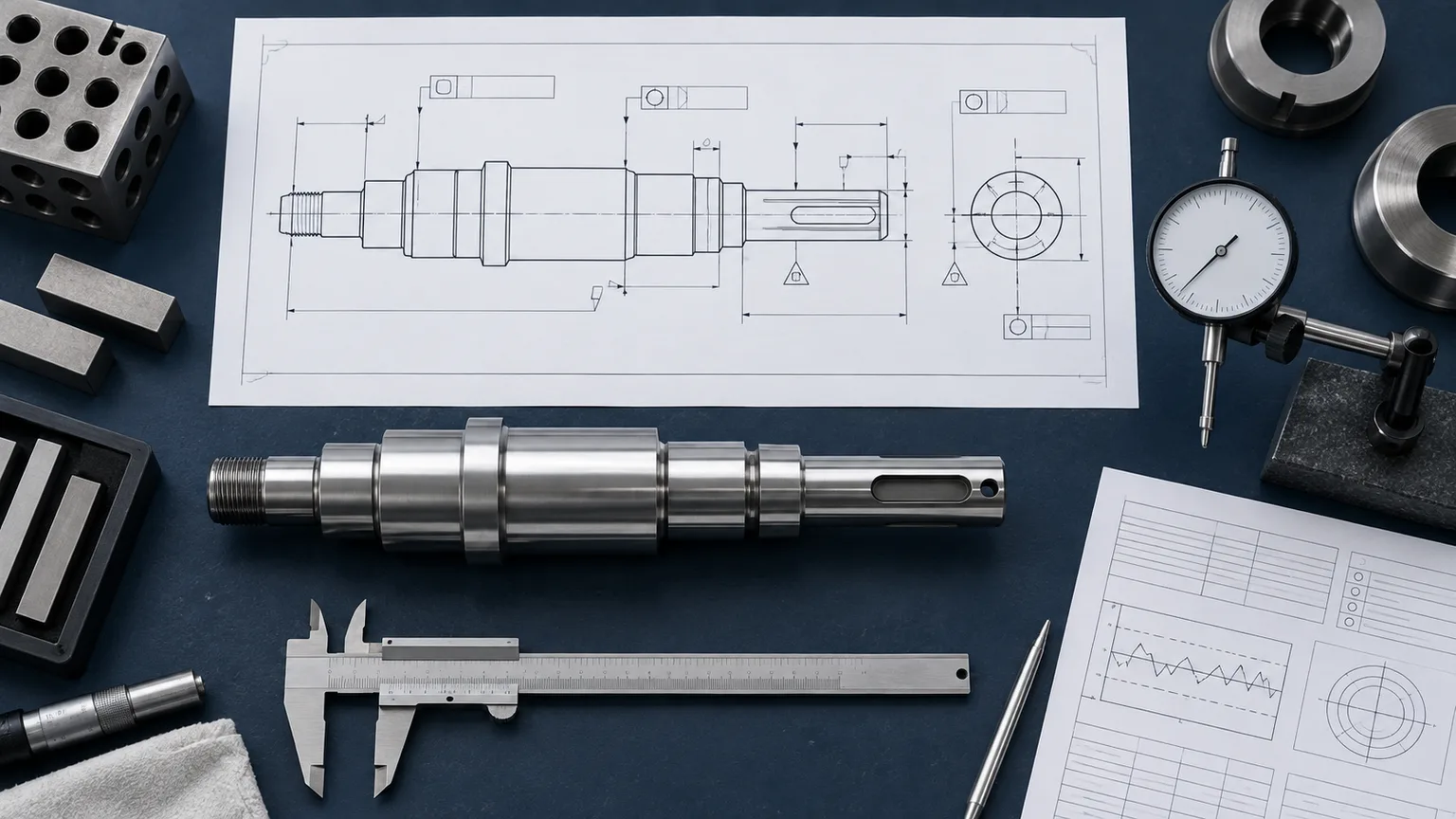
Illustration: keep the shaft, drawing and supporting records connected. The depicted drawing is not a manufacturing specification.
1. Establish the Requirement Baseline Before Ordering
Start by identifying the complete set of documents that defines the shaft.
A drawing number and revision are important, but they may not describe everything. Your order may also depend on a CAD model, material specification, heat-treatment instruction, surface requirement, inspection plan or approved technical clarification.
List these documents together. Include their identifiers, revisions and release status where applicable.
Avoid instructions such as “use the latest drawing.” Different people may have different files, and a newly edited document may not yet be approved for manufacturing.
Instead, identify the specific released revision that applies to the order.
For example, your purchasing record could identify a shaft drawing at Revision C, a supporting model at its corresponding release and an inspection specification at Revision 2. These are illustrative identifiers, not recommended numbering rules.
If a specification changes independently, record that change even when the shaft drawing number remains unchanged.
Before requesting a quotation, use a precision shaft RFQ checklist to assemble the technical and commercial inputs.
2. Define How the Drawing and CAD Model Work Together
A drawing and a model can disagree.
The model may contain an earlier shoulder position. The PDF may show a revised thread. A supplier may receive a STEP file without knowing whether it corresponds to the released drawing.
Define which information controls each requirement and how conflicts must be resolved. Do not assume every supplier uses the same document-precedence rules.
If the drawing controls dimensions and acceptance requirements, say so. If model-based requirements apply, identify the relevant model and associated instructions explicitly.
A conflict should trigger clarification before the affected work continues. The supplier should not choose whichever file is easier to manufacture.
Also distinguish design geometry from manufacturing decisions. A model may describe the finished part without specifying machining allowance, fixture design or intermediate operations.
Those manufacturing details should support the approved requirements. They should not silently replace them.
3. Keep the Quotation Connected to Its Revision
A quotation is based on a particular requirement set.
If you change that set after receiving the price, ask the supplier to review the impact before placing or amending the order.
Some changes affect more than the modified feature. A tighter bearing fit may change the finishing route. A different heat-treatment requirement may affect machining sequence, inspection and distortion management. A revised material may change availability.
Ask whether the change affects:
- Unit price or one-time costs.
- Material already purchased.
- Tooling, fixtures or gauges.
- Manufacturing sequence.
- Inspection scope.
- Sample approval.
- Delivery timing.
Do not treat an unchanged part number as evidence that the original quotation still applies.
Equally, do not assume every revision requires a price increase. Request a documented assessment of the actual change.
The purchasing record should make it clear which revision the accepted quotation covers.
4. Describe the Change, Not Just the New File
Sending a replacement PDF without explanation makes review harder.
Provide the new released document together with a concise change description. Identify affected features and explain the intended outcome where that information is relevant.
For example, “bearing shoulder moved to provide assembly clearance” is more useful than “drawing updated.”
However, a change summary should not become the only manufacturing instruction. The released drawing and supporting requirements still need to be complete and consistent.
Check whether the revision affects related features:
- A shoulder change may alter axial location.
- A groove change may affect tool access or local geometry.
- A thread change may affect mating hardware and gauging.
- A surface requirement may affect finishing and dimensional allowance.
- A datum change may affect how geometry is inspected.
For shoulder-related changes, review the guidance on shaft shoulders, fillet radii and relief grooves.
The objective is to identify dependencies before production, not after assembly reveals them.
5. Separate Proposed Changes From Approved Changes
Engineering discussions often contain alternatives.
A supplier may propose a different radius, material, machining method or inspection arrangement. An engineer may ask whether another feature size is possible. Neither conversation necessarily authorizes manufacture.
Label proposals clearly. Identify who can approve the final requirement and how that approval will be recorded.
Avoid leaving a production decision inside an ambiguous email exchange. Statements such as “looks reasonable” or “should be fine” may not establish the exact requirement, affected quantity or authorization scope.
When a proposal is accepted, incorporate it into the controlled requirement set or an explicitly approved instruction.
If the supplier cannot meet a requirement, request a specific deviation proposal. It should state what differs, which parts are affected and what approval is being requested.
Do not describe an unapproved deviation as an equivalent solution.
6. Decide When the New Revision Takes Effect
“Effective immediately” may be unclear when an order is already running.
Does it apply to unpurchased material, unmachined blanks, work in progress, finished stock or the next purchase order?
Define the transition using an identifiable boundary. Depending on your system, that could be an order line, manufacturing lot, serial-number range or another controlled identifier.
Ask the supplier to report the status of affected quantities before agreeing on the transition.
Separate quantities into practical groups: not started, material committed, machining underway, secondary processing underway and finished.
Then determine the disposition of each group.
Some parts may remain acceptable under the earlier revision. Others may require rework, additional inspection or segregation. Some may not be economically or technically recoverable.
These decisions require engineering and commercial agreement. They should not be left to the shipping team.
7. Assess Work in Progress Before Authorizing Rework
A finished-part drawing does not tell you whether an intermediate part can safely reach the new requirement.
For example, material already removed cannot be restored by changing the program. A revised heat-treatment condition may not be achievable through a simple repeat operation. A surface treatment may affect dimensions or make rework more involved.
Request an assessment based on the actual manufacturing stage.
Identify the proposed rework route, remaining allowance, affected characteristics and verification needed afterward. Where performance could be affected, involve the responsible design authority.
Do not approve rework solely because the final dimension appears achievable.
Also agree on identification. Reworked parts must remain traceable to their original lot and the authorization under which they were processed.
If earlier-revision parts are accepted for a limited quantity or application, document that limitation. A one-time acceptance should not quietly become permission for future production.
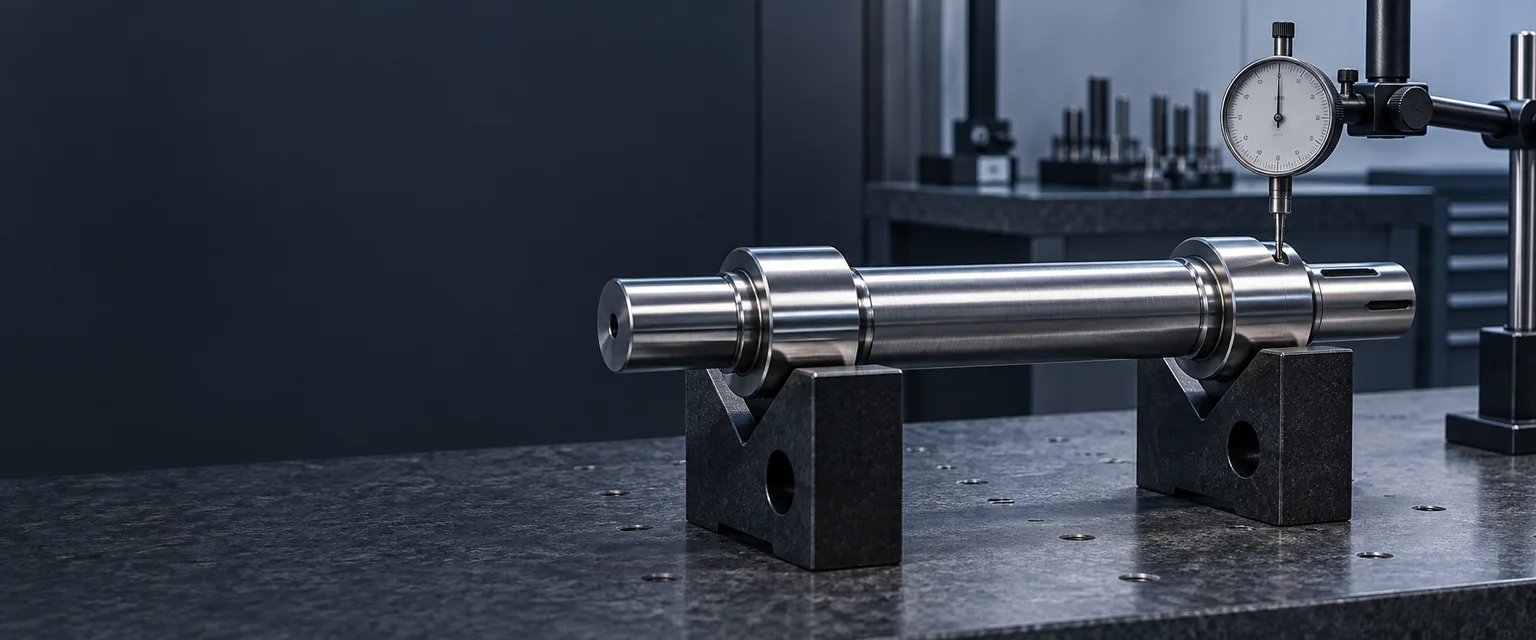
Illustration: a geometry change may require review of the inspection setup as well as the machining instructions.
8. Update Inspection Alongside Manufacturing Instructions
A revised drawing needs a corresponding review of inspection documentation.
Otherwise, the supplier may manufacture the new geometry but inspect it against an old report template.
Review the characteristic list, nominal values, limits, datum references and measurement methods. Check whether changed requirements need different equipment, access or part preparation.
A changed datum scheme deserves particular attention. A familiar measurement setup may no longer evaluate the requirement as intended.
Likewise, a change to surface texture cannot be addressed only by changing a dimensional report.
Keep evidence linked to the applicable revision. Reports should identify the part, revision and relevant lot or sample identifiers.
Where a change affects bearing interfaces, refer to bearing journal specifications. For geometric requirements, use the relevant shaft runout guide.
Neither article replaces the requirement on your released drawing.
9. Choose a Proportionate Reapproval Scope
Not every revision requires the same approval activity.
An administrative correction may need document verification. A functional geometry change may need dimensional inspection and an assembly check. A material or process change may require different evidence.
Assess the risk rather than applying an automatic “full approval” or “no approval” rule.
Identify what changed, what it could affect and what evidence is necessary to release the affected parts.
A focused inspection can be appropriate when its scope is justified. However, checking only the edited dimension may miss related characteristics.
For example, changing a shaft-end feature could affect axial location, machining access or an adjacent surface.
Document the approval scope and any exclusions. Distinguish approval of a sample from authorization to resume repeat production.
The custom shaft first article inspection checklist provides a related framework for connecting samples with requirements and recorded results.
10. Control External Processing and Supporting Documents
A shaft may pass through more than one operation or organization.
Where external processing is used, confirm that applicable changes reach the affected instructions and purchase documents. A revised material or finish requirement must not stop at the main machining drawing.
The same principle applies to packaging, marking and inspection services.
Ask the responsible supplier to confirm how affected instructions will be updated and how obsolete versions will be prevented from being used accidentally.
Do not assume that everyone needs every document. They need the correct information for their work, with a clear connection to the controlled requirement baseline.
If a supplier proposes a process change while the product drawing remains unchanged, assess whether your purchasing or quality agreement requires notification or approval.
Product revision control and process change control are related, but they are not interchangeable.
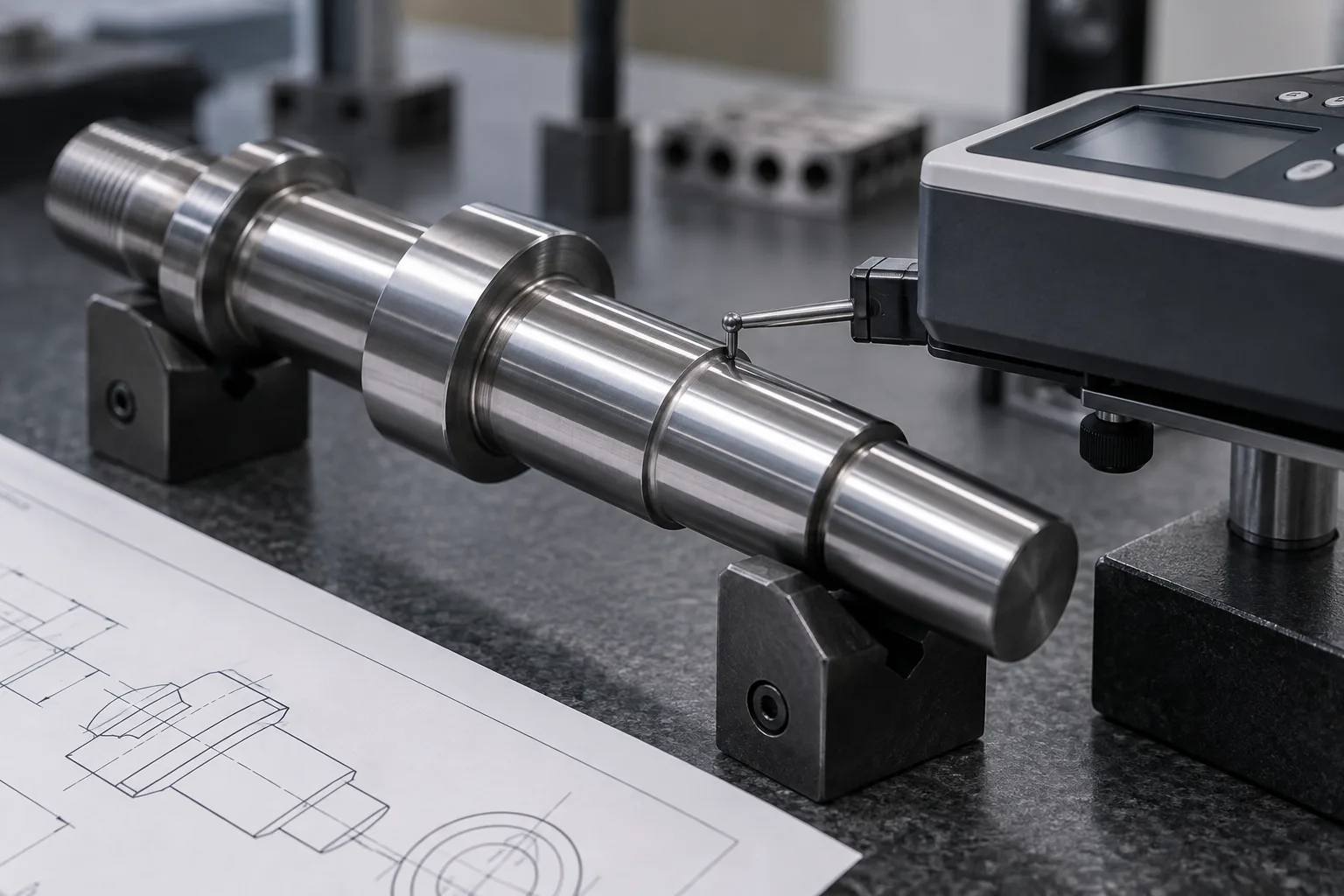
Illustration: revised surface requirements should be reflected in the finishing instructions and relevant inspection records.
11. Prevent Mixed Revisions at Packing and Receiving
Revision control continues after inspection.
Parts from different revisions may look almost identical. If they are mixed in one container without reliable identification, receiving personnel may not be able to separate them.
Agree on an identification method appropriate to the part and order. This may use packaging labels, lot records or approved part marking.
Do not add permanent marking to a functional surface without authorization. Marking location and method can matter.
Shipping documents should connect the delivered quantity with its applicable revision and lot identifiers. If an order contains an authorized mixture of revisions, identify the quantities separately.
At receiving, check those identifiers before releasing the parts to assembly or stock.
A dimensional spot check is not a substitute for revision traceability. Two revisions may share the measured dimension while differing elsewhere.
For protection during shipment, see the separate precision shaft packaging guide.
12. Use a Short Engineering Change Release Checklist
Before releasing a shaft revision, confirm the following:
- The new drawing and supporting documents are approved and identifiable.
- Drawing and model conflicts are resolved.
- The supplier has acknowledged the applicable requirement set.
- Price and delivery impacts are agreed where relevant.
- The effective order, lot or quantity boundary is defined.
- Existing material and work in progress have an agreed disposition.
- Manufacturing and inspection instructions are updated.
- Reapproval requirements and approval authority are clear.
- Packaging and shipment identification prevent mixed revisions.
- The final release decision is recorded.
Keep the checklist proportionate to the project. Its purpose is to close gaps, not create paperwork without a decision.
Configuration management offers a useful broader framework. ISO describes ISO 10007 as guidance covering identification, change control, status accounting and audit. The checklist here is practical editorial guidance, not a reproduction of the standard or a claim of certification. Source: ISO/TC 176
Frequently Asked Questions
Can I keep the same part number after changing the shaft?
That depends on your identification and interchangeability rules. A revision change may be appropriate, or a new part number may be needed. Have the responsible engineering authority decide, especially when old and new parts are not interchangeable.
Is an email enough to approve a change?
It can form part of a controlled approval record if your agreed system permits it. The record still needs to identify the requirement, authority, affected quantity and effective point. An informal conversation should not leave these details uncertain.
Should every drawing revision trigger first article inspection?
Not automatically. Determine the verification scope from the change and its consequences. Administrative changes and functional changes should not be treated as identical.
Can earlier-revision stock still be shipped?
Only when it remains authorized for the relevant order or has a documented acceptance. The supplier should not assume that older stock is acceptable simply because it was manufactured before the change.
What should I send with a revised shaft RFQ?
Send the released drawing, corresponding model where needed, supporting specifications, change summary, quantity and intended effective point. Identify existing orders or stock that may be affected.
Discuss Your Revised Shaft Requirements
Preparing a new shaft drawing or changing an existing part?
Send TOPSHAFT the released drawing, revision identifier, quantity and supporting requirements. For an existing order, also identify the affected order and intended transition point.
Request a drawing-based review so the technical and commercial implications can be clarified before the affected work proceeds.