
Precision Shaft RFQ Checklist: What To Send Before You Request A Quote
Introduction
A precision shaft RFQ is useful only when a supplier can understand the part, its function, and the evidence you need at delivery. Send a current drawing, define the critical interfaces, and state your production assumptions. That reduces quotation revisions and prevents a low price from being based on the wrong route.
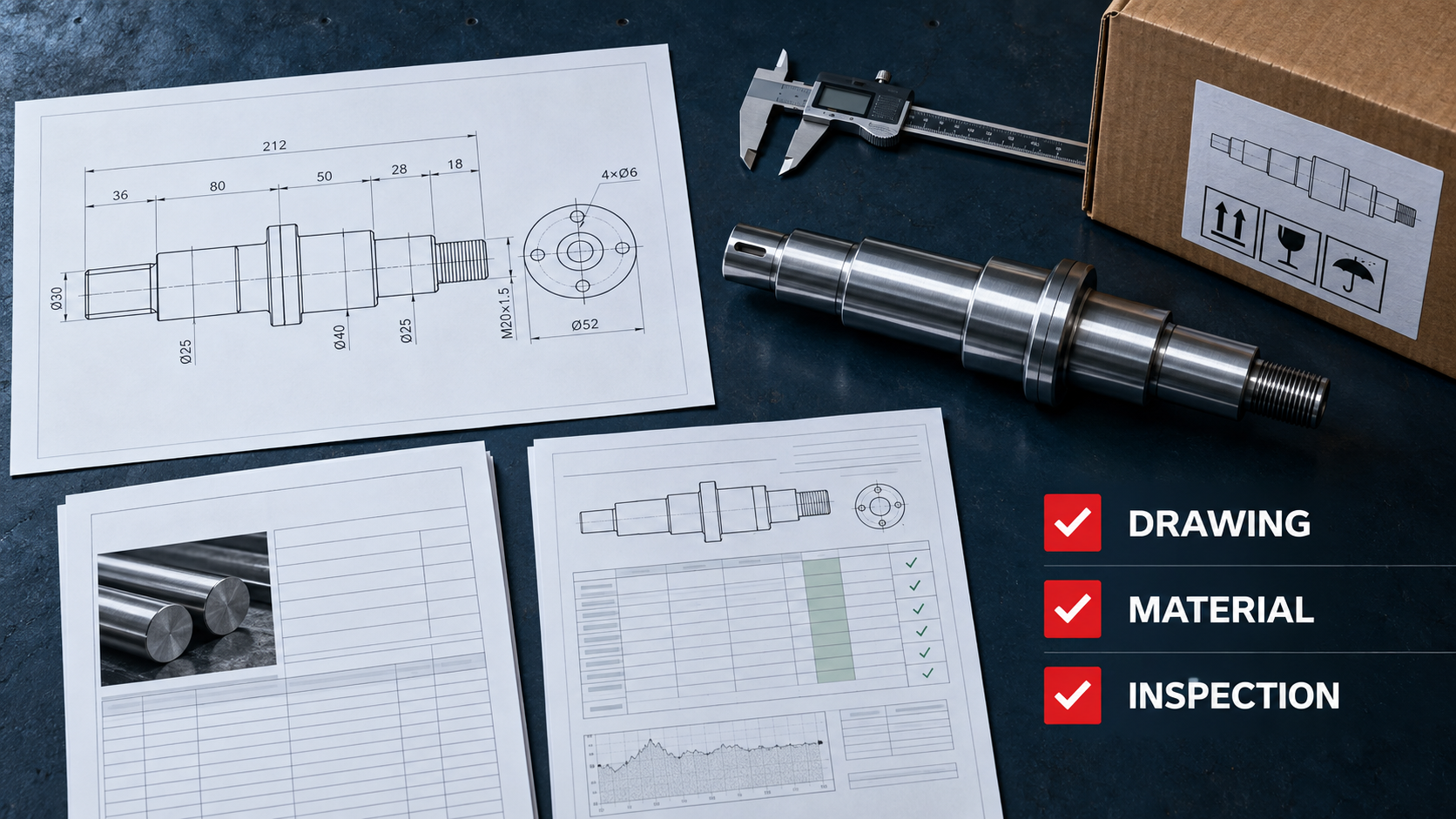
Start With A Controlled Drawing Package
Your drawing package should tell the supplier exactly which revision they are pricing.
Send the latest released 2D drawing as a PDF. Add the 3D model when it helps explain complex features, profiles, or assembly orientation. State the part number, revision, unit system, and drawing date in the RFQ email or cover sheet.
Do not rely on an image, a marked-up sample, or a previous purchase order alone. Those can support the discussion, but they do not replace a controlled drawing.
Include these items:
- Part number and drawing revision.
- 2D PDF drawing with dimensions and tolerances.
- STEP, IGES, or other agreed 3D model, when available.
- A note identifying any superseded drawing or approved deviation.
- Photos of the mating assembly or sample, when the drawing needs context.
If the drawing is still preliminary, label it as preliminary. Ask the supplier to list the assumptions used for quotation. You can then review those assumptions before releasing material.
Define The Functional Features First
The supplier needs to know which surfaces affect assembly and performance.
For a custom shaft, that often includes bearing journals, seal lands, rotor seats, gears, splines, keyways, threads, and shoulder locations. A nominal outside diameter does not explain whether a surface is cosmetic or controls fit and rotation.
Use this table to identify the features that need special attention.
| Feature | Information To State | Reason To Include It |
|---|---|---|
| Bearing journal | Fit, datum, surface requirement, mating bearing | Protects fit and rotating alignment |
| Gear, spline, or keyway | Standard, tooth or keyway details, torque direction | Defines the torque-transfer interface |
| Rotor or coupling seat | Fit, axial location, assembly direction | Prevents an incorrect stack position |
| Threaded end | Thread designation, class, gauge requirement | Avoids incompatible mating hardware |
| Seal land | Finish, hardness when specified, lead-in | Connects the route to seal performance |
| Long shaft body | Straightness, support points, critical zones | Helps assess handling and machining risk |
Do not assign a critical tolerance to every feature by default. Identify the surfaces that control fit, alignment, sealing, torque transfer, or safety. This gives the supplier a practical basis for choosing operations and inspection.
State Material, Condition, And Treatment Requirements
Your RFQ should name the material grade and the condition that matters at delivery.
State the grade, material standard, starting condition, heat-treatment requirement, coating, plating, or corrosion protection. Request a material certificate only when your application or purchasing procedure requires it. If you need a hardness range or case depth, place it on the drawing or reference the applicable specification.
Avoid writing only “steel” or “stainless steel.” Those labels do not establish chemistry, mechanical condition, machinability, or acceptance criteria.
If the final part needs heat treatment, clarify the order of operations. Heat treatment can influence size, form, and surface condition. A supplier can then determine whether a later finishing step is needed for the functional surfaces. The route depends on geometry, material, treatment method, and drawing requirements.
Make Datum And Geometric Requirements Unambiguous
Datums and geometric controls tell the supplier how the functional surfaces relate to each other.
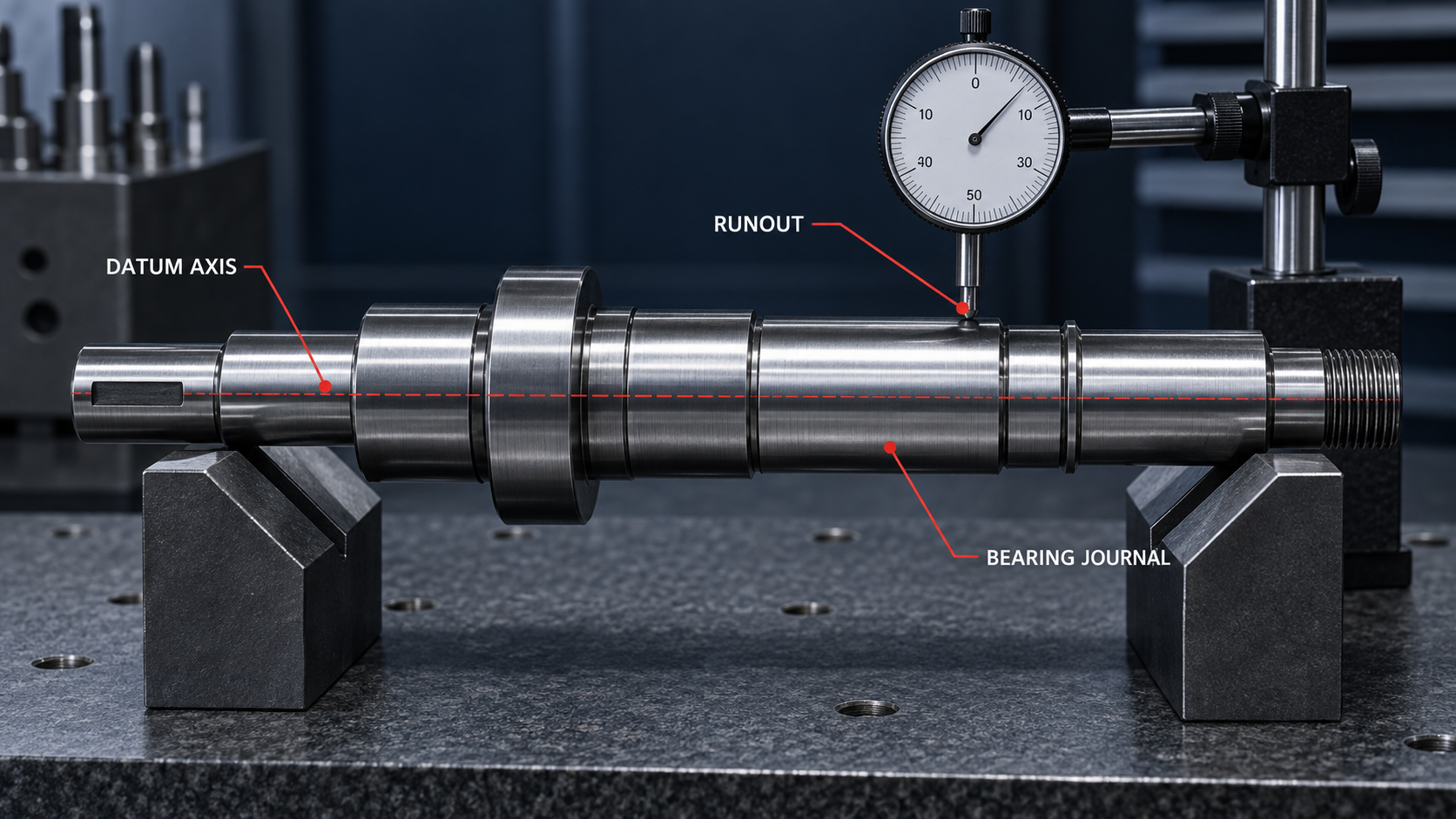
ISO 1101:2017 defines a symbol language for geometrical specifications, including form, orientation, location, and run-out. ISO 5459:2024 specifies rules and methodology for datums and datum systems. If your drawing follows ASME practice, ASME Y14.5 describes the related GD&T language.
For shafts, state the datum feature that establishes the reference axis. Then relate the functional diameters and features to that datum where the assembly requires it. For example, a bearing journal and a gear seat may need an axis relationship. A non-functional stock diameter may not.
Use the control that matches the risk:
- Use size limits for a fit that is controlled by diameter.
- Use runout when rotation relative to a datum axis matters.
- Use straightness when a long shaft must remain within an axis or line condition.
- Use position or profile when a feature’s location or contour matters.
Do not substitute one control for another without engineering review. The inspection method must match the drawing callout and the function you are protecting.
>
Specify Surface, Edge, And Cleanliness Expectations
Surface requirements belong to named functional zones, not to a general promise of “good finish.”
Call out the required surface texture where it affects a bearing, seal, press fit, coating, or sliding contact. Identify deburring expectations around keyways, cross-holes, threads, and sharp shoulders. If a part must be cleaned before assembly, define the required condition or the applicable customer procedure.
Packing should protect the same features you inspected. For example, finished journals and threaded ends may need separators, caps, sleeves, or an agreed orientation inside the carton. State any rust-prevention, labeling, barcoding, or export-packing requirements before the quotation is final.
Separate Prototype, Pilot, And Production Quantities
Quantities change the practical manufacturing route and the evidence you should request.
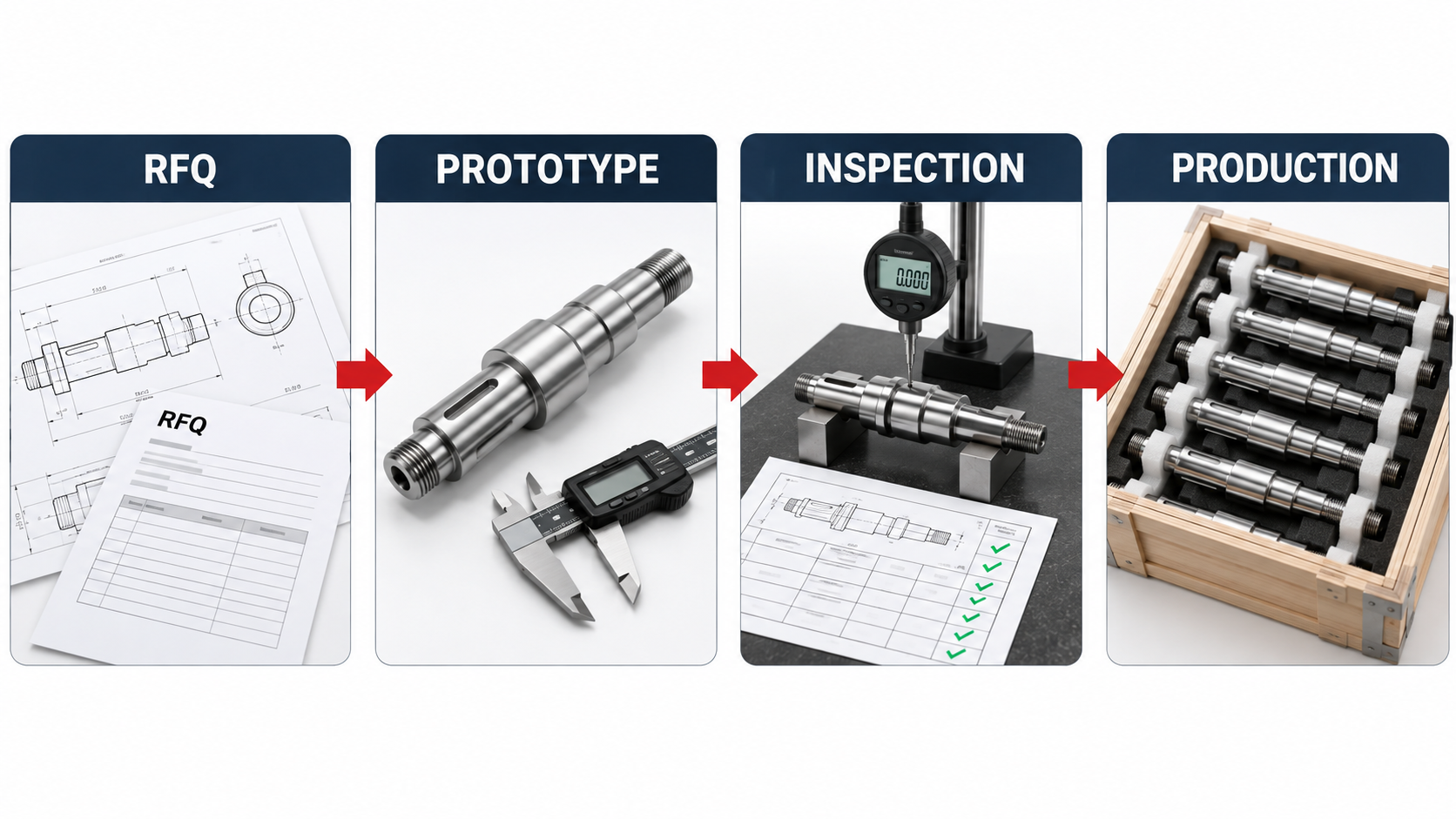
State the sample quantity, pilot quantity, expected repeat order quantity, and annual forecast when available. Also state whether the part is for design validation, customer qualification, service stock, or regular production.
| Stage | What To Include In The RFQ | Decision It Supports |
|---|---|---|
| Prototype | Quantity, target date, open design items, sample inspection needs | Confirms the route and assembly fit |
| Pilot | Planned release quantity, first-article requirements, change-control method | Validates readiness for repeat work |
| Production | Order pattern, annual forecast, pack quantity, traceability scope | Supports material planning and process control |
Do not describe a prototype order as production unless the drawing and acceptance requirements are already frozen. The supplier should be able to distinguish a planning quote from a release-ready production quote.
Agree The Inspection Evidence Before Production Begins
Inspection evidence should be matched to the parts and characteristics that create real assembly risk.
For a first article, ask for the drawing revision, measurement units, critical characteristic results, material evidence where required, and any agreed treatment results. For repeat orders, specify whether you need a full report, a selected-characteristic report, a certificate of conformance, or another agreed document.
The measurement method matters. A micrometer can be suitable for a diameter. It may not prove a runout relationship or a feature position. Ask the supplier which method will be used for each critical characteristic when the drawing leaves room for interpretation.
This is especially important for motor shafts, where fit, alignment, and rotating interfaces can depend on relationships between multiple features. For more detail on those relationships, see Shaft Runout Tolerance: How To Specify And Inspect Precision Shafts.
Include Commercial And Delivery Information
Commercial details help the supplier provide a usable quotation, not just a part price.
Include your requested currency, Incoterm if decided, delivery destination, target delivery date, packaging requirements, and any required supplier documents. State whether freight should be quoted separately. If the destination is not final, say so rather than asking the supplier to guess.
You should also state whether alternatives are welcome. A supplier may be able to suggest a standard stock size, a different relief, or a different process sequence. Any alternative should be documented and approved before it replaces a drawing requirement.
Use This Precision Shaft RFQ Checklist
Before requesting a quote, confirm that your package includes:
- Current drawing revision and 3D model where useful.
- Part number, quantity by stage, annual forecast, and target date.
- Application context and mating interfaces.
- Material grade, condition, treatment, and finish requirements.
- Datums, fits, geometric tolerances, and critical characteristics.
- Required inspection reports, certificates, and approval process.
- Packing, labeling, destination, and freight expectations.
- Open questions and the assumptions you want the supplier to use.
FAQ
Can You Request A Quote Without A Final Drawing?
Yes, for budgeting or early supplier review. Label the drawing as preliminary and ask the supplier to record the quotation assumptions. Final acceptance criteria should follow the approved revision.
Should You Include A 3D Model With A Shaft RFQ?
Include it when it clarifies geometry or assembly context. Keep the 2D drawing as the controlled source for dimensions, tolerances, notes, and revision status unless your product-definition process states otherwise.
What Is The Minimum Information For A Precision Shaft Quote?
At minimum, send a controlled drawing, quantity, material requirement, critical features, requested delivery timing, and destination. Add the application and mating details when the functional requirements are not obvious from the drawing.
When Should You Request A First-Article Inspection Report?
Request it when you need evidence before approving a prototype or pilot lot. Define the characteristics, drawing revision, and acceptance route in advance so the report is relevant to the actual part.
Conclusion
A complete RFQ lets you compare suppliers on a shared technical basis. Define the controlled drawing, function, material, geometric relationships, inspection evidence, and commercial assumptions before you compare price. That makes the quotation more useful and the next engineering conversation faster.
CTA
Ready to review a precision shaft RFQ? Send your drawing and requirements with the quantity, application, material, critical interfaces, and inspection needs. TOPSHAFT can start with a practical drawing-based discussion.