Precision ground
Controlled OD, roundness, cylindricity and functional surface for bearing, bushing and guide contact.

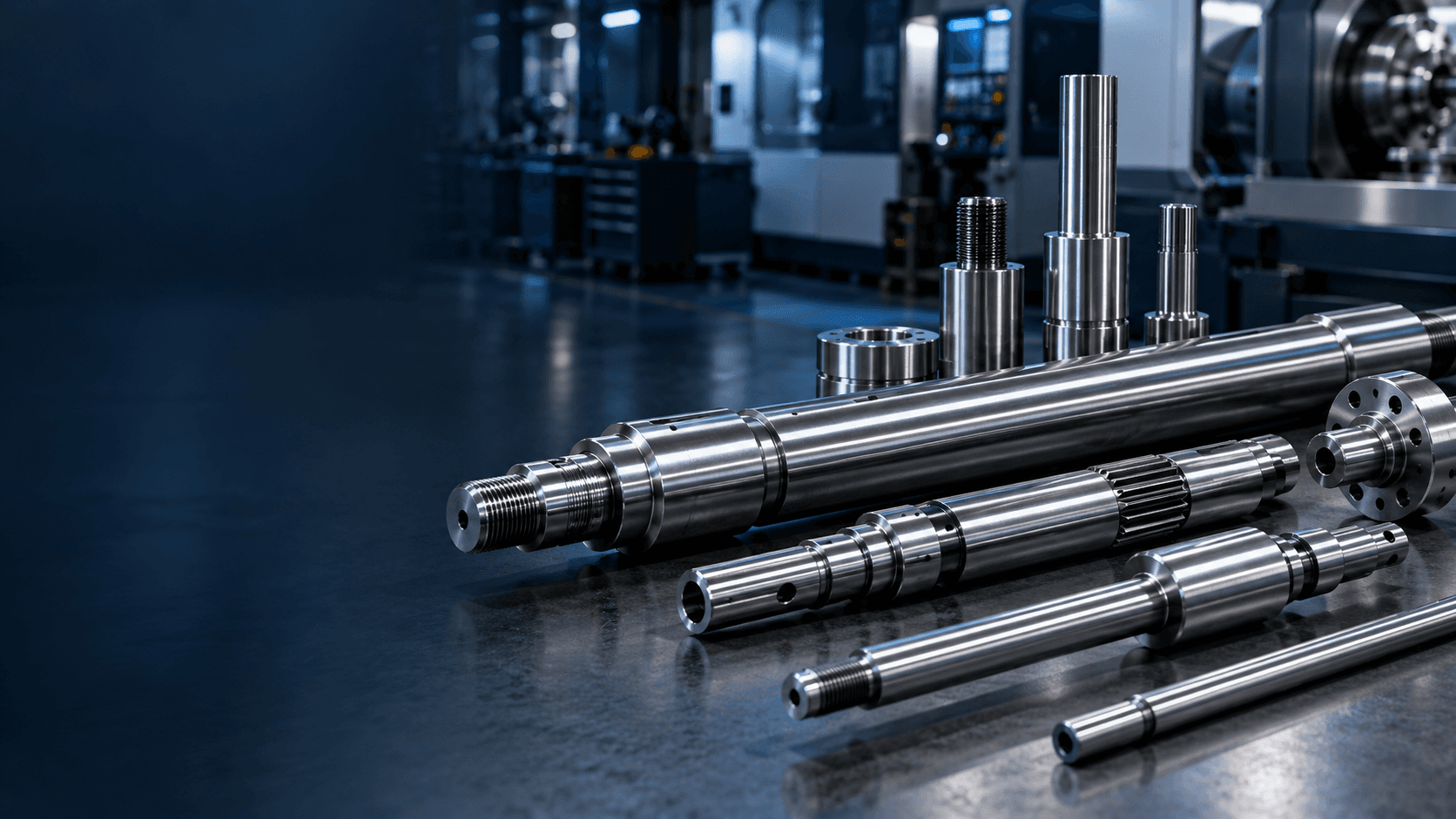
CUSTOM PRECISION SHAFT ROD MANUFACTURER
Topshaft manufactures precision shaft rods, rod shafts and precision ground shafting for rotary motion, linear motion, automation, industrial machinery, bearing systems and OEM assemblies.
Diameter tolerance, straightness, roundness, cylindricity, hardness, surface finish and drawing-defined end geometry are reviewed as one functional system.
STEP, STP, IGES, X_T, DWG, DXF and PDF drawings can be reviewed.PRECISION SHAFT ROD MANUFACTURING AT A GLANCE
Actual achievable tolerance, straightness, hardness and finish depend on material, diameter, shaft length, heat-treatment route, feature geometry and production quantity.
WHAT IS A PRECISION SHAFT ROD?
A precision shaft rod is a straight cylindrical shaft manufactured with controlled outside diameter, straightness, roundness and surface condition for use in mechanical assemblies. It can be a simple cut-to-length part or include chamfers, threads, tapped holes, grooves, flats, cross holes, shoulders and reduced journal ends.
Unlike ordinary commercial round bar, precision shafting is intended to function directly with bearings, bushings, linear guides, clamps, couplings and motion systems.
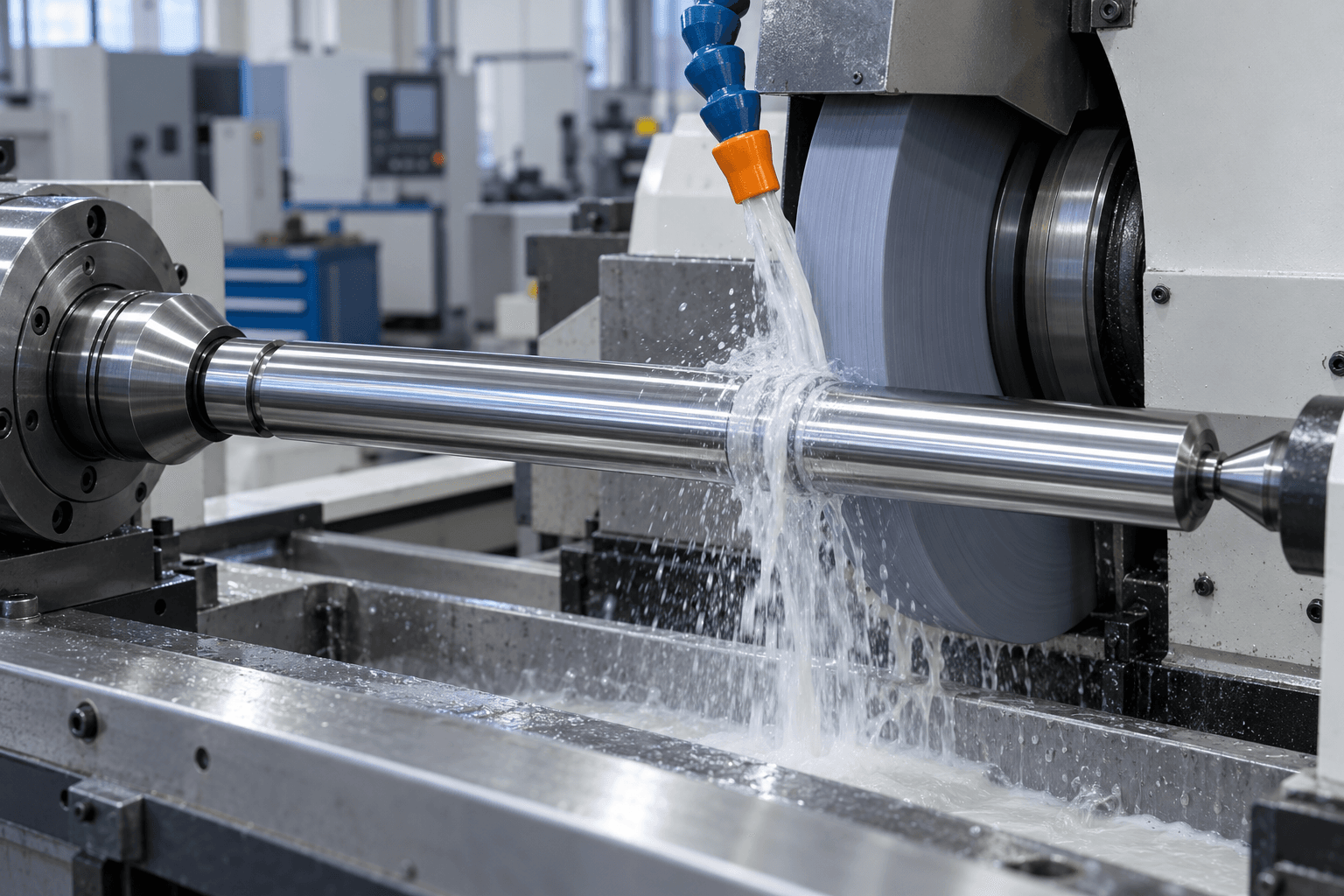
GROUND, HARDENED OR TURNED — DEFINE THE FUNCTION FIRST
Grinding is useful where fit, form or surface requirements exceed what turning alone can economically provide. Hardening is useful where continuous sliding or rolling contact calls for wear resistance.
Controlled OD, roundness, cylindricity and functional surface for bearing, bushing and guide contact.
Surface wear resistance for sliding guides, rollers, bushings and repeated mechanical contact.
An efficient route when turning already achieves the required diameter, fit and roughness.
Establish the final functional diameter after hardening or another thermal route.
Allocate tight control to bearing and guide surfaces rather than applying it everywhere.
Add threads, chamfers, tapped holes, flats, cross holes and grooves to the drawing.
Diameter + straightness + roundness / cylindricity + hardness + surface finish + end features → reliable fit and motion.
ENGINEERING COMPARISONS
A shaft can meet its diameter tolerance without automatically meeting straightness, roundness, cylindricity or runout requirements.
MATERIAL & END-FEATURE OPTIONS
1045 / C45 or 4140 / 42CrMo directions can balance strength, machinability and heat-treatment response.
303, 304, 316, 420 and 17-4PH have different corrosion, strength, wear and machinability characteristics.
A lightweight route for instrumentation and lower-load automation where high surface hardness is not central.
Define thread standard, tapped holes, chamfers, flats, cross holes, grooves, reliefs and reduced journal diameters.
STRAIGHTNESS & DEFLECTION
A long shaft can be made straight yet bend elastically under operational load. Shaft diameter, unsupported length, material stiffness, loading and support positions all need review.
Long, slender shaft rods require particular attention to machining, straightening, handling, packaging and installation. Review manufactured straightness together with the supported application, not as an isolated number.
Bearing and bushing alignment
Long-span guide-shaft behavior
Surface finish matched to the mating component
Final dimensions before or after coating
FROM MATERIAL TO FINISHED SHAFT ROD
The correct sequence is defined by the drawing: material condition, length-to-diameter ratio, thermal route, final geometry, surface finish and inspection plan.
QUALITY CONTROL FOR PRECISION SHAFTING
Inspection can be organized around outside diameter, diameter consistency, straightness, roundness, cylindricity, overall length, surface roughness, hardness, hardened depth, end-feature geometry and visual surface condition.
Depending on the drawing, measurement can use micrometers, gauges, dial indicators, straightness fixtures, CMM or optical inspection, surface-roughness testing and hardness testing.
Explore inspection & quality support →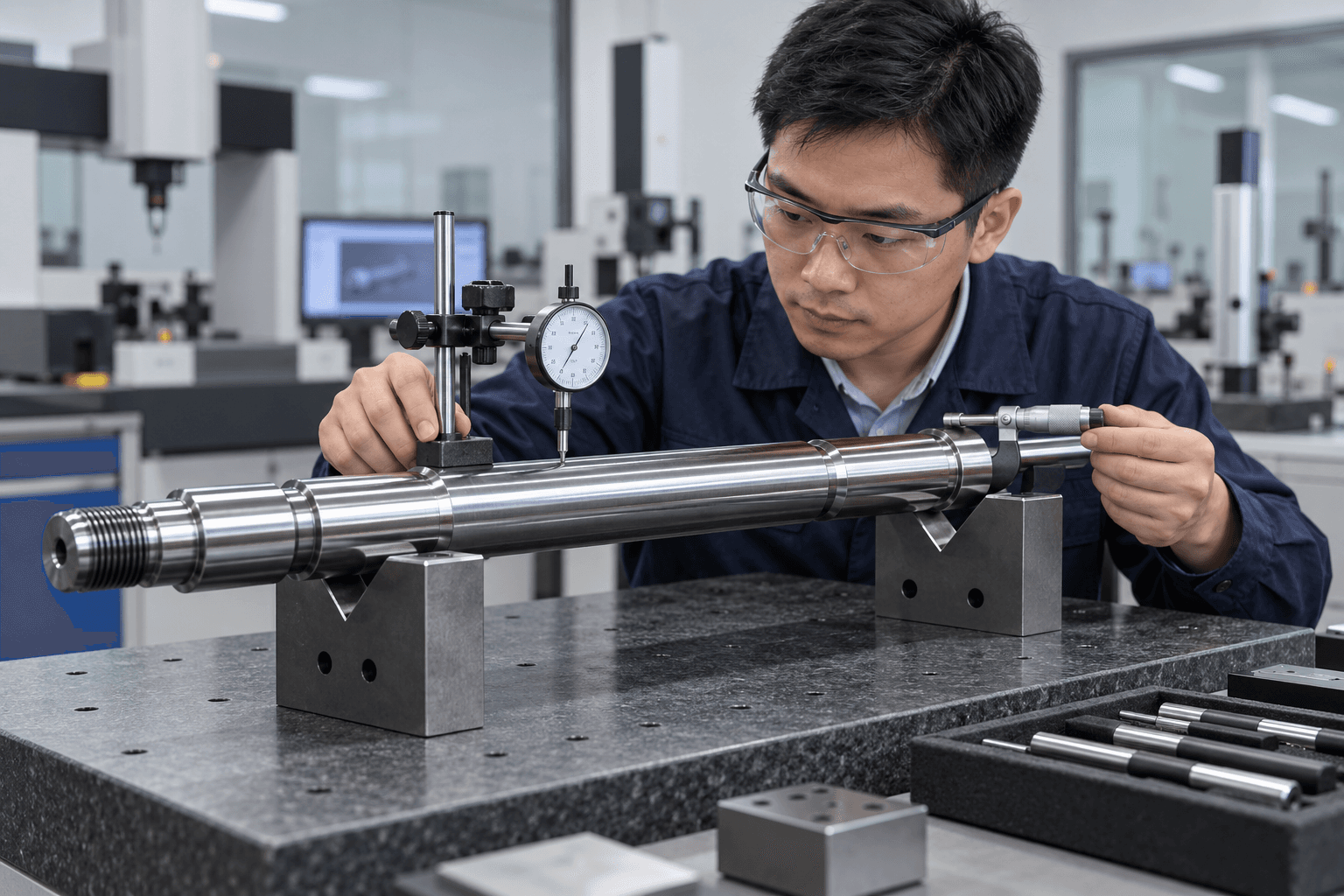
PRECISION SHAFT ROD APPLICATIONS
Guide shafts, support rods, machine axes and positioning members where straightness, diameter consistency and surface finish matter.
Ground shaft rods can support linear bearings, bushings, slides and guide mechanisms.
Explore Linear Motion Shafts →Rotating support shafts, guide shafts, assembly rods, mechanism shafts and machine frames.
Controlled mating surfaces for plain bushings, ball bushings, sleeve bearings and support bearings.
Long precision shafting for packaging lines, printing machinery, converting equipment and positioning systems.
Smaller precision shaft rods for automation, diagnostic equipment and instrument mechanisms.
WHAT WE NEED FOR A SHAFT ROD QUOTE
Send a drawing or CAD model whenever possible so geometry, process route and inspection can be reviewed together.
PRECISION SHAFT ROD FAQS
A shaft rod is a straight cylindrical shaft manufactured with controlled diameter, straightness and surface condition for rotary, linear-motion, guide or mechanical-support applications.
Round bar is primarily raw material. A precision shaft rod is intended to function as a machine component and can include controlled OD, straightness, hardness, surface finish and custom end features.
It is straight shaft material finished through grinding to improve dimensional consistency, geometry and surface condition.
Carbon steel, alloy steel, stainless steel and aluminum can all be considered. The right choice depends on load, wear, corrosion, hardness and environment.
Yes. Depending on material and application, shaft rods can be through hardened, case hardened, induction hardened or processed to another specified thermal route.
Straightness influences bearing alignment, sliding movement, friction, vibration, runout and installation, especially on long precision shafts.
Yes. External threads, tapped end holes, flats, cross holes, grooves and other secondary features can be incorporated where technically feasible.
Provide the drawing or CAD model, diameter, length, material, quantity, tolerance, straightness, hardness, surface finish and any custom end-feature requirements.
NEED CUSTOM PRECISION SHAFT RODS?
Whether you need a simple cut-to-length ground rod or a customized shaft with threads, grooves, flats, holes or machined end journals, Topshaft can review the complete manufacturing route around your application.