01What is a nylon shaft used for?
+
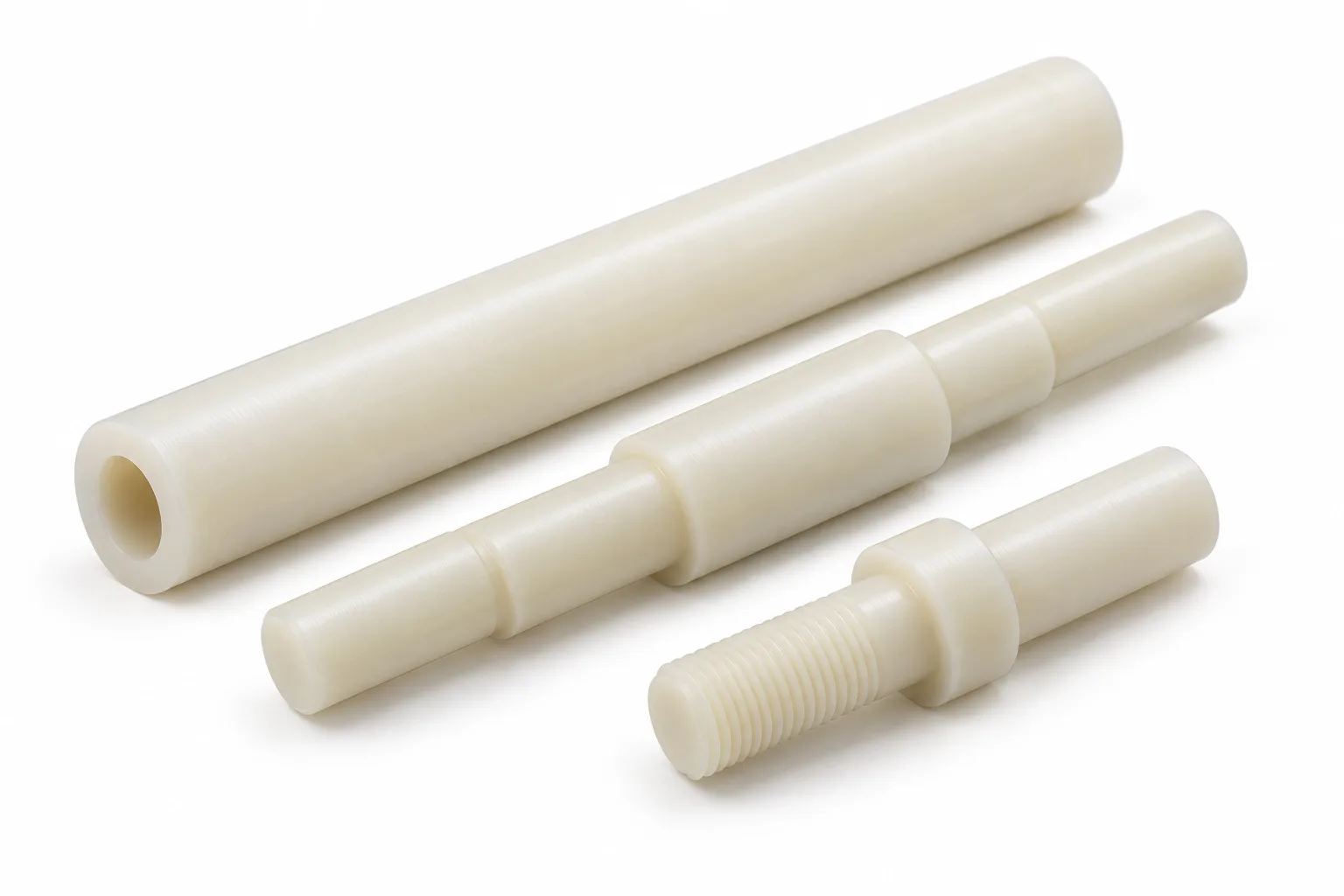
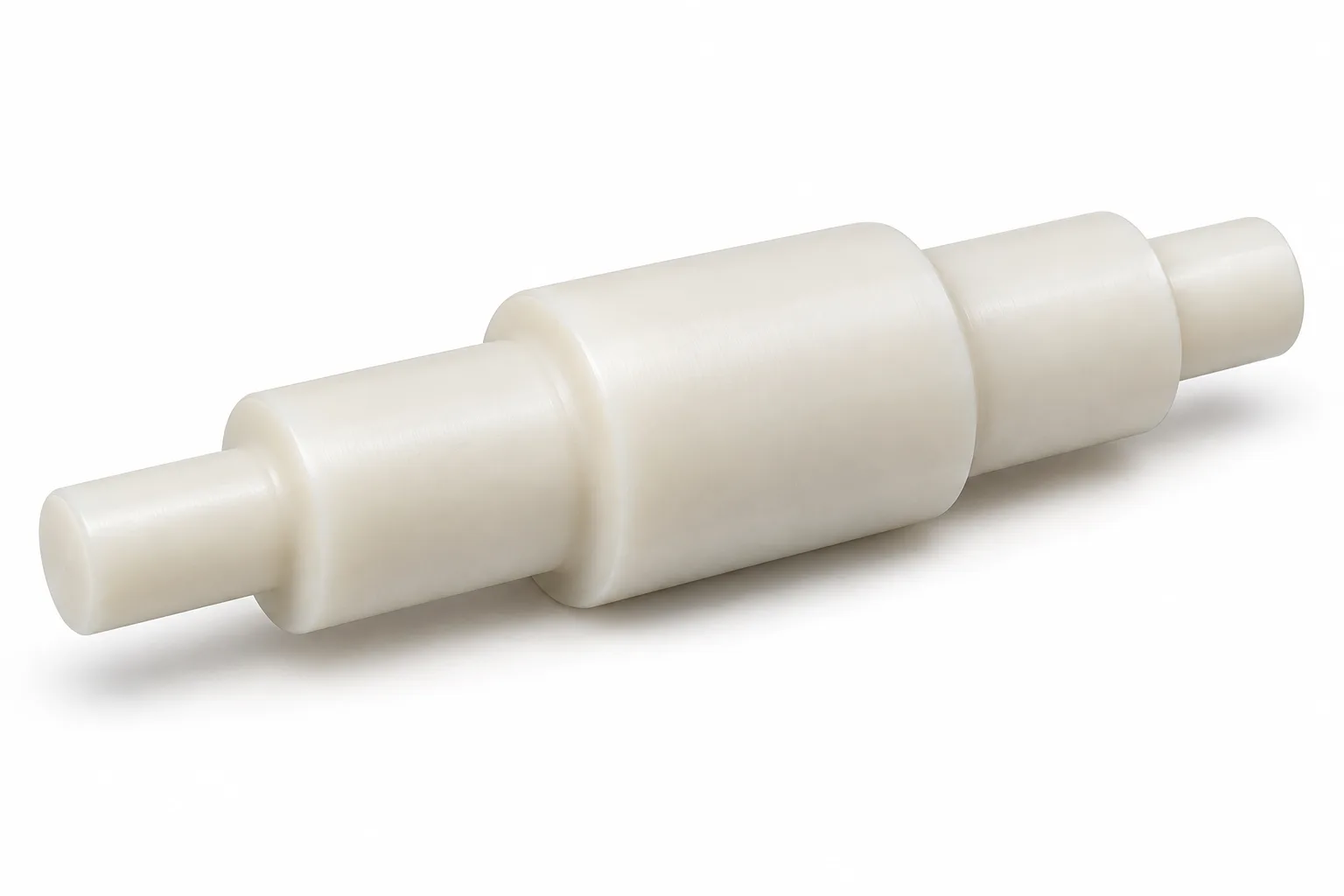
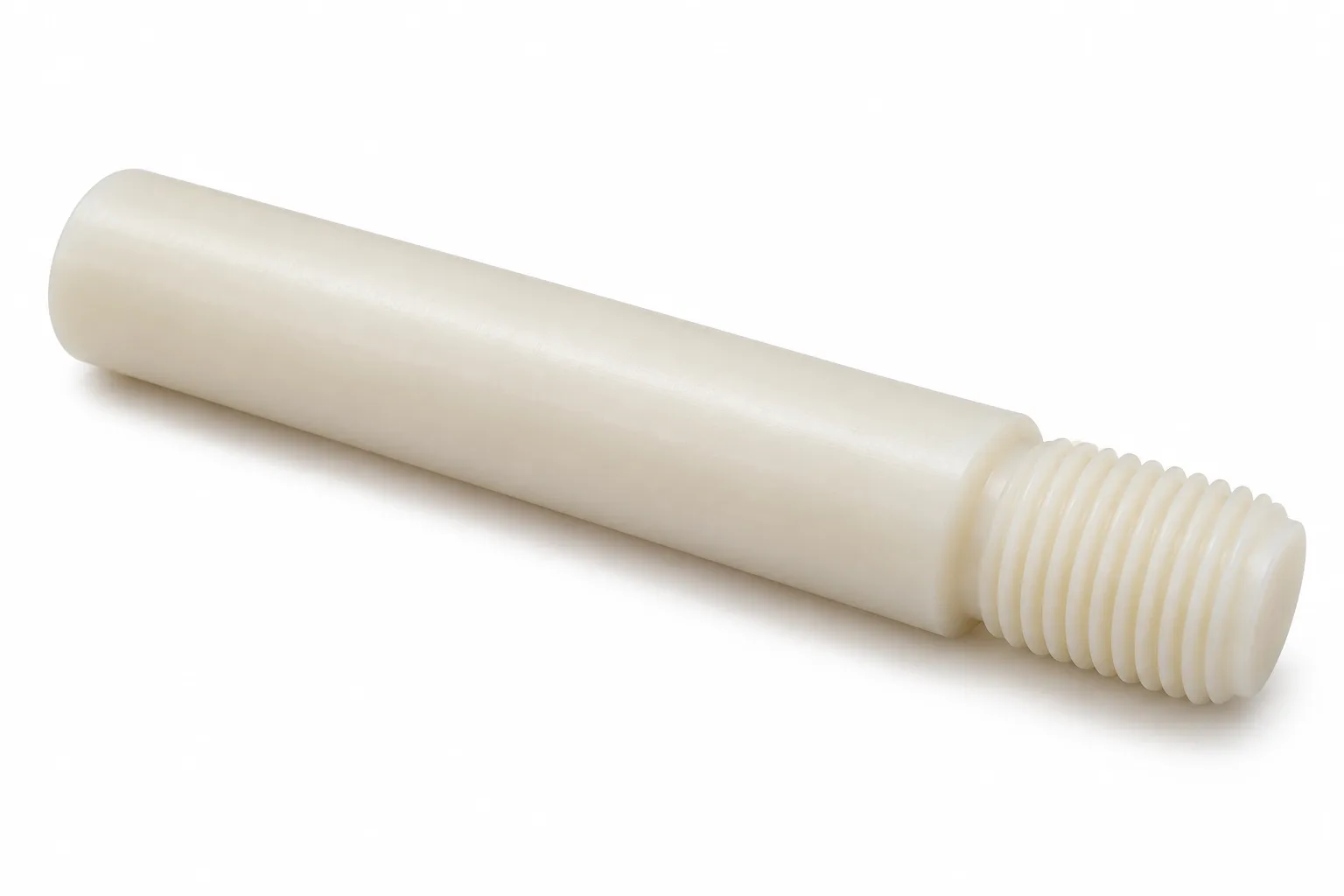
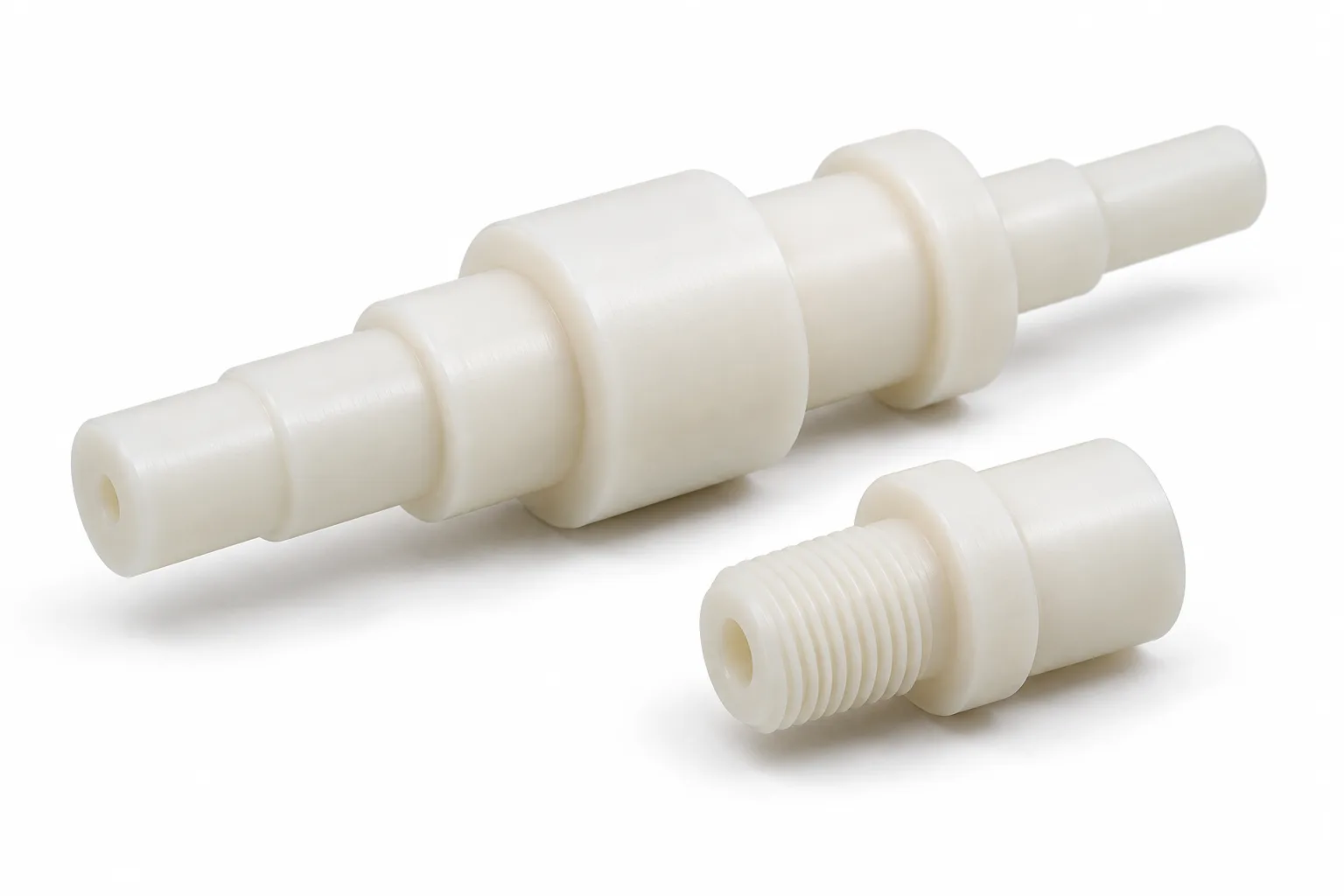
A nylon shaft is used for suitably loaded guide, roller, positioning or other mechanical components where low weight, toughness, insulation or sliding behavior is useful. It is not automatically suitable for every rotating assembly. Material grade, humidity, support span, contact pressure, speed and the required life determine whether a nylon plastic shaft fits the application.
02Can nylon shafts replace steel shafts?
+
Nylon can replace steel only when the complete design supports the substitution. Its lower stiffness, moisture response and creep may require a larger diameter, shorter unsupported span or a different retention method. Check torque, bending, bearing fits, temperature and long-term clearance before approving a replacement; copying the metal geometry and tolerances is not sufficient.
03What is the difference between PA6 and PA66 shafts?
+
PA6 and PA66 are different polyamide families with different property profiles, while both are moisture-sensitive. PA66 generally has a higher melting temperature, but that does not independently establish better service performance for a loaded shaft. Compare the actual stock grades, conditioning state, stiffness, impact behavior, temperature and machining requirements. Cast PA6 and modified grades add further distinctions.
04Can Topshaft manufacture custom nylon shafts from drawings?
+
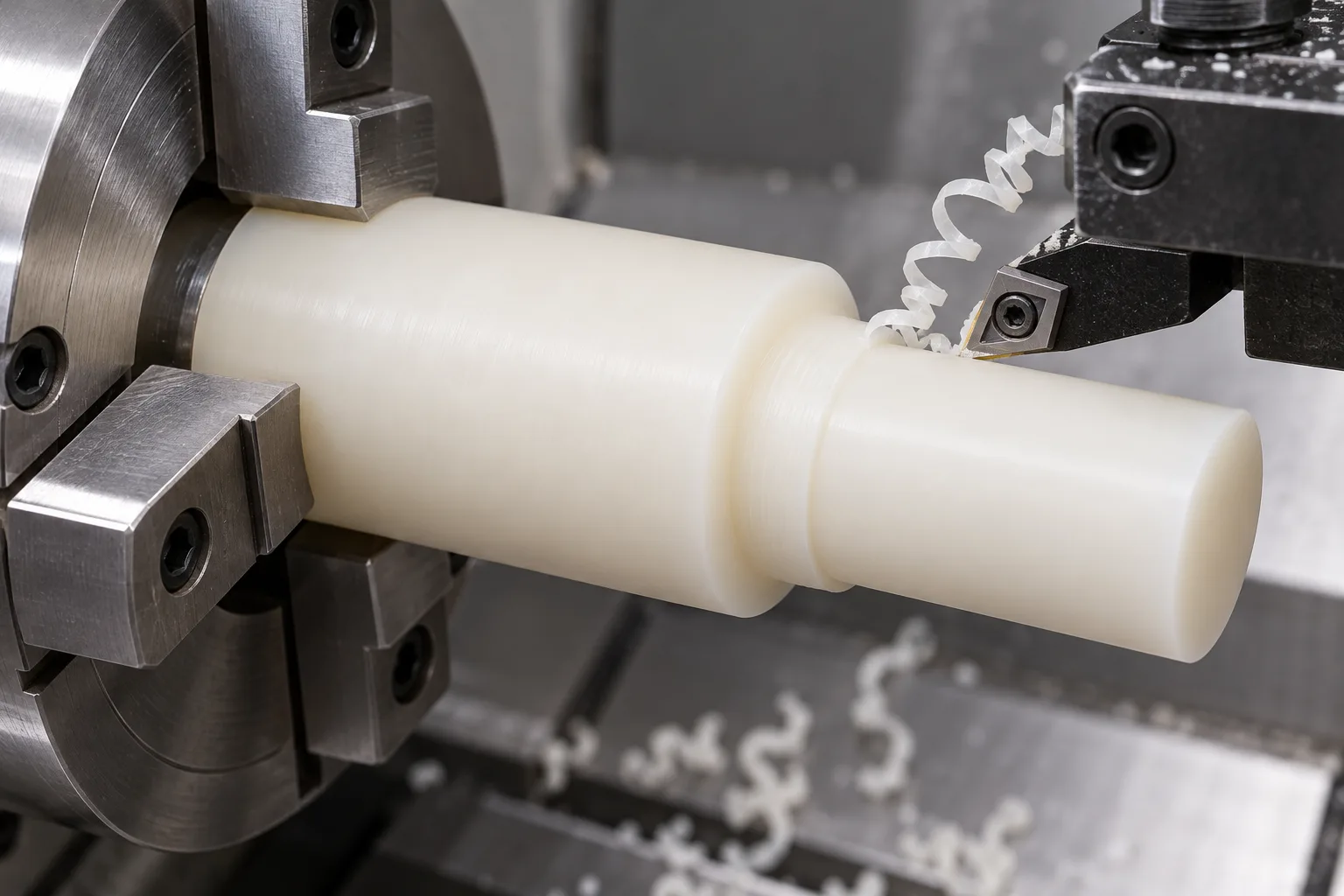
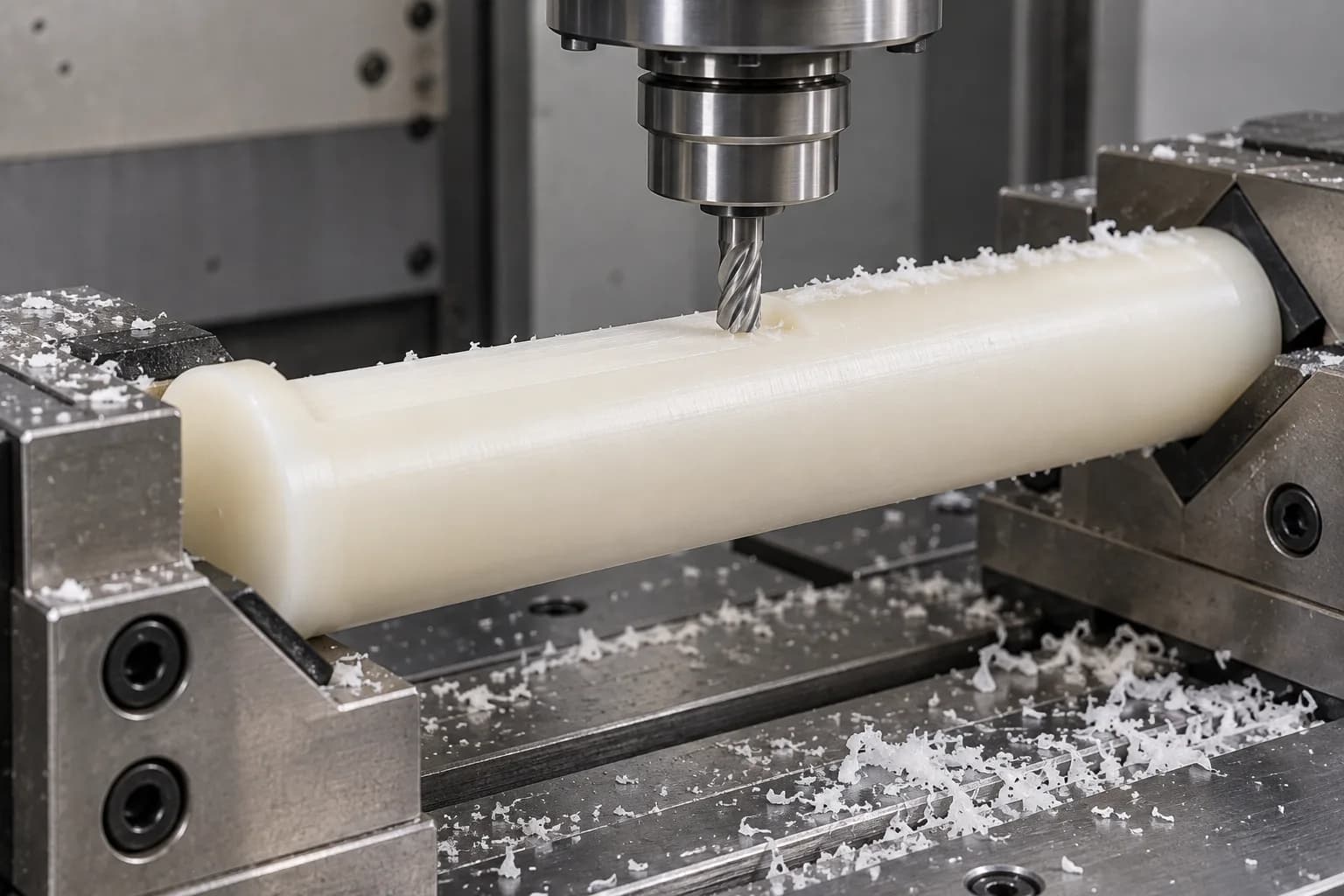
Topshaft reviews customer drawings for custom nylon shaft manufacturing using turning, milling and secondary machining. Send the grade or selection requirements, quantity, datums, critical fits and operating conditions. The team confirms sourcing, machining feasibility and inspection scope before quotation. A nylon shaft supplier should resolve material and final-condition questions rather than treating the drawing as a cut-to-length rod request.
05What tolerances can be achieved when machining nylon shafts?
+
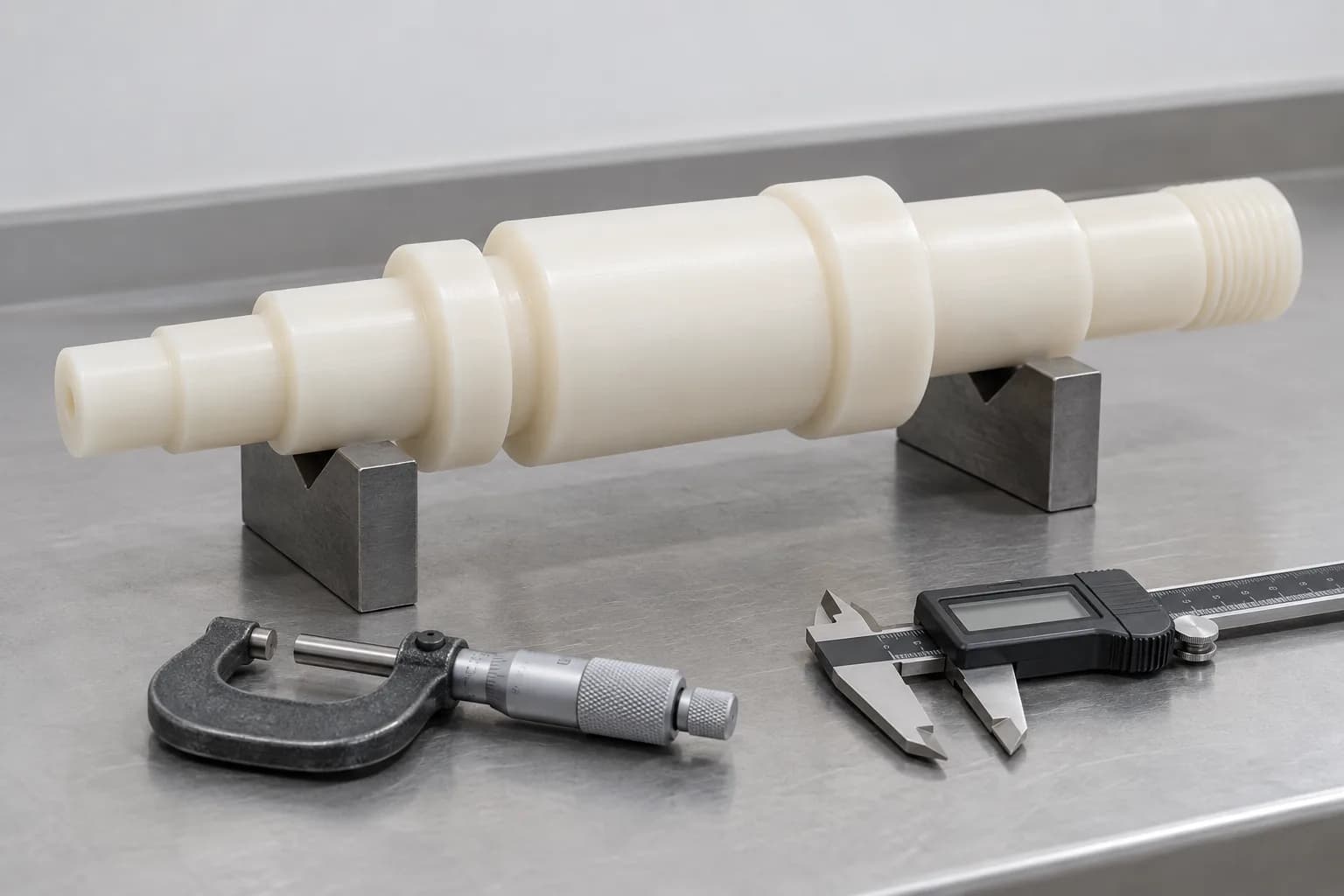
Achievable tolerances must be confirmed for the specific grade, geometry and agreed measurement condition. Machining heat, clamping, slenderness, moisture and temperature all affect the result. Identify the truly critical features and the intended final state on the drawing. A general metal-machining claim such as ±0.005 mm should not be assumed for every precision nylon shaft.
06Does nylon moisture absorption affect shaft dimensions?
+
Yes. Moisture absorption can change nylon shaft dimensions and influence stiffness, fit and other properties. The magnitude and timing depend on grade, wall section and exposure. Agree the conditioning and acceptance state, then review service humidity or liquid exposure separately. Dry inspection results alone do not establish that a close-clearance assembly will remain unchanged after use.
07Is nylon or Delrin better for a precision shaft?
+
Neither material is best for every precision shaft. POM, including specified Delrin grades, generally offers lower moisture uptake and useful dimensional stability, while nylon can be attractive for toughness and suitable wear applications. Compare actual grades, loads, temperature, chemical exposure and counterface behavior. If moisture-driven fit changes dominate, include POM in the material review rather than selecting solely on initial price.