
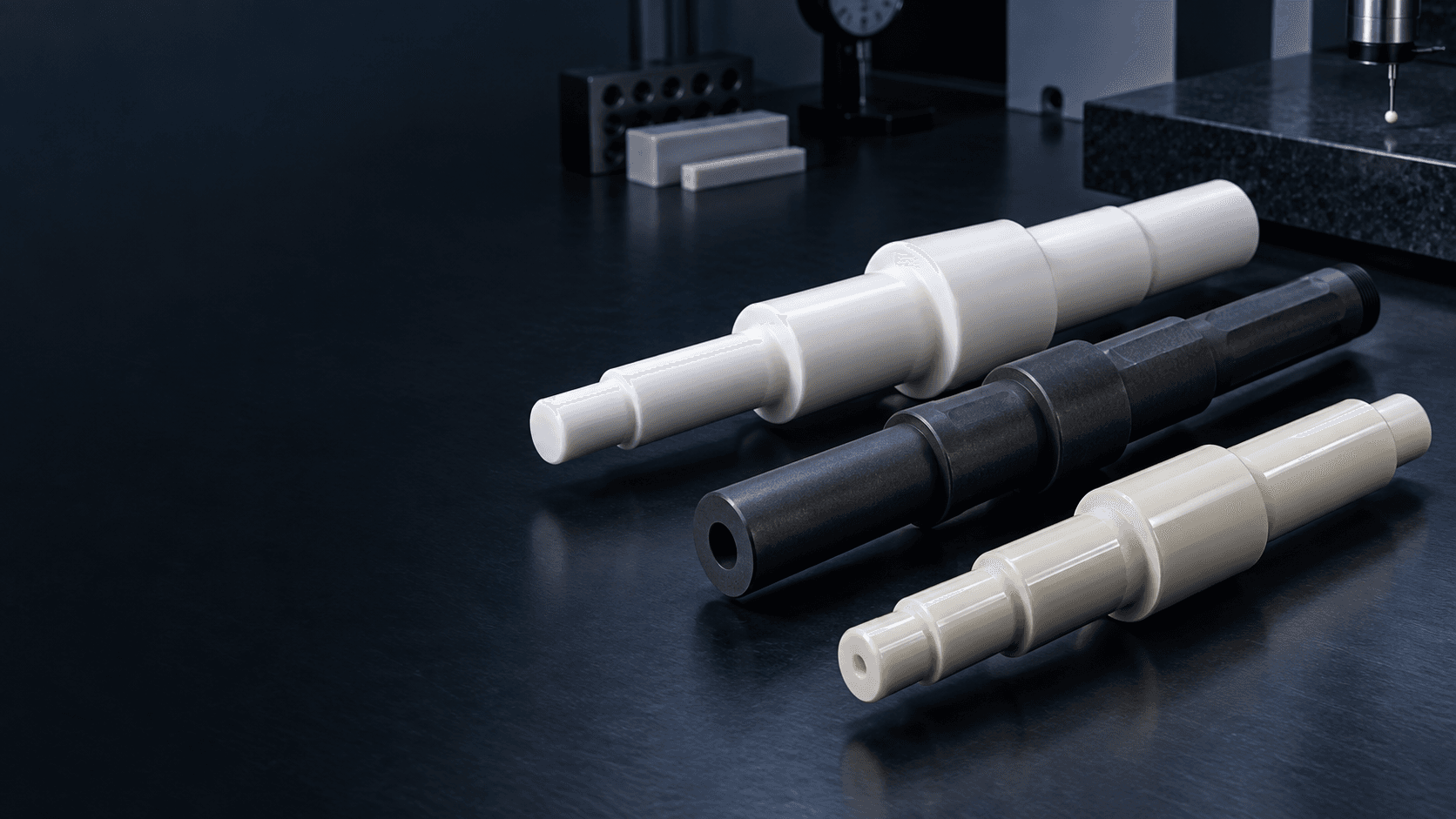
TECHNICAL CERAMIC SHAFTS
Custom Ceramic Shaft Manufacturer
Engineered For Wear, Corrosion And Demanding Environments.
TOPSHAFT supports custom precision ceramic shaft projects through a controlled ceramic manufacturing and finishing supply chain. Alumina, zirconia and silicon carbide are reviewed against the actual load, fluid, wear, temperature, electrical and surface-finish requirements.
Drawing-defined shafts can include journals, bores, grooves, shoulders and application-specific geometry, with diamond grinding, lapping or polishing where required.
Send your drawing, material requirement, quantity, operating environment and critical tolerances for engineering review.CERAMIC SHAFT CAPABILITY SNAPSHOT
Material, Geometry And Finishing Must Be Reviewed Together.
Technical ceramics are not selected as a generic upgrade from metal. The ceramic grade, geometry, mating parts and manufacturing route are all connected.
- Product
- Custom technical ceramic shafts
- Core materials
- Alumina, zirconia and silicon carbide
- Geometry
- Straight, stepped, hollow, grooved and drawing-specific
- Functional areas
- Journals, sealing surfaces, locating diameters and bores
- Finishing
- Diamond grinding, lapping and polishing as required
- Key requirements
- Diameter, roundness, cylindricity, straightness, runout and roughness
- Production
- Prototype through repeat production, subject to the ceramic route
- Inspection
- Drawing-defined dimensional, geometric and surface requirements
WHAT IS A CERAMIC SHAFT?
Precision Shaft Geometry In An Advanced Ceramic Material.
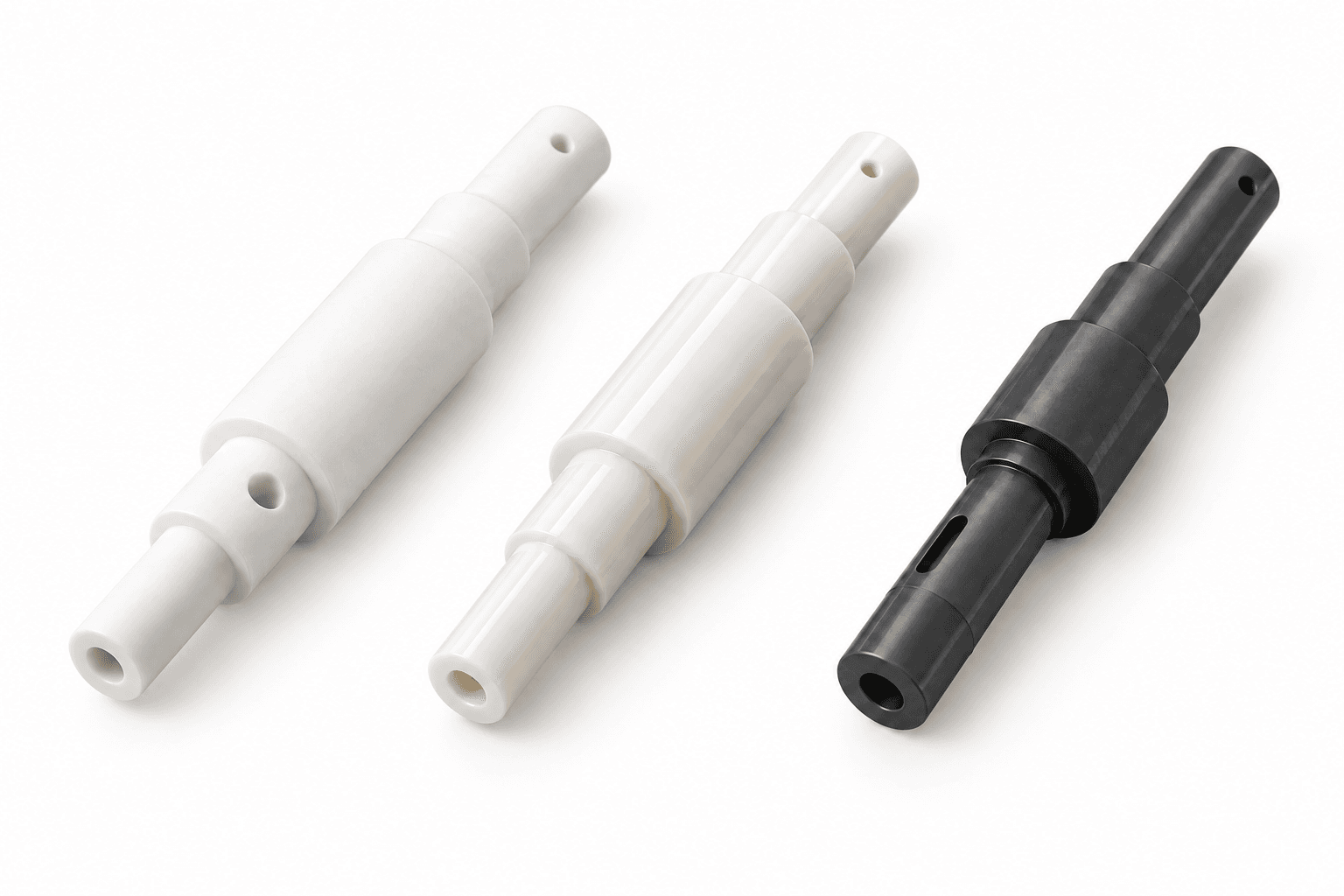
A ceramic shaft is a precision shaft manufactured from technical ceramic instead of conventional steel or stainless steel. Suitable ceramic grades can combine high hardness, wear resistance, chemical resistance, electrical insulation or high-temperature capability.
Ceramics are advantageous when those material properties match the operating conditions—not because ceramic is automatically better than metal.
CERAMIC MATERIAL SELECTION
Which Ceramic Is Suitable For Your Shaft?
Material selection follows the application; this is a starting guide, not an automatic recommendation.
Final material selection should follow the actual load, environment, geometry, mating components and required reliability. Silicon nitride is reviewed only for specialist projects where the appropriate route is confirmed.
CERAMIC SHAFT VS. METAL SHAFT
Different Material. Different Mechanical Design Thinking.
Ceramics can offer high hardness, chemical resistance and dimensional stability, but they deform very little before fracture. A metal-shaft drawing should not be converted to ceramic without reviewing stress concentrations, edge condition and assembly loads.
Wear & abrasionOften very high with suitable ceramicElectrical insulationStrong for many oxide ceramics; not every ceramicImpact toleranceRequires material- and geometry-specific reviewPost-fired machiningDiamond grinding is commonly requiredCost basisCan be higher than a conventional metal shaftBest useWear, corrosion, electrical or thermal need—not generic precision
FROM POWDER TO PRECISION SHAFT
How Are Precision Ceramic Shafts Manufactured?
The route is deliberately different from metal CNC-turning pages. Critical geometry is planned around forming, sintering shrinkage and hard finishing.
- 01Material & drawing reviewReview ceramic family, geometry, tolerance and application conditions.
- 02FormingPressing, isostatic pressing, extrusion or injection molding may be considered according to geometry and quantity.
- 03Green machiningThe unfired blank can often be shaped more economically before firing.
- 04SinteringFiring develops the dense ceramic microstructure; controlled shrinkage must be accounted for.
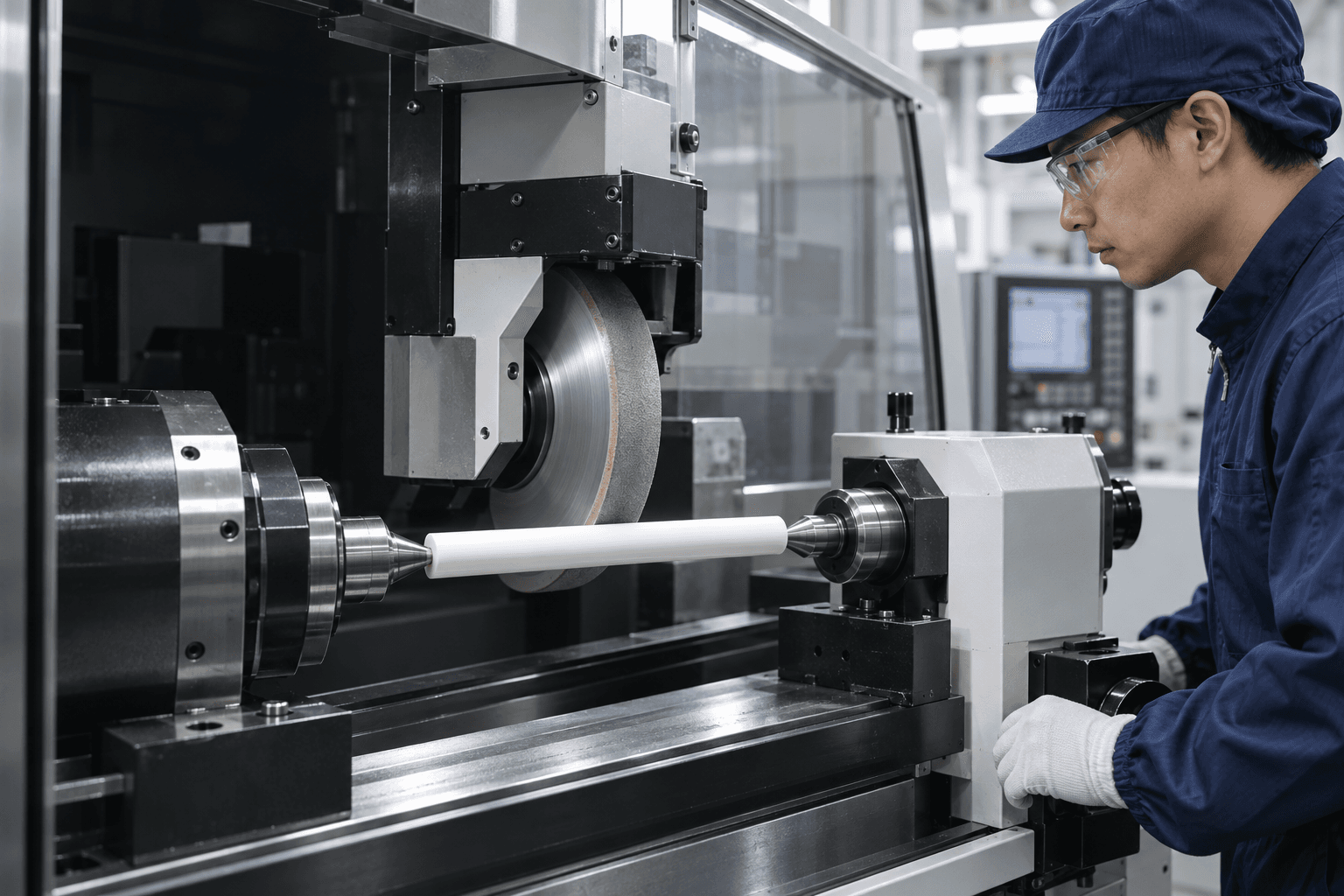
- 05Diamond grindingFired ceramic is extremely hard, so critical dimensions are commonly finished with diamond grinding.
- 06Lapping / polishingLapping or polishing can be used for sealing, bearing and low-roughness surfaces.
- 07Final inspectionVerify final drawing-defined geometry, surface and visual-integrity requirements.
GEOMETRY & FUNCTION
Which Features Can Ceramic Shafts Have?
Feature feasibility depends strongly on ceramic material, wall thickness, radii, depth, sintering route and required tolerance. Complex metal-shaft features are not automatically equally economical in ceramic.
Cylindrical geometry
Straight OD, stepped diameters, bearing or bushing journals and locating shoulders.
Internal & end features
Axial bores, through holes, selected cross holes, flats and drawing-specific end geometry.
Functional surfaces
Grooves, sealing interfaces and polished sliding surfaces where the application needs them.
CERAMIC-SPECIFIC DFM
Design The Shaft Around The Ceramic Route.
Good DFM reduces manufacturing risk and avoids adding cost through unnecessary post-sinter grinding or fragile geometry.
- 01Use practical radii instead of sharp internal corners.
- 02Avoid abrupt section changes where smooth transitions are possible.
- 03Review thin walls carefully, especially on hollow ceramic shafts.
- 04Avoid unnecessary deep or narrow features that restrict post-fired grinding access.
- 05Define ultra-tight tolerances and fine finishes only on critical surfaces.
- 06Review press fits, clamping and assembly loads for brittle ceramic materials.
APPLICATION DIRECTIONS
Where Ceramic Shafts Add Value.
Pump & Fluid-Handling Shafts
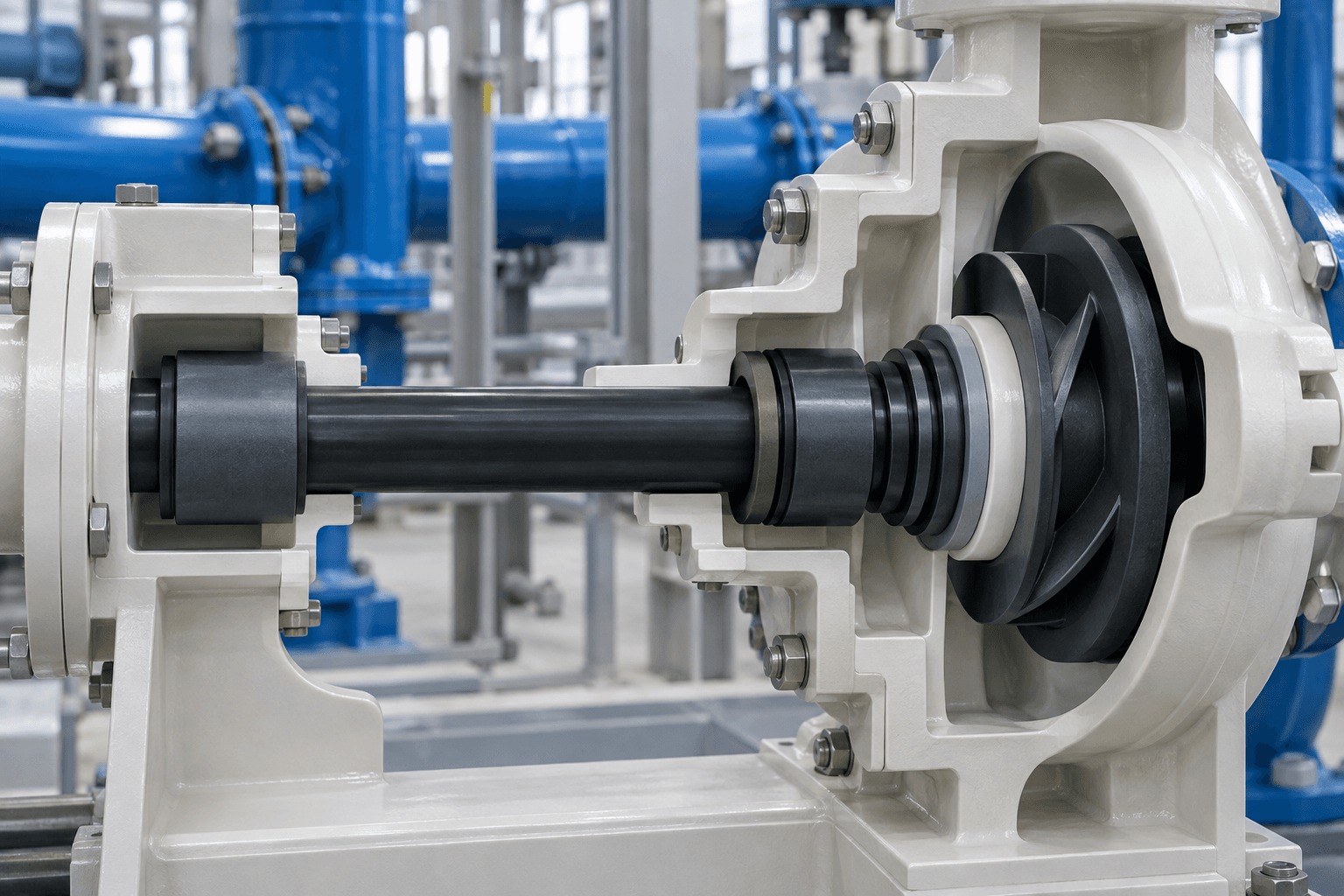
Chemical pumps, dosing pumps, water pumps, magnetic-drive systems and other fluid-handling equipment can be reviewed around wear, corrosion and sealing interfaces.
Explore pump shaft applications →Chemical & Corrosive Equipment
Alumina, zirconia or silicon carbide may be considered against actual chemistry, process fluid, temperature and wear conditions.
Wear-Critical Machinery
For abrasive, sliding or contamination-sensitive mechanisms where conventional shaft surfaces wear rapidly.
Electrical & Precision Equipment
Suitable oxide ceramics can support electrically insulating mechanisms, laboratory equipment and specialty industrial systems.
MATING INTERFACES
Review The Shaft With Its Bushing, Bearing Or Seal.
For wear applications, the ceramic shaft should be evaluated together with the mating ceramic, polymer, bearing or seal component. The material pair influences friction, wear, thermal expansion, lubrication and clearance.
Discuss hollow or bored ceramic geometry →PRECISION & INSPECTION
What Should Be Inspected On A Ceramic Shaft?
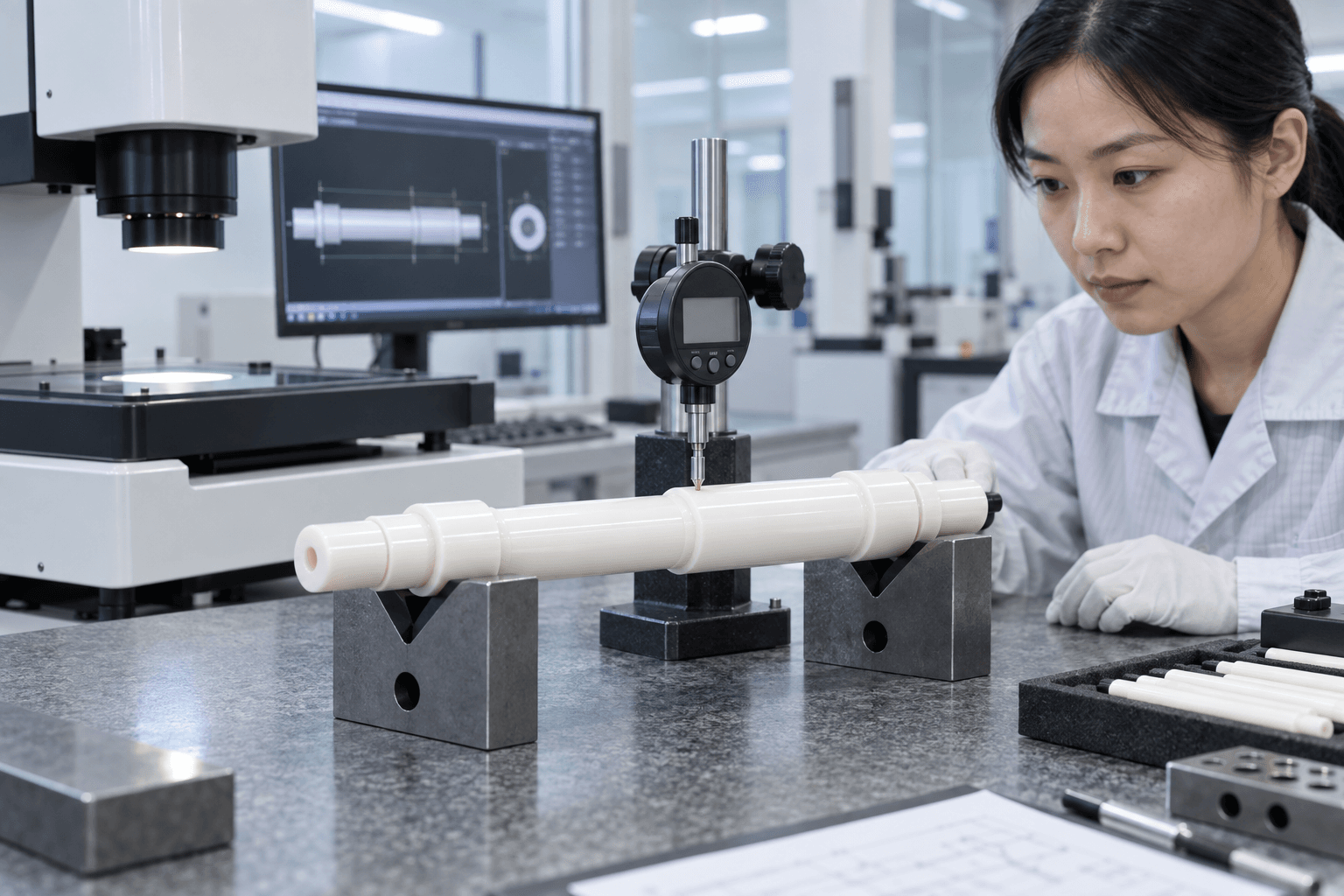
Inspection follows the drawing and agreed acceptance scope. Achievable tolerance and finish depend on material, diameter, length, feature geometry, forming route and the amount of post-sinter finishing.
Explore precision shaft inspection →Outside & bore diameterControls the fit and internal geometry
Roundness & cylindricitySupports consistent rotation and journal contact
Straightness & runoutControls long-shaft alignment and rotational relationship
Shoulder locationControls axial assembly position
Surface roughnessMatters for seals, bushings and sliding interfaces
Edge condition & visual integrityHelps identify visible chipping, cracks or surface defects
Material gradeConfirms the specified technical ceramic
CERAMIC SHAFT RFQ
What Information Is Needed For A Ceramic Shaft Quote?
Application and environment data are particularly important when selecting a ceramic material and defining a practical route.
CERAMIC SHAFT FAQS
Direct Answers For Engineering And Sourcing Teams.
Clear answers help you decide whether a ceramic shaft route is suitable before the drawing review begins.
What is a ceramic shaft?+
A ceramic shaft is a precision shaft made from an advanced technical ceramic rather than conventional metal. It is selected when wear, corrosion, electrical, thermal or contamination requirements make a suitable ceramic material attractive.
What materials are used for ceramic shafts?+
Alumina, zirconia and silicon carbide are the principal material directions on this page. Silicon nitride can be reviewed for specialist projects where the required ceramic route is available.
Are ceramic shafts stronger than steel shafts?+
They are not a direct substitute. Ceramics can offer high hardness and wear resistance, but structural ceramics are less ductile and require different design treatment around impact, stress concentration and assembly loads.
Can ceramic shafts be used in pumps?+
Yes. Ceramic shafts are commonly reviewed for chemical, dosing, water and fluid-handling equipment where wear, corrosion or process fluids limit a conventional metallic shaft surface.
How are precision ceramic shafts manufactured?+
A typical route is material and drawing review, forming, green machining, sintering, then critical finishing with diamond grinding, lapping or polishing followed by final inspection.
Can ceramic shafts be CNC machined?+
Unfired ceramic can often be green machined. Sintered ceramic is generally finished with hard processes such as diamond grinding rather than conventional metal-style CNC turning.
What tolerances and surface finishes are achievable?+
They depend on ceramic material, diameter, length, geometry, forming method and the amount of post-sinter diamond grinding. Requirements are reviewed against the actual drawing rather than promised as generic numbers.
What should I send for a ceramic shaft quote?+
Send the drawing or model, material or performance requirement, geometry, critical tolerances, surface finish, application, mating components, environment, loads and quantity.
READY TO REVIEW A CERAMIC SHAFT?
Send Your Drawing For A Practical Ceramic Material & Manufacturing Review.
Include material or performance requirements, geometry, quantity, critical surfaces, operating environment, loads and documentation needs.