
CUSTOM HOLLOW SHAFT MANUFACTURER
Precision Inside.
Precision Outside.
Custom hollow shafts engineered around both the bore and external geometry.
Topshaft manufactures custom hollow shafts for reduced rotating mass, internal cable or fluid routing, compact assemblies and specialized transmission geometry.Bore size, wall thickness, ID-to-OD concentricity, straightness, bearing journals and external features are reviewed around your drawing.
Send your OD, bore geometry, material, critical tolerances and quantity for engineering review.AT A GLANCE
Custom hollow shaft capabilities
Internal and external surfaces are planned as one functional component system—not as unrelated machining operations.- Bore type
- Through bore, blind bore, stepped bore and drawing-specific internal geometry
- Outside geometry
- Straight, stepped, flanged, threaded and multi-feature shafts
- Bore features
- Internal shoulders, threads, grooves, keyways and drawing-defined features
- External features
- Bearing journals, keyways, splines, threads, grooves, flats and holes
- Materials
- Carbon steel, alloy steel, stainless steel, aluminum and other machinable materials
- Machining
- CNC turning, drilling, boring, milling, grinding and secondary machining
- Critical relationships
- ID-to-OD concentricity, journal runout, wall thickness and straightness
- Production
- Prototype, low-volume and repeat production
ENGINEERING OVERVIEW
What is a hollow shaft?
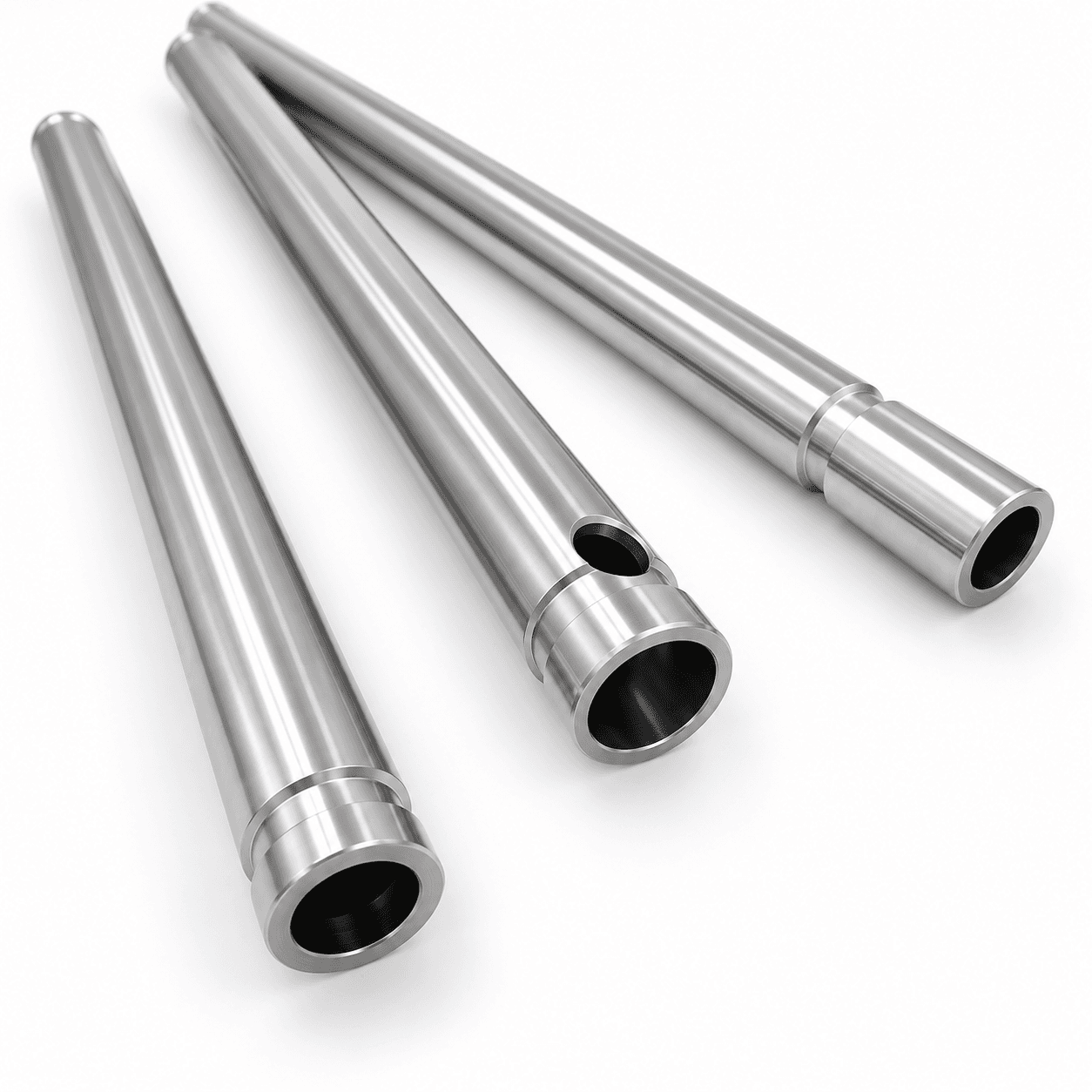
A hollow shaft contains an axial internal bore instead of being solid through its cross-section. The bore may pass completely through the shaft or terminate internally, depending on the design.
It can reduce rotating mass, provide a passage for cables, wiring, air, coolant or another mechanical component, and support compact coaxial assemblies.
A hollow shaft is not automatically stronger than a solid shaft of the same material and outside diameter. The engineering advantage comes from selecting the OD, ID and wall thickness for the required torque, stiffness, weight and functional passage.
BORE GEOMETRY
What bore designs can a hollow shaft have?
Blind bore
An internal cavity that stops within the shaft for weight reduction, assembly interfaces, internal threads or locating features.Stepped bore
Multiple internal diameters with shoulders for bearings, bushings, seals, spacers and inserted components.Tapered or threaded bore
Drawing-defined internal surfaces for location, clamping, retention or mating parts.Internal keyway or spline
Torque-transmission geometry inside the bore where tool access and wall thickness permit.Combined geometry
A custom bore can combine diameters, shoulders, threads and other functional details in one part.OD, ID & WALL THICKNESS
Why are OD, ID and wall thickness important?
For a simple concentric shaft, nominal wall thickness is calculated as (OD − ID) ÷ 2. Each dimension affects the component's function and manufacturing route.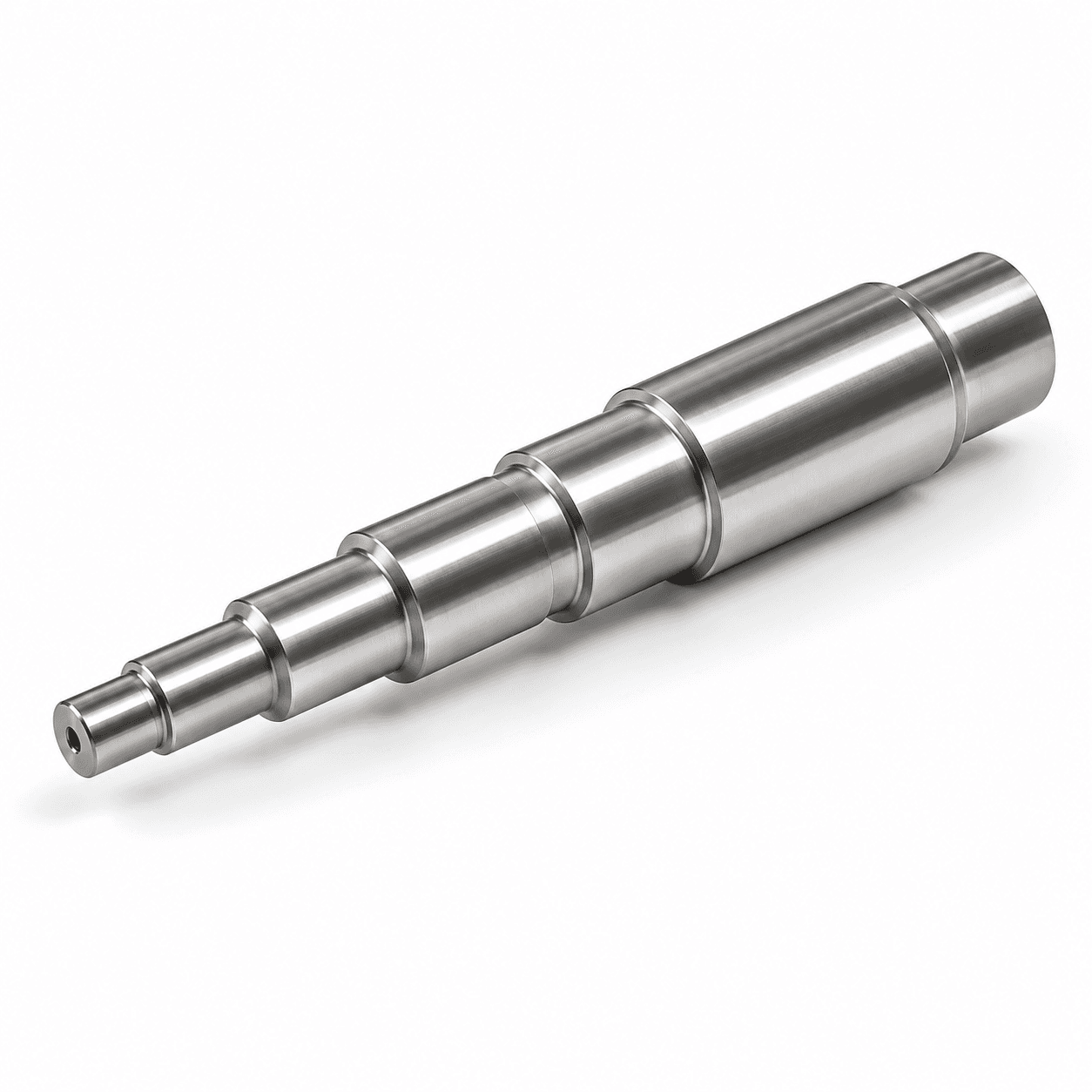
Outside diameter
Controls external interfaces, bearing fits and structural stiffness.Inside diameter
Defines the internal passage, clearance or mating-component fit.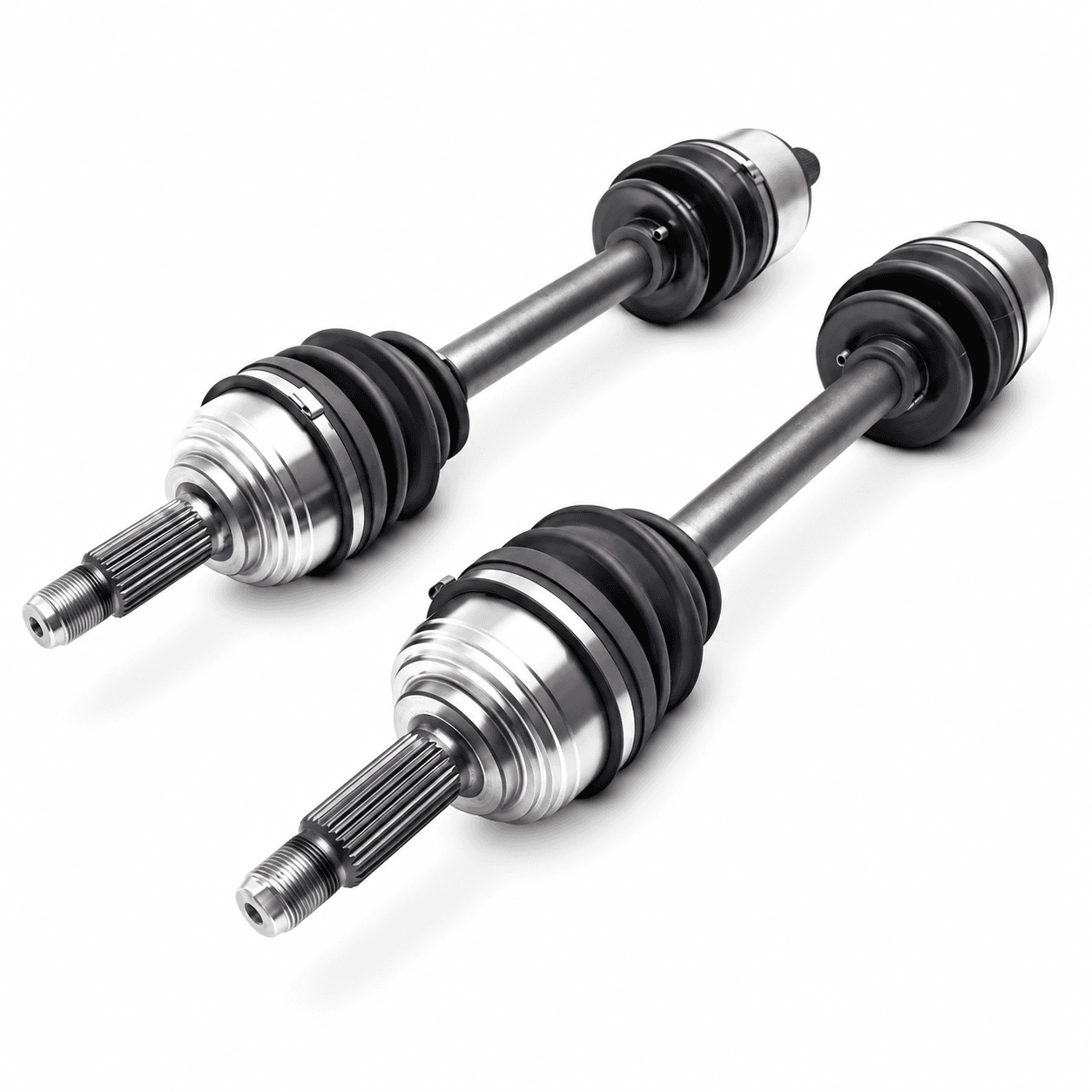
Wall thickness
Influences stiffness, mass, machining stability and treatment distortion.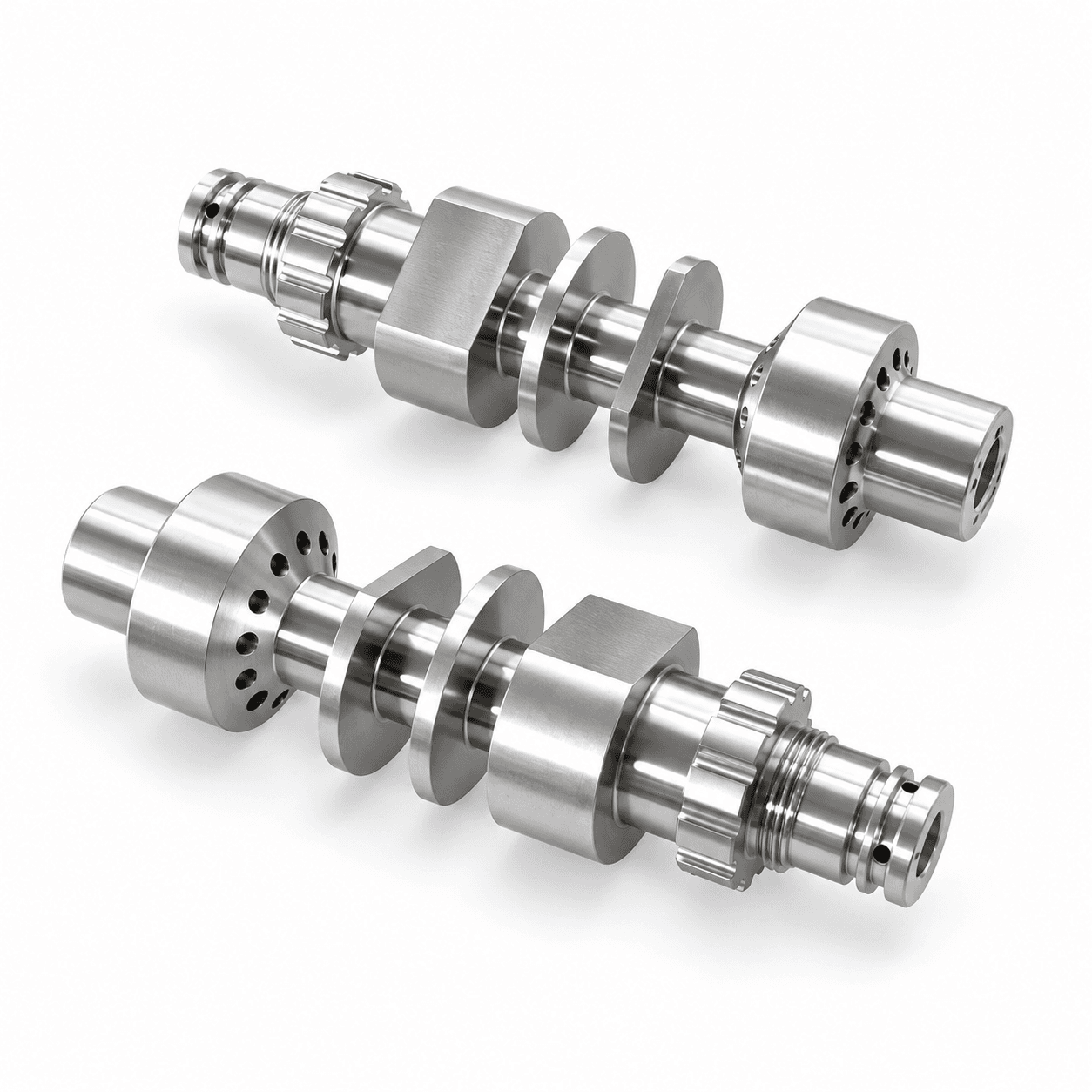
Bore concentricity
Controls wall-thickness variation and alignment of inside and outside features.MANUFACTURING ROUTE
How are custom hollow shafts manufactured?
The process is selected around bore diameter, depth, access, material, required finish and the relationship between the bore and external datums.MATERIAL DIRECTION
Selecting a material for a hollow shaft
Material selection follows the drawing, torque, wall thickness, weight, corrosion exposure, hardness and operating environment.1045 / C45
General industrial shafts where strength, machinability and cost are balanced.4140 / 42CrMo
Higher-strength and tougher sections for demanding transmission requirements.304 / 316 stainless steel
Corrosion-resistant applications in wet, washdown or chemical environments.17-4PH stainless steel
Strength plus corrosion resistance for specialized components.6061 / 7075 aluminum
Lower-mass component designs where the application permits.Hardenable alloy steel
Wear-resistant journal and treatment requirements.
CRITICAL RELATIONSHIPS
Why does bore concentricity matter?
A hollow shaft has both an external rotational axis and an internal bore axis. If those axes are offset, one side of the wall becomes thinner while the opposite side becomes thicker.- ID-to-OD concentricity and minimum wall thickness
- Bore diameter, bore straightness and surface condition
- Journal runout, external diameter and shaft straightness
- Shoulder position and axial assembly location
- Hardness and drawing-specific inspection requirements
DESIGN FOR MANUFACTURING
What makes a precision hollow shaft more demanding?
The challenge is not simply producing a hole. The route must preserve the relationship between the bore, journals, shoulders, mounting faces, straightness and remaining wall.Long bores & thin walls
Long internal passages add tool-access and bore-straightness considerations. Thin-wall parts can be more sensitive to clamping forces and machining deflection.
Multiple datum features
A bore, bearing journal and flange may all need controlled geometric relationships. Heat treatment can also affect the final machining sequence.
APPLICATION CONTEXT
Where are hollow shafts used?
Robotics
Central passages can route power, signal and pneumatic services through rotating joints.Servo & motion control
Compact axes can benefit from reduced rotating mass and internal routing.Machine-tool spindles
Bores can accommodate drawbars, tooling mechanisms, coolant or internal components.Electric motors
Hollow motor or rotor shafts can support through-axis installation and integrated routing.Gearboxes & reducers
Hollow output shafts enable coaxial installation and compact drivetrain architecture.Industrial automation
Rotary tables, indexing systems, packaging and assembly machinery.Pumps & fluid equipment
Internal passages can support application-specific fluid or process requirements.Industrial machinery
Custom transmission and rotating assemblies with constrained installation space.WHY TOPSHAFT
A hollow shaft partner that considers the inside and outside together.
Drawing-based manufacturing
Through bores, blind bores, stepped bores and external interfaces are evaluated from your technical drawing.Bore-led process planning
Bore depth, access, material, wall thickness and tolerance drive a practical manufacturing strategy.Multi-process capability
Turning, drilling, boring, milling, grinding, treatment and finishing can be combined as the design requires.Critical-feature inspection
Inspection requirements can focus on ID-to-OD relationships, runout, straightness and other functional features.Prototype to repeat production
Support starts with engineering samples and can continue through recurring OEM requirements.Practical engineering review
Requirements affecting feasibility, cost or lead time can be identified before quotation.PREPARE YOUR RFQ
What information is needed for a hollow shaft quote?
For a hollow shaft, the inside geometry is as important as the outside dimensions. Share both so the route can be reviewed accurately.- 01Outside diameter, overall length and bearing journals
- 02Bore diameter, depth and through / blind / stepped geometry
- 03Minimum wall thickness and internal features
- 04ID-to-OD concentricity, runout and straightness
- 05Threads, keyways, splines, grooves and cross holes
- 06Material grade, heat treatment and hardness
- 07Surface finish and critical inspection requirements
- 08Prototype, production and annual quantities
BUYER QUESTIONS
Hollow shaft FAQs
Practical answers for engineering and sourcing teams.What is a hollow shaft?+
A hollow shaft contains an axial internal bore. The bore may run through the shaft or terminate internally, and can reduce mass or provide space for cables, fluids, another shaft or mechanical components.
Why use a hollow shaft instead of a solid shaft?+
Hollow shafts are selected when reduced mass, a central passage or compact integration is useful. A solid shaft with the same material and outside diameter retains more torsional stiffness, so the OD, ID and wall thickness should be engineered for the actual load.
Are hollow shafts lighter than solid shafts?+
Yes. For the same material, length and outside diameter, a hollow shaft contains less material and weighs less.
What is ID-to-OD concentricity?+
It describes the relationship between the internal bore axis and the outside diameter axis. It matters where wall thickness, rotational balance or assembly alignment is critical.
Can Topshaft make through-bore and stepped-bore shafts?+
Yes. Through bores, blind bores, stepped diameters and drawing-defined internal features can be reviewed according to bore size, depth, material, wall thickness, access and tolerance.
Can a hollow shaft have keyways or splines?+
Depending on the drawing, hollow shafts can incorporate external or internal keyways, splines, threads, grooves and other transmission features.
Can hollow shafts be heat treated?+
Heat treatment can be evaluated according to the material and mechanical requirements. The route should account for any final dimensions required after treatment.
What is needed for a hollow shaft quote?+
Send the drawing with OD, ID, bore depth and type, wall thickness, material, critical geometric tolerances, treatment, surface finish and required quantity.
READY TO START?