Single-eccentric shaft
- One principal offset journal
- Pump, actuator and adjustment mechanisms
- Stroke primarily set by eccentricity
- Simple bearing and drive-end layout

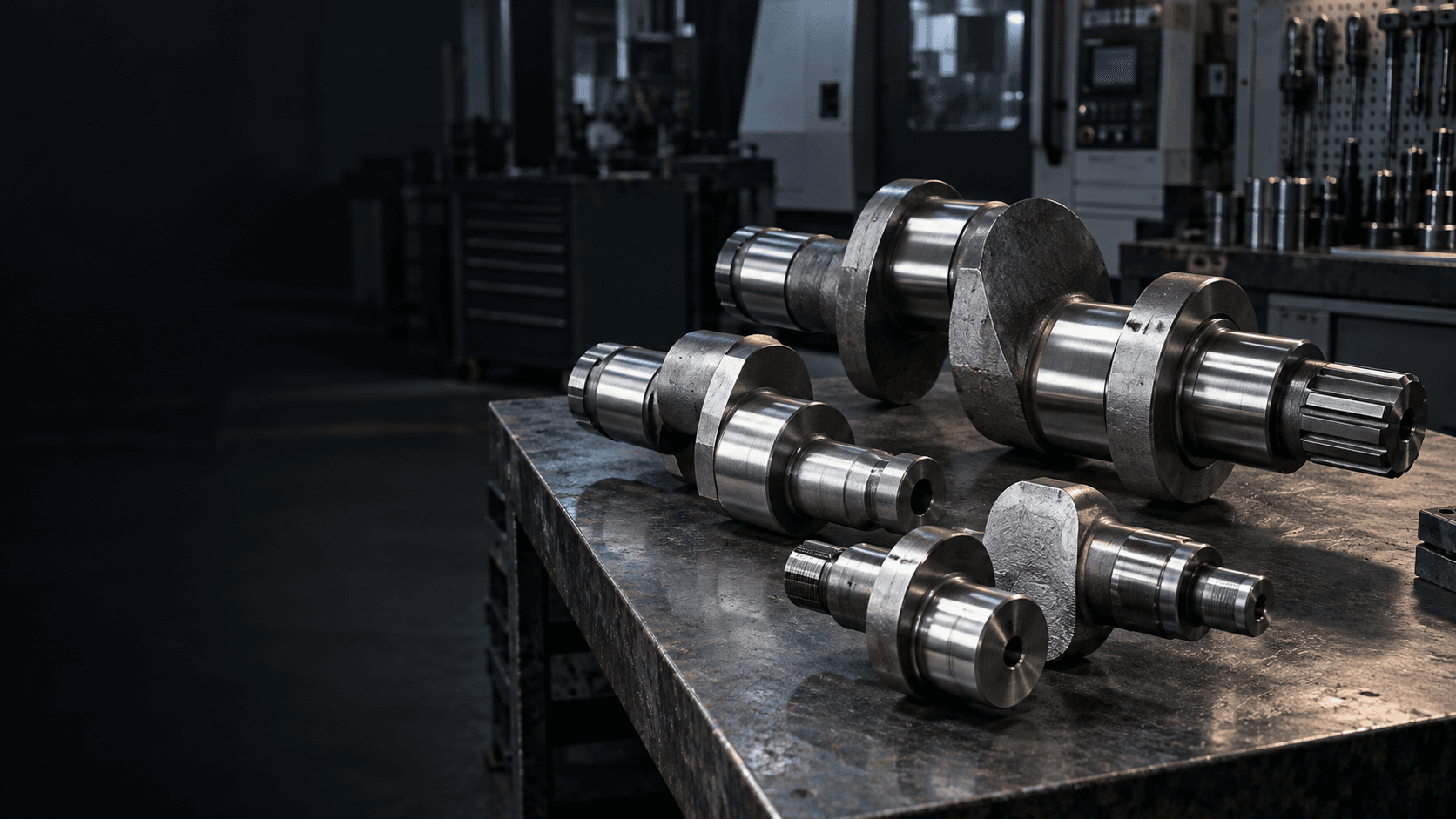
CUSTOM ECCENTRIC SHAFT MANUFACTURER
Topshaft manufactures drawing-based eccentric shafts for pumps, presses, compressors, automation equipment and specialised mechanisms. Every functional axis is planned around your defined eccentricity, journal geometry and inspection requirements.
Include eccentricity, journal dimensions, material, tolerances and quantity for faster review.ENGINEERING SNAPSHOT
The main axis, eccentric journal, phase and support surfaces must work together—not as independently machined diameters.
ECCENTRICITY
An eccentric shaft contains at least one cylindrical journal whose centreline is deliberately offset from the primary axis of rotation. That centre-to-centre distance is the eccentricity, e.
As the shaft rotates, the offset journal travels around the main axis. This can generate controlled reciprocating, oscillating or orbital movement in the connected mechanism.
MOTION CONVERSION
OFFSET JOURNAL ARRANGEMENT
Multiple eccentric journals can coordinate several motion events from one shaft. Their angular relationship is as important as the offset itself.
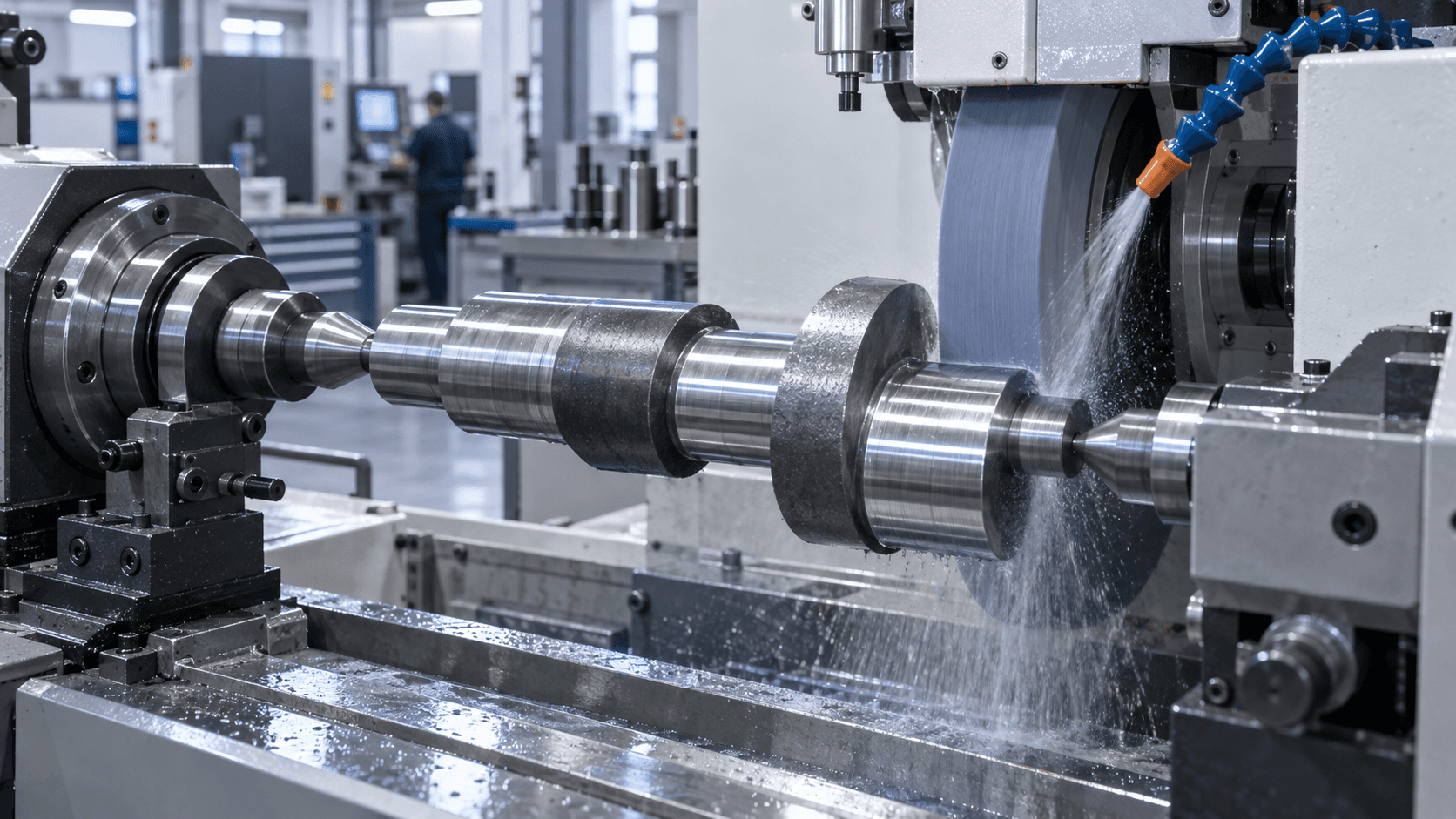
ECCENTRIC MACHINING & GRINDING
Conventional shaft turning is centred around one axis. An eccentric shaft deliberately introduces another, so workholding, datum transfer and cutting stability need to preserve the relationship between both axes.
After heat treatment, critical journals can require eccentric grinding to recover specified diameter, roundness, surface finish and offset accuracy.
MANUFACTURING ROUTE
Review the main axis, eccentric axis, offset, journal phase, treatment and final-grinding requirements.
Turn bearing journals, shoulders, grooves and end features around the primary rotational axis.
Use controlled offset centres, fixture positioning or CNC setup to establish the eccentric axis.
Create the offset journal while preserving its centre distance and relationship to the main axis.
Apply the required heat treatment, then finish concentric and eccentric journals where specified.
Verify eccentricity, phase, journal size, runout, straightness and drawing-defined functional datums.
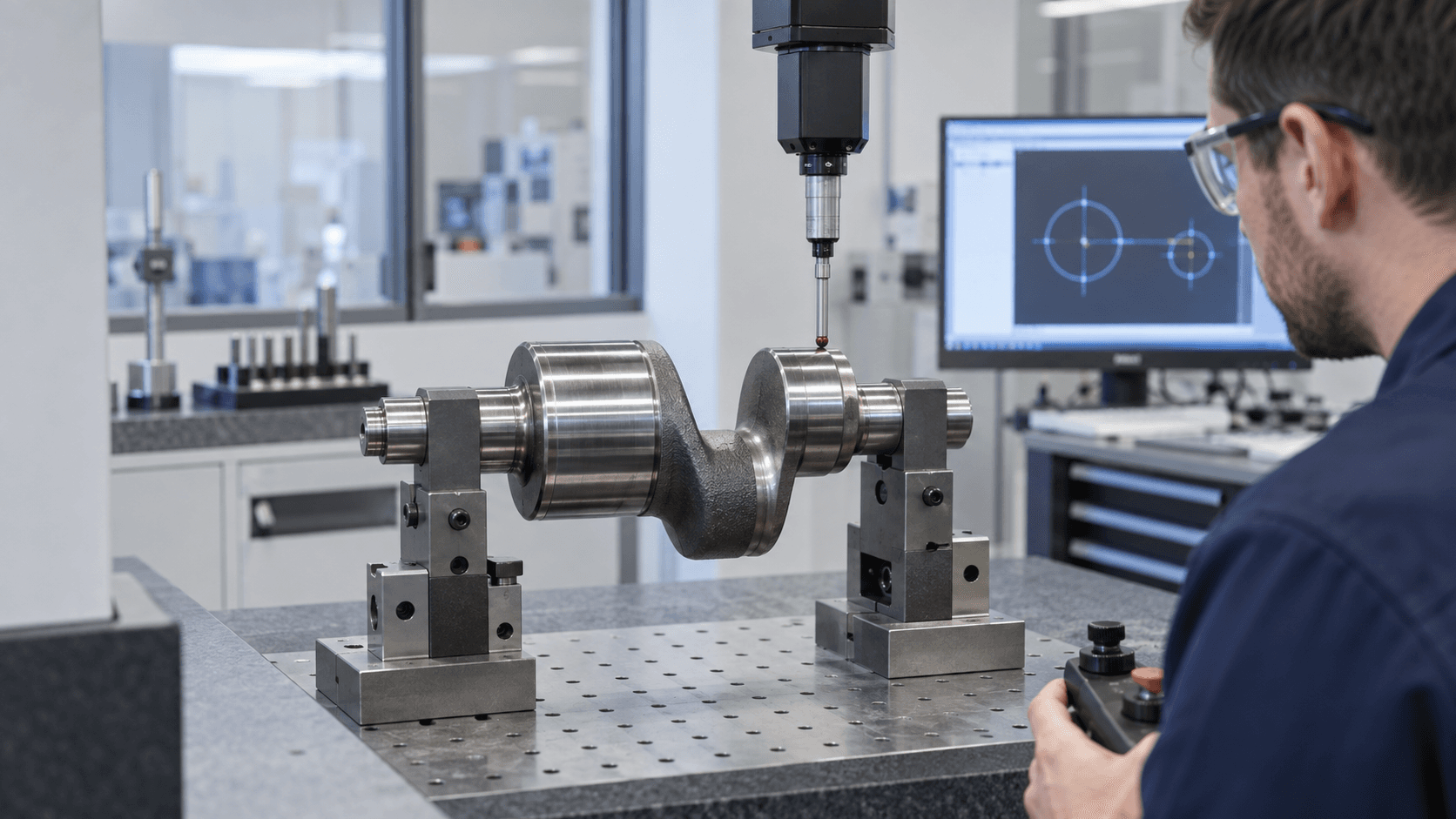
OFFSET INSPECTION
Eccentricity cannot be confirmed by measuring journal diameters alone. Inspection verifies the relative location of the main rotational axis and eccentric journal axis according to the drawing's datum structure.
RELATED MOTION SHAFTS
An eccentric shaft creates motion primarily through an offset circular axis. A camshaft creates programmed follower movement through the non-circular shape of its lobes.
Motion amplitude is strongly related to eccentricity and a simple mechanism can produce stroke close to 2e.
Rise, dwell and return are independently shaped by the complete lobe profile and lobe phase.
Explore custom camshafts →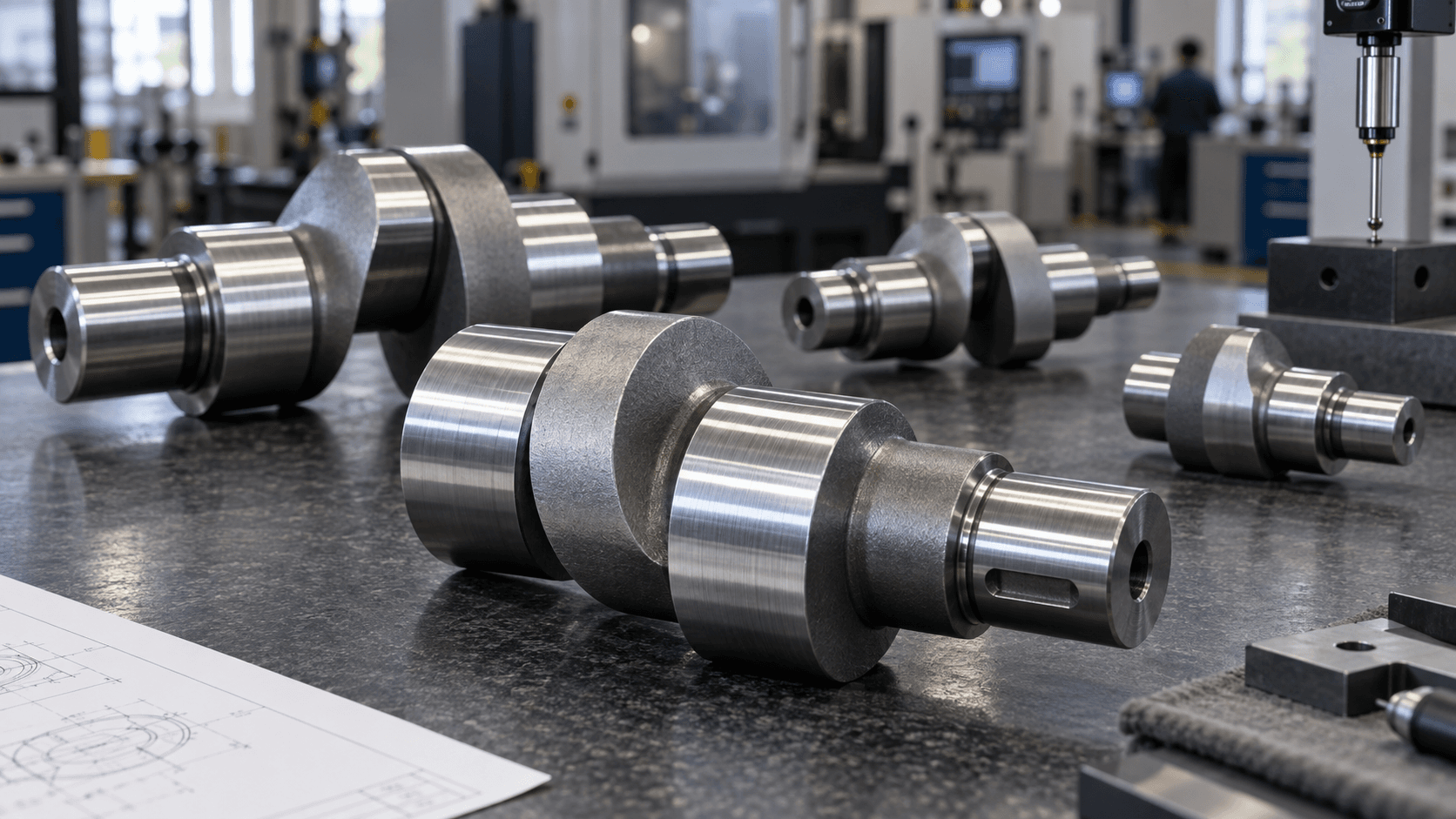
APPLICATIONS
Eccentric shafts can provide periodic displacement for reciprocating pumps, compressors, mechanical presses, feeders, vibration equipment and specialised automation. Material and treatment should be selected around speed, load, fatigue, bearing contact and the intended operating environment.
Discuss Your Eccentric Shaft Project →PREPARE YOUR RFQ
BUYER QUESTIONS
An eccentric shaft contains one or more journals intentionally offset from the main shaft axis. As it rotates, the offset can create orbital, reciprocating or oscillating motion.
Eccentricity is the centre-to-centre distance between the primary shaft axis and the eccentric journal axis.
In a simple eccentric mechanism, the theoretical total stroke is twice the eccentricity: S = 2e. The final motion can also depend on the connected linkage or follower geometry.
No. Eccentricity is an intentional design offset. Runout is an unwanted or tolerance-controlled variation measured while a surface rotates relative to a selected datum axis.
Yes. Multiple eccentric journals can be incorporated with drawing-defined diameters, axial positions, eccentricities and angular phase relationships.
Yes. Precision eccentric grinding can be used when final diameter, roundness, finish or post-heat-treatment accuracy is required.
READY TO START?